Buying a Historic Home in Fort Worth’s Older Districts
What should you know before buying a historic home in Fort Worth?
Before you buy in one of Fort Worth’s historic districts — like Fairmount-Southside or the Elizabeth Boulevard area that includes Ryan Place — understand two things: the exterior of the home carries “HC” historic overlay zoning, which means many visible changes require a Certificate of Appropriateness approved by the city’s Historic and Cultural Landmarks Commission, and the home itself is likely decades old, so foundation, wiring, and plumbing deserve close inspection. The character is the payoff. The design rules and the age of the systems are the trade-offs you plan around.
By The Chad Smith Team | September 24, 2026
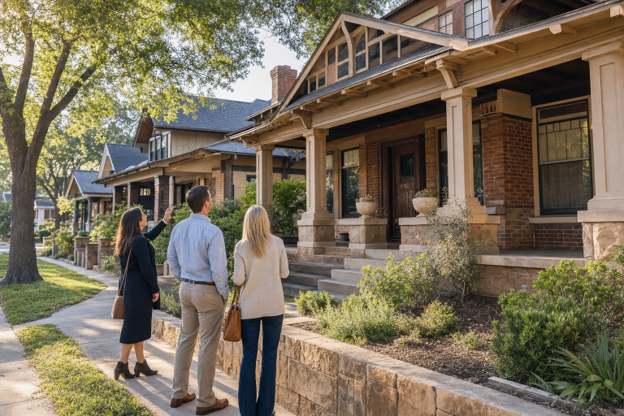
Fort Worth has eleven local historic districts, and some of them are among the most sought-after places to own a home in Tarrant County. Fairmount-Southside, designated locally and nationally in 1990, is one of the largest residential historic districts in the country. Elizabeth Boulevard was the city’s first historic district and is listed on the National Register — Ryan Place sits within it. These are neighborhoods people fall in love with: early-20th-century architecture, mature trees, and streetscapes you simply can’t reproduce with new construction.
Buying here is a rewarding but distinct process. You’re not just buying a house — you’re buying into a set of preservation rules that protect the district’s character, and an older home whose systems need real scrutiny. Neither is a reason to walk away. Both are reasons to know what you’re signing up for.
Here’s what to understand before you make an offer in a Fort Worth historic district.
The historic overlay: what “HC” zoning actually means
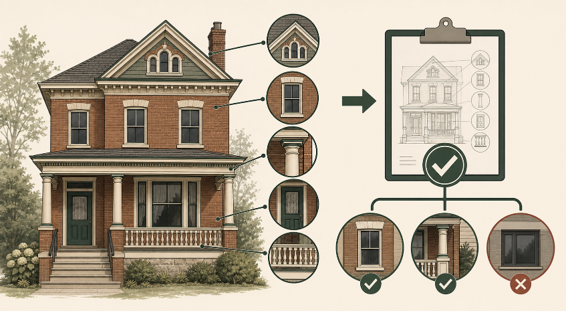
Homes in Fort Worth’s historic districts carry an HC (Historic and Cultural) overlay on top of their base zoning. Here’s the part that reassures most buyers: the overlay does not change how you can use the property. If it’s a single-family home, it stays a single-family home — the overlay doesn’t restrict that.
What the overlay does is govern exterior changes visible from the public right-of-way. The goal is to preserve the district’s architectural character, so the city reviews certain alterations before they happen.
That review is called a Certificate of Appropriateness (COA), and it’s issued by Fort Worth’s Historic and Cultural Landmarks Commission (HCLC).
When you need a Certificate of Appropriateness
This is the single most important thing to understand as a buyer, because it shapes what you can and can’t do after you close. In a designated district, exterior work that changes the appearance of the home typically requires a COA before you begin. Depending on the scope, that can include things like:
• Replacing windows or doors on visible elevations
• Changing roofing materials (in Fairmount, for example, unpainted masonry and metal roofs are specifically called out for review)
• Additions, new construction, or demolition
• Significant changes to the front facade, porches, or trim
Routine interior work and ordinary repairs that match existing materials generally don’t require review. But if your plans include a visible addition or you want to swap original wood windows for vinyl, you’ll want to know the district’s design standards before you buy — not after.
Each district publishes design standards and guidelines. Fairmount, for instance, has a detailed Structure Design Standards & Guidelines document created specifically to help people considering a purchase understand what ownership involves. Read the guidelines for the specific district you’re shopping. It’s the clearest picture of what your future projects will require.
The practical takeaway: budget extra time for exterior projects. A COA means a submittal and, for larger work, a public hearing before the HCLC. That’s not a dealbreaker — thousands of owners navigate it happily — but it means a window replacement or an addition isn’t a same-weekend project.
Don’t let the charm distract you from the inspection
Everything that applies to any historic home applies double in Fort Worth’s older districts, because many of these houses date to the early 1900s. Prioritize the systems that are costly and hard to see:
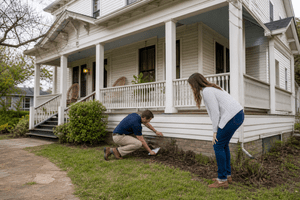
• Foundation. Tarrant County’s expansive clay soil stresses every older foundation. Watch for stair-step brick cracks, sloping floors, and sticking doors, and bring in a structural engineer if your inspector flags movement. Our overview of foundation issues in North Texas explains what repairs involve.
• Electrical. Homes built before 1950 may have knob-and-tube wiring. This matters beyond code: most Texas insurers won’t cover a home with active knob-and-tube, and no insurance means no mortgage. Confirm the wiring type and panel capacity.
• Plumbing. Galvanized supply lines corrode over decades, and old cast-iron or clay sewer lines crack and take on tree roots. A sewer scope is a cheap add-on that can reveal an expensive problem.
• Roof and hazardous materials. Check the roof’s remaining life, and remember that pre-1978 homes may contain lead paint, with asbestos possible in older flooring and insulation — worth knowing, especially if you plan to renovate.
Because these homes are older and renovations are common, a thorough inspection matters more here, not less. Our take on waiving the home inspection is simple: in a historic district, don’t.
Use your option period for district research too
The Texas option period is where you do your homework — and on a historic-district home, that homework includes more than the inspection. Use the window to:
1. Complete your general inspection and any specialty follow-ups (structural engineer, sewer scope, electrical estimate).
2. Read the district’s design standards so you know what future exterior projects will require.
3. Confirm the property’s specific historic designation and whether any prior unpermitted exterior work could create issues.
For the small negotiated fee, you keep the unrestricted right to terminate if what you learn changes your mind. Our guide to the Texas option period walks through how to use it well.
This layered due diligence — inspection plus district rules — is exactly what we help buyers coordinate when they’re shopping Fairmount, Ryan Place, and Fort Worth’s other historic neighborhoods. The homes are worth it. Going in informed is how you enjoy the charm without the surprises.
Frequently Asked Questions
Can I renovate a historic home in Fort Worth however I want?
Not entirely. Exterior changes visible from the street typically require a Certificate of Appropriateness from the Historic and Cultural Landmarks Commission, following the district’s published design standards. Interior work and ordinary repairs that match existing materials usually don’t require review, but visible additions, window replacements, and roofing changes often do.
Does historic overlay zoning limit how I can use the property?
No. The HC overlay preserves the district’s exterior character but does not change the underlying use — a single-family home stays a single-family home. The overlay governs the appearance of visible exterior changes, not what the building is used for.
Which Fort Worth neighborhoods are historic districts?
Fort Worth has eleven local historic districts. Fairmount-Southside is one of the largest residential historic districts in the country, and Elizabeth Boulevard — which includes Ryan Place — was the city’s first and is on the National Register. Each district has its own design standards, so confirm the exact designation for any home you’re considering.
Do I need a special inspection for a historic Fort Worth home?
There’s no legally separate inspection, but you should hire an inspector experienced with older construction and budget for add-ons like a structural engineer for the foundation and a sewer scope for the main line. Many of these homes date to the early 1900s, so the major systems deserve extra scrutiny.
How long does a Certificate of Appropriateness take?
It depends on the scope of work. Minor, staff-level approvals can be quicker, while larger projects like additions or new construction go before the Historic and Cultural Landmarks Commission at a public hearing. The key is to plan exterior projects with extra lead time rather than expecting immediate approval.
The bottom line
A historic home in Fort Worth’s older districts offers character you can’t find in new construction — but it comes with a preservation framework and an older set of systems. Understand the Certificate of Appropriateness process for exterior changes, inspect the foundation, wiring, and plumbing carefully, and use your option period for both.
If you’re shopping Fairmount, Ryan Place, or another Fort Worth historic district and want a guide who knows both the design rules and what to watch for in the inspection, we’re happy to help. Reach out anytime.
About The Chad Smith Team
The Chad Smith Team at Realty of America is one of the top-producing real estate teams in the Dallas-Fort Worth Metroplex, with more than 22 years of experience, 2,915 homes sold, and recognition by RealTrends among the top 1% of real estate professionals nationwide. The team helps first-time buyers, sellers, relocation clients, and new construction buyers throughout Arlington, Mansfield, Fort Worth, Midlothian, Waxahachie, and surrounding DFW communities. Through this blog, the Chad Smith Team shares expert market insights and practical advice to help North Texas buyers and sellers make informed real estate decisions.