Mansfield vs. Cedar Hill: Comparing Buyer Options
Should You Buy in Mansfield or Cedar Hill?
Mansfield generally offers more new construction and a wider range of larger, newer homes, with resale prices most commonly landing between $350,000 and $500,000 and new builds often starting near $400,000. Cedar Hill tends to run a bit lower on the entry end, with a broader mix of 1980s–2000s resale homes in the high $200,000s to low $400,000s, alongside higher-end lakeside properties near Joe Pool Lake that climb well past $600,000. The right choice usually comes down to which commute route you’re willing to drive daily and whether you want more new-build inventory or a lower entry price with lake access closer to home.
By The Chad Smith Team | November 4, 2026
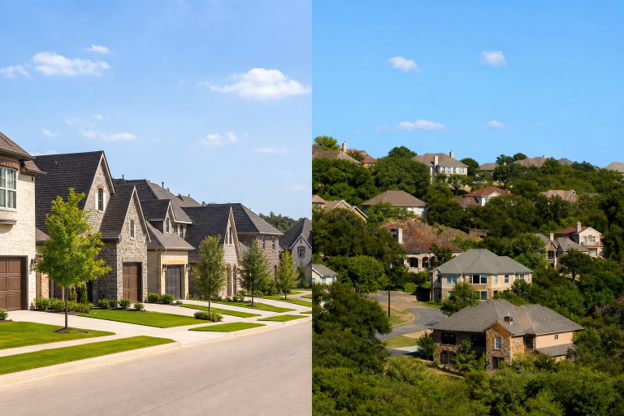
Mansfield and Cedar Hill get cross-shopped a lot, and it makes sense. Both sit south of the core Dallas-Fort Worth job centers, both give you highway access into the Metroplex without living inside it, and both have carved out their own identity apart from the bigger cities next door. But they’re not the same market, and the differences show up fast once you start touring.
We’ve walked buyers through this exact comparison more times than we can count, usually because someone found a great listing in one city and then found an equally great one in the other and couldn’t figure out why the numbers felt so different. Here’s the honest breakdown.
Home Prices, Inventory, and Home Styles
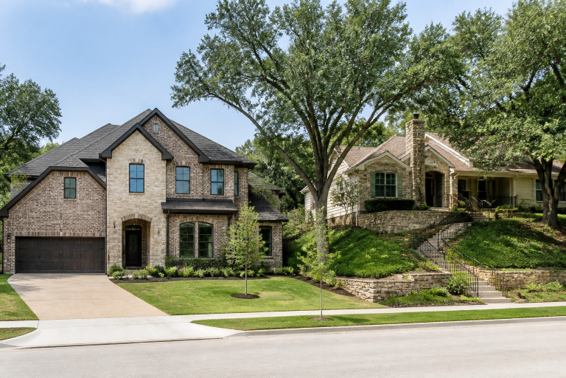
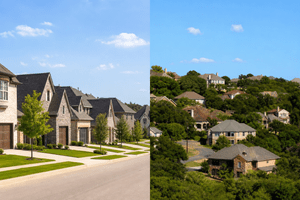
Mansfield, in Tarrant County, has leaned heavily into new construction over the last several years. Communities like South Pointe — a large master-planned development spanning more than 870 acres — along with newer builds at Westhill Park and Birdsong have added a steady supply of homes in the $400,000s and up. Resale inventory across the city is most active in the $350,000–$500,000 range, and larger new-construction homes in communities like South Pointe and Heritage can push past $600,000.
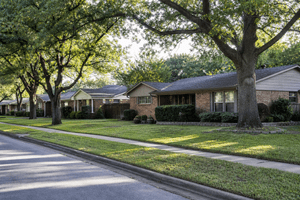
Cedar Hill, in Dallas County, has a different inventory mix. A large share of the housing stock is resale — established subdivisions built from the 1980s through the early 2000s, many with larger lots and more mature landscaping than you’ll find in Mansfield’s newer sections. Recent market data has put Cedar Hill’s citywide median in the $310,000–$325,000 range, but that number blends two very different markets: standard resale neighborhoods on one end, and the Lake Ridge community on the other, where homes routinely sell well above $600,000 thanks to golf course and lake frontage.
What this means for you as a buyer:
• If you want new construction with builder warranties and modern floor plans, Mansfield currently has more active communities to choose from.
• If you want a lower entry price with the option to move up into a premium lakeside neighborhood without leaving the city, Cedar Hill’s Lake Ridge area is worth a closer look.
• If lot size matters more than square footage, Cedar Hill’s older subdivisions often out-lot newer Mansfield product on comparable budgets.
Neither city is “cheaper” across the board — it depends heavily on which pocket of each city you’re comparing. This is exactly the kind of side-by-side we run for buyers before they ever step into a showing, because a citywide median rarely tells you what a specific street or subdivision is actually doing. We covered a similar dynamic in our breakdown of Mansfield vs. Midlothian commute, price, and space trade-offs, and the same principle applies here: compare neighborhoods, not just city averages.
Commute Routes and Proximity to DFW
This is usually the deciding factor once price ranges start to overlap.
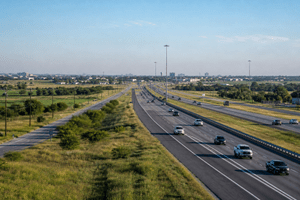
Mansfield sits southeast of Fort Worth and is built around US-287 and SH-360. Most residents get to Fort Worth in roughly 25–35 minutes under normal conditions, and the newer 360 Tollway extension has meaningfully cut commute times toward Arlington, the Mid-Cities, and Grand Prairie without needing to touch I-20 or I-35W. Getting into Dallas from Mansfield typically runs 45–55 minutes during peak traffic, since you’re crossing the Metroplex east-west.
Cedar Hill sits southwest of Dallas along US-67, with I-20 running just north of the city for quick access east or west. Downtown Dallas is roughly a 20–25 minute drive under normal traffic, and job centers in Arlington and Las Colinas run about 30 minutes. Cedar Hill’s position also puts it reasonably close to Dallas Love Field, while a trip to DFW International Airport takes longer given the distance across the Metroplex.
In short: if your daily commute points toward Fort Worth, Arlington, or the Mid-Cities, Mansfield’s US-287/360 corridor is going to save you time. If you’re commuting into downtown Dallas or Las Colinas regularly, Cedar Hill’s US-67/I-20 position generally wins. If your job is genuinely DFW Airport-adjacent, Mansfield tends to have the shorter drive.
Property Taxes: Tarrant County vs. Dallas County
Property taxes in Texas are driven mostly by your school district and city rate, not just the county — so the exact number always depends on the specific ISD and municipal rate attached to a given address. That said, the county-level context is useful for narrowing expectations.
• Mansfield sits primarily in Tarrant County. Tarrant’s county-level effective rate runs a bit under 1.8%, and combined effective rates (county, city, school district, and any special districts) across Tarrant County generally fall in the 1.85%–2.4% range depending on the specific ISD.
• Cedar Hill sits primarily in Dallas County (a small portion extends into Ellis County). Dallas County’s county-only effective rate tends to run somewhat lower than Tarrant’s, but combined effective rates across Dallas County cities and school districts commonly land in the 2.0%–2.6% range.
Neither county has a clear, consistent tax advantage over the other once you factor in the specific school district and city rate attached to a property — the spread within each county is often wider than the spread between them. If you’re comparing two specific listings, we always recommend pulling the actual combined rate for that exact address rather than relying on a county average. That’s a five-minute lookup we run for buyers before they write an offer.
Lifestyle and Amenity Trade-Offs
Beyond price and commute, the day-to-day feel of each city comes down to retail corridors, parks, and how you’ll spend a Saturday.
Mansfield has built out its retail and dining along the US-287 business corridor and around Broad Street, with steady growth tied to its new residential communities. Golf and open green space are well represented, and the city’s newer subdivisions tend to come with community amenity centers, pools, and walking trails built in as part of the development.
Cedar Hill centers its retail around Hillside Village (formerly Uptown Village) on US-67, a walkable shopping and dining corridor with direct access to major retailers. Where Cedar Hill really stands apart is outdoor recreation: the city maintains more than 30 neighborhood and community parks and over 36 miles of trails, plus direct access to Cedar Hill State Park’s roughly 1,825 acres along Joe Pool Lake — a 7,500-acre lake used for boating, swimming, and fishing — and the Dogwood Canyon Audubon Center for hiking and birding.
If lake access and trail mileage are high on your list, Cedar Hill has the built-in advantage. If you want retail growth tracking a wave of new residential construction and easy tollway access across the southern Metroplex, Mansfield is the stronger fit. Both cities continue to benefit from the broader growth patterns reshaping the southern half of DFW — we go into more detail on that trend in our post on what DFW Metroplex growth means for homeowners.
Frequently Asked Questions
Is Mansfield or Cedar Hill closer to downtown Dallas?
Cedar Hill is closer to downtown Dallas, typically a 20–25 minute drive via US-67 and I-20 under normal traffic. Mansfield’s drive into Dallas generally runs 45–55 minutes during peak hours, since it sits farther southeast and the trip crosses more of the Metroplex.
Which city has more new construction available right now?
Mansfield currently has more active new-construction communities, including South Pointe, Westhill Park, and Birdsong, with new builds commonly starting around $400,000. Cedar Hill’s inventory leans more heavily toward resale homes from the 1980s through early 2000s, with newer construction concentrated in and around the Lake Ridge area.
Are property taxes lower in Mansfield or Cedar Hill?
Neither county has a consistent advantage — combined effective rates in both Tarrant County (Mansfield) and Dallas County (Cedar Hill) generally fall somewhere between 1.85% and 2.6%, depending on the specific school district and city. The safest approach is pulling the actual combined rate for a specific address rather than assuming based on county alone.
Does Cedar Hill or Mansfield have better access to parks and lake recreation?
Cedar Hill has the stronger built-in advantage here, with more than 30 parks, over 36 miles of trails, and direct access to Cedar Hill State Park and Joe Pool Lake. Mansfield’s newer communities often include their own amenity centers and trails, but the city doesn’t have Cedar Hill’s scale of public lake and state park access.
Which city is better for a shorter commute to DFW International Airport?
Mansfield generally offers a shorter drive to DFW International Airport, since it sits closer to the airport’s southern approach roads. Cedar Hill’s position southwest of Dallas puts it closer to Dallas Love Field but adds distance and drive time to DFW International.
If you’re weighing Mansfield against Cedar Hill for your own move, the right answer really does depend on your commute, your budget, and how you want to spend your weekends. We walk buyers through this comparison regularly, pulling current listings and actual tax rates for the specific neighborhoods you’re considering rather than relying on citywide averages. If you’re ready to talk through which of these two markets fits your situation, we’re happy to walk you through the numbers. Reach out anytime.
About The Chad Smith Team
The Chad Smith Team at Realty of America is one of the top-producing real estate teams in the Dallas-Fort Worth Metroplex, with more than 22 years of experience, 2,915 homes sold, and recognition by RealTrends among the top 1% of real estate professionals nationwide. The team helps first-time buyers, sellers, relocation clients, and new construction buyers throughout Arlington, Mansfield, Fort Worth, Midlothian, Waxahachie, and surrounding DFW communities. Through this blog, the Chad Smith Team shares expert market insights and practical advice to help North Texas buyers and sellers make informed real estate decisions.