Waterfront Financing and Insurance for Granbury Lake Homes
How do financing and insurance work for a Lake Granbury waterfront home?
Buying a waterfront home on Lake Granbury usually involves two wrinkles most buyers don’t face: financing that may cross into jumbo-loan territory because of higher lakefront prices, and a layered insurance picture that can include a standard homeowners policy plus separate flood coverage if the home sits in a FEMA flood zone. If any part of the structure is in a special flood hazard area and you have a mortgage, your lender will require flood insurance. The smart move is to price both the loan and the full insurance stack before you fall for the view.
By The Chad Smith Team | September 24, 2026
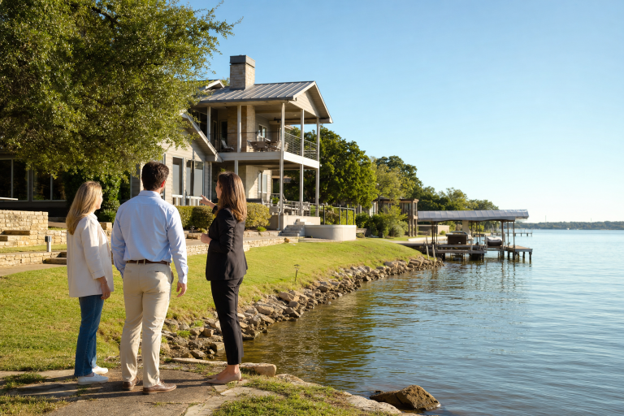
Lake Granbury, in Hood County southwest of Fort Worth, is one of the most desirable waterfront markets in North Texas. The draw is obvious: open water, boat docks, and a small-town pace an hour from the Metroplex. But a lakefront home is a more complex purchase than an inland one, and the two areas where buyers get surprised are financing and insurance.
Neither is a reason to avoid the lake. They’re just line items you plan for. Here’s how both actually work on a Granbury waterfront home.
Financing: why lakefront often means a bigger loan
Waterfront homes on Lake Granbury generally sit at the higher end of the local market, and that price point affects how you finance.
Conventional versus jumbo. Every year, there’s a conforming loan limit — the ceiling for a standard conventional loan that Fannie Mae or Freddie Mac will back. When a home’s price pushes your loan amount above that limit, you move into jumbo loan territory. Jumbo loans are entirely available, but they typically come with:
• Higher credit score requirements
• Larger down payments (often 10–20%+ depending on the lender)
• More documentation of income and reserves
• Sometimes a slightly different rate structure
If you’re comparing loan types, our breakdown of FHA versus conventional loans covers the fundamentals, though many waterfront buyers will be looking at conventional or jumbo rather than FHA.
A Texas-specific rule to know. If you ever plan to tap your equity later, remember that the Texas Constitution (Article XVI, Section 50(a)(6)) caps total home equity borrowing at 80% of the home’s fair market value minus all outstanding liens. That applies to home equity loans, HELOCs, and cash-out refinances on any Hood County property — so a waterfront home isn’t a blank check even after it appreciates.
Appraisal and condition. Lenders scrutinize waterfront homes more closely. Docks, bulkheads, and any part of the structure near the water can affect the appraisal and the loan. Make sure your lender knows it’s a waterfront property from day one so there are no surprises in underwriting.
Insurance: the layered picture on Lake Granbury
This is where waterfront buyers most often underestimate their carrying costs. A lakefront home can require more than one policy.
1. Standard homeowners insurance. This covers the structure and your belongings against typical perils — but standard policies exclude flood damage. That’s true everywhere, not just at the lake. Our overview of homeowners insurance in North Texas covers what a base policy does and doesn’t include.
2. Flood insurance. Here’s the key fact: if any portion of your home sits in a FEMA-designated special flood hazard area and you have a mortgage, your lender will require flood insurance. Roughly 15% of lakefront properties nationally end up needing lender-required flood coverage. You have two sources:
• NFIP (the federal National Flood Insurance Program)
• Private flood insurance, which can sometimes offer broader coverage or better pricing
On a Granbury waterfront home, get both an NFIP and a private quote and compare coverage and cost side by side. They can differ meaningfully.
3. Windstorm and other riders. North Texas gets serious spring storms, and depending on the home and carrier you may want to confirm how wind and hail are handled in your policy.
Flood zones, elevation, and permits
Before you write an offer, find out exactly where the home sits relative to the flood map.
• Check the FEMA flood map for the specific address to see what flood zone it’s in. Zone designations drive whether flood insurance is required and how much it costs.
• Ask for an elevation certificate. This document shows how the home’s lowest floor sits relative to the base flood elevation (BFE). A home built above the BFE can see dramatically lower flood premiums than one below it.
• Understand permit rules for any changes. If you plan to build or modify a dock, boathouse, addition, or anything in the floodplain, you may need a floodplain development permit from the City of Granbury or Hood County, which often requires an elevation certificate and compliance with finished-floor standards.
One more timing note: spring storm season, roughly March through May, brings the heaviest rains and the highest flood risk on Lake Granbury, particularly when upstream reservoirs release water into the Brazos River system. It doesn’t mean the home floods — it means the flood picture is real and worth pricing properly.
Put it all together before you commit
Your option period is the time to nail all of this down. During that window, for a small negotiated fee, you keep the right to terminate the contract for any reason — so use it to:
1. Pull the FEMA flood zone and request the elevation certificate.
2. Get firm insurance quotes: homeowners plus NFIP and private flood.
3. Confirm your financing type and lock a realistic rate and down payment, especially if you’re near jumbo territory.
4. Ask about any dock, bulkhead, or floodplain permits tied to the property.
Our guide to the Texas option period explains how to make the most of it.
The total monthly cost of a Lake Granbury waterfront home is the mortgage plus a fuller insurance stack than an inland home — and knowing that real number before you’re committed is the difference between a dream purchase and a stressful one. This is exactly the kind of math we run with our waterfront buyers before they write an offer.
Frequently Asked Questions
Do I need flood insurance for a Lake Granbury home?
If any part of the home sits in a FEMA special flood hazard area and you have a mortgage, your lender will require flood insurance. Even if it’s not required, many waterfront owners carry it voluntarily. Check the FEMA flood map for the specific address, and get both NFIP and private flood quotes to compare.
Will I need a jumbo loan to buy a waterfront home in Granbury?
Possibly. Waterfront homes on Lake Granbury often sit at the higher end of the market, and if your loan amount exceeds the annual conforming limit, you move into jumbo-loan territory — which typically means a larger down payment, stronger credit, and more documentation. Talk to a lender early so you know which loan type applies.
What is an elevation certificate and why does it matter?
An elevation certificate documents how a home’s lowest floor sits relative to the base flood elevation. It’s a major factor in your flood insurance premium — a home built above the base flood elevation can cost far less to insure than one below it — and it may be required for permits on floodplain construction.
Does Lake Granbury flood?
Lake Granbury is part of the Brazos River system, and spring storm season from roughly March through May brings the heaviest rains and highest flood risk, especially when upstream reservoirs release water. Whether a specific home is at risk depends on its flood zone and elevation, which you can verify with FEMA maps and an elevation certificate.
Can I borrow against a Granbury waterfront home’s equity later?
Yes, but Texas law caps total home equity borrowing at 80% of the home’s fair market value minus all outstanding liens, under Article XVI, Section 50(a)(6) of the Texas Constitution. That limit applies to home equity loans, HELOCs, and cash-out refinances on Hood County properties.
The bottom line
A Lake Granbury waterfront home is a wonderful thing to own — but the financing may run into jumbo territory, and the insurance picture is layered with flood and windstorm considerations an inland home never faces. Price the loan and the full insurance stack, verify the flood zone and elevation, and use your option period to confirm it all.
If you’re considering a waterfront home on Lake Granbury and want help running the true monthly numbers before you make an offer, we do this with our buyers all the time. Reach out anytime.
About The Chad Smith Team
The Chad Smith Team at Realty of America is one of the top-producing real estate teams in the Dallas-Fort Worth Metroplex, with more than 22 years of experience, 2,915 homes sold, and recognition by RealTrends among the top 1% of real estate professionals nationwide. The team helps first-time buyers, sellers, relocation clients, and new construction buyers throughout Arlington, Mansfield, Fort Worth, Midlothian, Waxahachie, and surrounding DFW communities. Through this blog, the Chad Smith Team shares expert market insights and practical advice to help North Texas buyers and sellers make informed real estate decisions.