Buying a Historic Home in Cleburne: Inspection Priorities
What should you inspect first when buying a historic home in Cleburne, TX?
When you buy an older home in Cleburne, prioritize the systems that are expensive to fix and hard to see: the foundation, the electrical wiring, the plumbing supply and sewer lines, the roof, and any hazardous materials like lead paint or asbestos. Homes built before 1950 often carry knob-and-tube wiring — which most Texas insurers won’t cover — and North Texas clay soil puts constant stress on older foundations. Line up an inspector who knows historic construction, and use your option period to get the truth before you’re committed.
By The Chad Smith Team | September 23, 2026
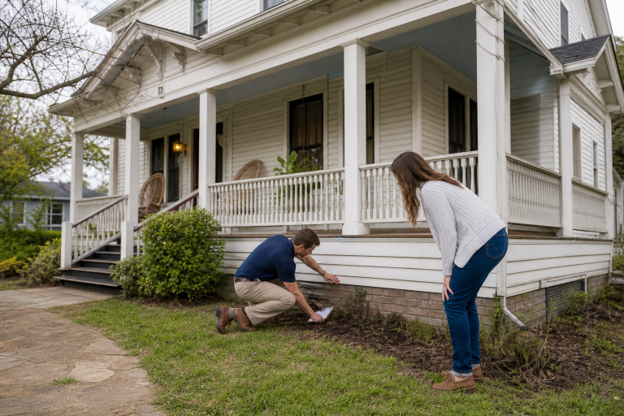
Cleburne is the county seat of Johnson County, about 30 miles south of Fort Worth, and it has one of the most appealing historic housing stocks in the DFW region. The downtown is full of preserved character, and the surrounding streets hold a mix of early-20th-century homes alongside newer builds. With a median home price around $230,000 — and vintage homes listing near a median of $295,000 — Cleburne is also one of the more affordable places in North Texas to own a home with real history.
That affordability and charm are exactly why buyers fall for these houses. But an older home is a different purchase than a five-year-old build. The character you’re paying for often comes attached to systems that are decades past their design life. The good news: almost every one of these issues is discoverable before you close, if you know what to look for and you use your inspection window well.
Here are the inspection priorities that matter most in a Cleburne historic home, ranked by how much they can cost you.
Foundation: the North Texas problem that never goes away
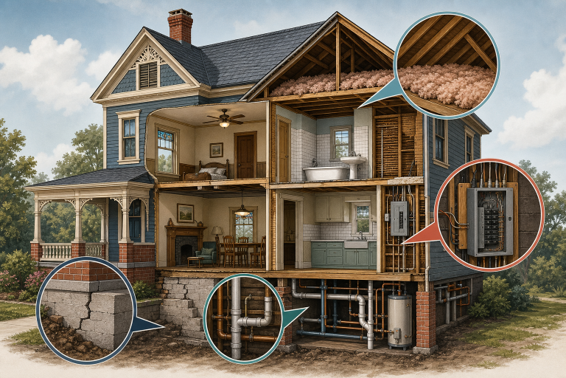
North Texas sits on expansive clay soil that swells when it’s wet and shrinks when it’s dry. That movement works on every foundation in the region, and older homes — especially those built before modern slab standards, on pier-and-beam or early concrete — show it first.
Watch for the classic signs during your showings and inspection:
• Stair-step cracks in exterior brick or interior drywall
• Doors and windows that stick or won’t latch
• Floors that slope or feel bouncy underfoot
• Gaps opening between walls, ceilings, and trim
Not every crack means a failing foundation — some movement is cosmetic and normal for the home’s age. But you can’t tell the difference from the couch. If your general inspector flags anything, bring in a structural engineer for a written evaluation. It’s a few hundred dollars that can save you from a five-figure surprise. Our overview of foundation issues in North Texas explains what repairs actually involve and how they affect resale.
Electrical: the wiring that can block your insurance
This is the one that catches Cleburne buyers off guard. Homes built before 1950 frequently have knob-and-tube wiring, and homes from the mid-century may have other outdated systems like ungrounded two-prong outlets or early aluminum branch wiring.
Here’s why it’s not just a code issue: most Texas homeowners insurance carriers will not write a policy on a home with active knob-and-tube wiring. No insurance means no mortgage. That can turn a “charming fixer” into a home you literally cannot finance until it’s rewired.
During your inspection, ask specifically:
• What type of wiring is in the walls, and is any of it knob-and-tube or ungrounded?
• Is there evidence of amateur or piecemeal electrical work?
• Does the panel have adequate capacity, or is it an outdated fuse box?
Rewiring an older home is one of the more expensive updates you can face, so get an electrician’s estimate during your option period if the inspector raises a flag. Knowing that number before you’re committed changes your negotiation entirely.
Plumbing: what’s behind the walls and under the yard
Older Cleburne homes often have galvanized steel supply pipes, which corrode from the inside out over decades. The symptoms are weak water pressure, discolored water, and eventually leaks inside the walls.
Just as important is the sewer line. Cast-iron and clay sewer lines in older homes are prone to cracking and root intrusion from mature trees — and a failed main line under a slab or yard is a genuinely costly repair. Consider paying for a sewer scope (a camera run through the line) as an add-on to your inspection. It’s inexpensive relative to what it can uncover.
Roof, insulation, and hazardous materials
A few more items belong on every historic-home checklist:
• Roof. Look at the age and condition, not just whether it’s leaking today. An older roof near the end of its life is a near-term cost and can affect your insurance.
• Insulation and energy efficiency. Many older homes were built with little or no wall insulation and single-pane windows. That won’t stop your purchase, but it shows up on every summer electric bill.
• Lead paint and asbestos. Homes built before 1978 may contain lead-based paint, and older flooring, pipe insulation, and popcorn ceilings can contain asbestos. Neither is necessarily a dealbreaker when it’s intact and undisturbed, but you want to know it’s there — especially if you plan to renovate, since disturbing these materials requires professional remediation.
Use your inspection window — and hire the right inspector
Texas gives buyers a powerful tool here: the option period. For a negotiated fee and a short window of days, you have the unrestricted right to terminate the contract for any reason. On a historic home, that window is where all of this due diligence happens — the general inspection, the structural engineer, the electrician’s estimate, the sewer scope. If the findings are worse than you expected, you can renegotiate the price or repairs, or walk away and get your earnest money back. Our guide to the Texas option period breaks down exactly how it works.
One more thing: hire an inspector who actually knows old houses. An inspector experienced with historic construction understands pier-and-beam foundations, original wiring methods, and period materials in a way that a checklist-only inspector may not. Ask about their experience with pre-war homes before you book.
This kind of layered inspection is exactly what we help our Cleburne buyers coordinate — because on a 90-year-old home, waiving or rushing the inspection is a risk that rarely pays off. Our take on when it makes sense to waive an inspection is short: on a historic home, don’t.
Frequently Asked Questions
Do historic homes in Cleburne need a special inspection?
They don’t require a legally separate inspection, but you should hire a general inspector experienced with older construction and budget for specialty add-ons — a structural engineer for the foundation, an electrician’s estimate if there’s outdated wiring, and a sewer scope for the main line. Standard inspections can miss issues specific to pre-war homes.
Will insurance cover a home with knob-and-tube wiring in Texas?
Usually not. Most Texas homeowners insurance carriers will not write a policy on a home with active knob-and-tube wiring, and without insurance you can’t get a mortgage. If an older Cleburne home still has knob-and-tube, budget for rewiring and get an estimate during your option period.
How much does it cost to fix a foundation on an older Cleburne home?
It depends entirely on the type and extent of movement, which is why a structural engineer’s written evaluation is worth the few hundred dollars it costs. North Texas clay soil affects nearly every older home to some degree, but not all movement requires major repair — some is cosmetic and stable.
Can I back out if the inspection on a historic home turns up problems?
Yes, if you’re within your option period. For a negotiated fee, the Texas option period gives you the unrestricted right to terminate the contract for any reason during a set window, which is when your historic-home inspections should happen. You can also use the findings to renegotiate price or repairs.
Are older homes in Cleburne a good value?
Cleburne offers some of the most affordable historic housing in the DFW region, with a median home price around $230,000 and vintage homes listing near $295,000. Whether a specific home is a good value depends on the condition of its major systems — which is exactly what a thorough inspection is designed to reveal.
The bottom line
A historic home in Cleburne can be a genuinely great buy — the character is real, and the prices are among the most reasonable in North Texas. The key is going in with clear eyes: prioritize the foundation, wiring, plumbing, roof, and hazardous materials, and use your option period to get real answers before you’re locked in.
If you’re considering an older home in Cleburne and want help lining up the right inspections and reading the results, we do this with our clients all the time. Reach out anytime.
About The Chad Smith Team
The Chad Smith Team at Realty of America is one of the top-producing real estate teams in the Dallas-Fort Worth Metroplex, with more than 22 years of experience, 2,915 homes sold, and recognition by RealTrends among the top 1% of real estate professionals nationwide. The team helps first-time buyers, sellers, relocation clients, and new construction buyers throughout Arlington, Mansfield, Fort Worth, Midlothian, Waxahachie, and surrounding DFW communities. Through this blog, the Chad Smith Team shares expert market insights and practical advice to help North Texas buyers and sellers make informed real estate decisions.