New Construction vs. Historic Homes in Cleburne, TX
Should you buy new construction or a historic home in Cleburne, TX?
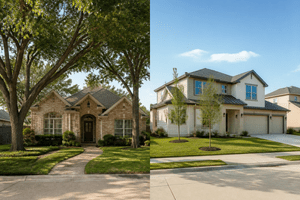
New construction in Cleburne — in communities like Burgess Meadows — gets you a move-in-ready home with a builder warranty and predictable maintenance costs, usually for a higher price per square foot. Historic homes near the downtown square and around Lake Pat Cleburne offer bigger lots, mature trees, and architectural character new subdivisions can’t replicate, but you’ll take on more inspection scrutiny and upkeep. The right call depends on whether you’d rather pay for predictability now or pay for character with a maintenance budget on standby.
By The Chad Smith Team | November 12, 2026
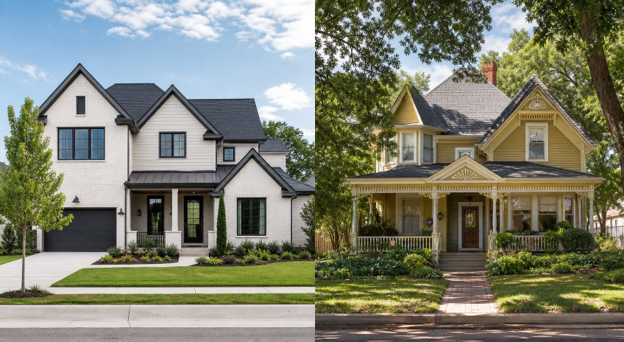
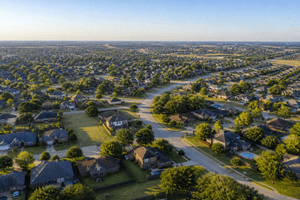
Cleburne is one of the few DFW-area markets where you can genuinely choose between these two paths without driving to a different city to do it. Johnson County has grown fast enough to pull in national builders, and Cleburne’s downtown core has stayed intact enough to keep its Victorian- and bungalow-era housing stock in real, livable condition. That combination is unusual, and it’s why this question comes up constantly with buyers looking at Cleburne.
Here’s how to think it through.
What you’re actually choosing between
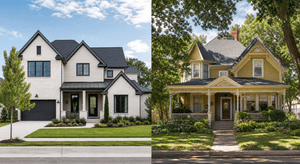
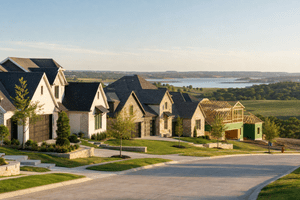
New construction in Cleburne is concentrated in master-planned communities on the edges of town, with Burgess Meadows — built out by HistoryMaker Homes — among the more visible ones. Century Communities, Legend Homes, National Home Corp, and a handful of regional builders like Cheldan Homes are also active in and around the city. Across the wider Cleburne market, new-build pricing spans roughly the high-$100Ks to well over $1 million, but the bulk of what’s actively selling in Cleburne itself lands in the high-$200Ks to $400Ks range, depending on lot size and floor plan.
What you get for that price:
• A home built to current energy codes, with newer HVAC, electrical, and plumbing systems under a builder warranty (typically one year on workmanship, longer on structural and mechanical components)
• A layout you can often still influence — cabinet finishes, flooring, and sometimes structural options — if you buy early enough in the build
• A predictable closing timeline once construction starts, though you’re still at the mercy of permitting and supply schedules if you’re buying pre-construction
• An HOA in most of these communities, which means monthly or annual dues and a set of deed restrictions you’ll want to read before you fall in love with a floor plan
Historic homes in Cleburne cluster around the downtown square, along the Bremond Block Historic District, and in the older residential streets radiating out from the Johnson County Courthouse — plus a distinct pocket of homes near Lake Pat Cleburne, inside Cleburne State Park, where lakefront and near-lake properties carry a real premium. The Save Old Cleburne driving tour catalogs more than 90 historic homes across styles that include Greek Revival, Queen Anne, Arts and Crafts, and classic bungalow — a genuine architectural range for a city this size. The Dotey-Kirkham Home is believed to be the oldest house still standing in Cleburne, and the Joiner-Long House carries a Recorded Texas Historic Landmark designation, giving you a sense of how seriously the city treats its older housing stock.
What you get for buying here:
• Larger, established lots with mature trees — something no new subdivision can offer on day one, no matter how good the landscaping package is
• Architectural details you’d pay a premium to replicate new: original millwork, high ceilings, wraparound porches, stained glass in some cases
• No HOA in most of these older neighborhoods, which means fewer restrictions but also less consistency in how neighboring properties are maintained
• A wider range of ages and conditions on major systems, which is exactly why the inspection matters more here than it does on a new build
The trade-offs that actually decide it
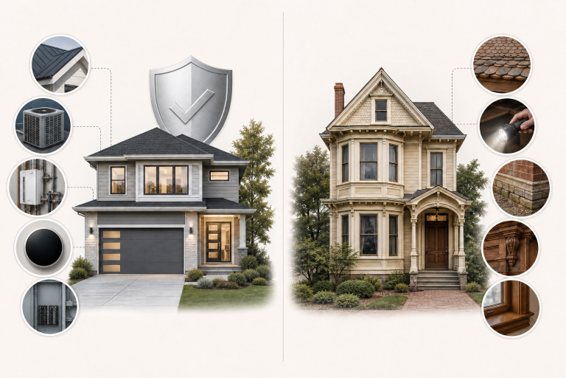
Once you get past the surface-level “character versus convenience” framing, three things tend to drive the actual decision.
Timeline and certainty. If you’re buying a home that’s already built — spec inventory in a new community, or a resale historic home — the timeline looks similar: an option period, financing, and a closing scheduled through a title company, generally 30 to 45 days out. The gap opens up if you’re buying pre-construction. Then you’re looking at months, sometimes longer, with a closing date that can move if the builder hits permitting delays or material backorders. If your move has a hard deadline, that’s worth weighing heavily.
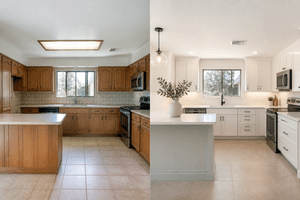
Money now versus money later. New construction front-loads its costs into the purchase price but backloads very little maintenance risk for the first several years — that’s what the warranty is for. A historic home usually costs less per square foot to buy, but you need to budget for the possibility of a roof, foundation, or HVAC system nearing the end of its life. This is where a strong inspection, done by someone who understands homes from this era, earns its fee. It’s also where the seller’s disclosure — the Texas Seller’s Disclosure Notice — becomes something you actually read line by line rather than skim.
Growth and commute. Johnson County’s growth is part of why Cleburne now has this much new-construction inventory to begin with — builders don’t show up in a market that isn’t adding people. Cleburne sits at the starting point of the Chisholm Trail Parkway, which puts central Fort Worth within roughly 35 to 40 minutes under normal traffic, and that access has made the city a legitimate commuter option rather than just a small county seat. If you want a broader read on how that growth pattern is playing out across the metroplex, our post on understanding DFW Metroplex growth and what it means for homeowners walks through the trend in more detail — the same forces pulling new builders into Mansfield are pulling them into Cleburne now, just a few years behind.
One more thing worth naming plainly: Texas is a non-disclosure state, so you won’t find exact sold prices published anywhere online, including for historic homes near the square or new builds in Burgess Meadows. Listing sites can show you what’s currently asking, but the real comparable sales data — what similar homes actually closed for — lives in the MLS and is something we pull for you directly rather than something you can piece together yourself from public records.
Which one actually fits you
If you want a fixed monthly cost, a warranty backing up every major system, and you don’t mind an HOA, new construction removes a lot of guesswork — especially if you’re relocating on a schedule and want to walk into a home with nothing to fix in year one.
If you want a lot that already has 60-year-old oak trees, a home with a layout and details you can’t special-order, and you’re comfortable budgeting for maintenance as it comes up, a historic home near downtown or Lake Pat Cleburne gets you something a new subdivision simply won’t. It also tends to be a stronger match if you’re buying with resale character in mind — historic districts hold a kind of appeal that doesn’t come and go with builder trends. For a sense of how new-construction inventory has been trending elsewhere in the metroplex, take a look at our roundup of new construction communities to watch right now — it’s useful context even if your search stays centered on Cleburne.
Sellers should read this the same way buyers do. If you own a historic home near the square and you’re weighing a sale, your competition isn’t just other historic listings — it’s every new-construction spec home sitting finished in Burgess Meadows with a warranty attached. Knowing how your home’s price per square foot stacks up against both categories changes how you price and how you market it.
Frequently Asked Questions
Is new construction more expensive than a historic home in Cleburne? Generally, yes, on a per-square-foot basis. New builds carry the cost of current materials, labor, and code compliance, while historic homes are priced against their age and condition. That said, a well-located historic home near the downtown square or Lake Pat Cleburne can close the gap fast, especially if it’s been updated.
Do historic homes in Cleburne have restrictions on renovations? Some properties within recognized historic districts, like the Bremond Block, may carry preservation guidelines depending on their designation. If you’re considering exterior changes to a home with any historic landmark status, check with the City of Cleburne’s historic preservation office and consult a professional before assuming what’s allowed — this isn’t something to guess on.
How long does it take to close on new construction versus a resale historic home? A resale historic home typically closes in 30 to 45 days through a title company, similar to any existing-home purchase. Pre-construction new builds take considerably longer — often several months — since you’re waiting on the builder’s schedule, not just financing and title work.
Are there HOA fees in Cleburne’s new construction communities? Most new master-planned communities in and around Cleburne, including those built out by national builders, do carry an HOA with monthly or annual dues. Most of Cleburne’s older, historic neighborhoods do not have an HOA, though you should always confirm deed restrictions before assuming either way.
Can I see actual sold prices for homes in Cleburne before I make an offer? Not through public records — Texas is a non-disclosure state, so exact sold prices aren’t published. We pull comparable sales data directly from the MLS to help you understand what similar homes in Cleburne have actually closed for, whether you’re comparing a new build to a historic resale or two homes in the same category.
New construction and historic homes solve different problems in Cleburne, and neither one is the objectively “better” choice — it comes down to whether you’re optimizing for predictability or character, and how much maintenance budget you want to carry. If you’re thinking through this for your own situation, we’re happy to walk you through the numbers. Reach out anytime.
About The Chad Smith Team
The Chad Smith Team at Realty of America is one of the top-producing real estate teams in the Dallas-Fort Worth Metroplex, with more than 22 years of experience, 2,915 homes sold, and recognition by RealTrends among the top 1% of real estate professionals nationwide. The team helps first-time buyers, sellers, relocation clients, and new construction buyers throughout Arlington, Mansfield, Fort Worth, Midlothian, Waxahachie, and surrounding DFW communities. Through this blog, the Chad Smith Team shares expert market insights and practical advice to help North Texas buyers and sellers make informed real estate decisions.