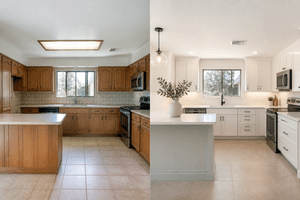
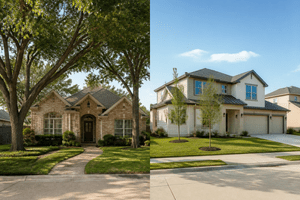
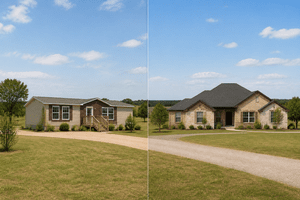
Updating a Dated Bedford Home: Renovate or Buy Move-In Ready?
Should you renovate a dated Bedford home or buy one that’s already updated?
It depends on your timeline, your tolerance for construction, and your financing options. A dated Bedford home usually costs less upfront and can be customized to your taste, but it comes with renovation loans, contractor scheduling, and weeks (sometimes months) of living around a project. A move-in ready home costs more per square foot but lets you skip the process entirely. Buyers who value control and don’t mind a project often come out ahead renovating; buyers who want to be settled quickly usually do better paying the premium.
By The Chad Smith Team | November 11, 2026
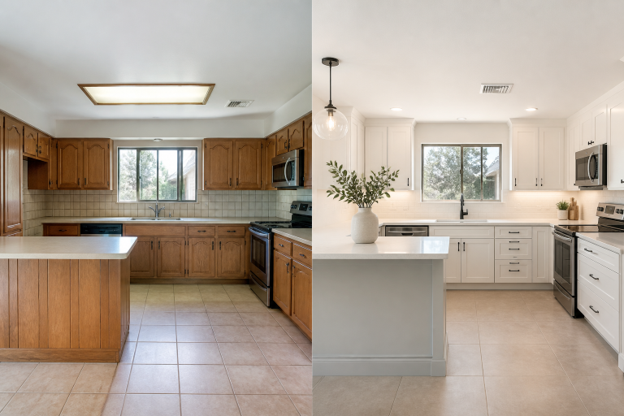
Most of the housing stock in Bedford went up in the 1970s and 1980s, during the city’s biggest growth stretch as the Mid-Cities corridor filled in between Fort Worth and the airport. That means a large share of what’s on the market today — brick ranch-style homes on generous lots, tucked into established streets — is somewhere between 40 and 55 years old. Original kitchens, single-pane windows, and HVAC systems nearing the end of their service life are common, not the exception.
That leaves a lot of Bedford buyers standing at the same fork in the road: buy the dated home at a lower price and update it over time, or pay more for something that’s already been done. Neither answer is universally right. Here’s how to think through it.
What you’re actually weighing
The sticker price on a dated home almost never tells the full story. A 1978 ranch listed $30,000–$50,000 below a recently renovated comp down the street can look like the obvious win — until you price out a new roof, HVAC replacement, kitchen, and both bathrooms. Depending on scope, that work can easily eat most or all of the “discount” you thought you were getting.
On the other hand, sellers who’ve already renovated typically price in every dollar of that work, plus a margin for the convenience of not having to manage it yourself. In a competitive Mid-Cities market where well-priced Bedford homes are seeing multiple offers and moving in a matter of weeks, that convenience premium is real — but so is the flexibility of buying something with room to make your own decisions on finishes.
A few questions tend to clarify which path fits you better:
• How soon do you need to be settled? A move can already be stressful. If you’re relocating for work, coordinating school-year timing, or simply don’t want to live through demolition, move-in ready removes a major variable.
• Do you have cash reserves beyond your down payment? Renovation costs almost always run over initial estimates, especially on homes this age where inspectors regularly find roofing, plumbing, or electrical systems at or past their expected lifespan.
• What’s your risk tolerance for surprises? Opening a 1970s wall can reveal outdated wiring or plumbing that wasn’t visible during inspection. That’s not a reason to avoid older homes — it’s a reason to budget a contingency.
• Do you want input on finishes, or would you rather someone else already made those decisions? This is often the deciding factor. Buyers who have a strong opinion about layout, cabinetry, and flooring tend to prefer buying dated and doing the work themselves.
Financing a renovation: what’s actually available
If you’re leaning toward buying a dated Bedford home and updating it, you don’t have to pay cash out of pocket for the whole project. A few financing paths are worth knowing about before you start touring homes:
• FHA 203(k) loan. This rolls your purchase price and renovation costs into a single government-backed mortgage, with down payments starting around 3.5%. It’s a solid option if your credit is still building, but it comes with lifetime mortgage insurance and more restrictions on cosmetic-only upgrades — the work generally needs to address livability or structural issues.
• Fannie Mae HomeStyle Renovation loan. This is the conventional version of the same idea. It typically requires a stronger credit profile, but it allows more flexibility — pools, landscaping, and larger cosmetic projects are fair game — and mortgage insurance can be removed once you reach 20% equity, unlike FHA’s MIP.
• Home equity line of credit (HELOC). If you already own a home and are updating it rather than financing a purchase-and-renovate at the same time, a HELOC lets you draw funds as work progresses. This is common for Bedford homeowners doing a phased renovation rather than an all-at-once overhaul.
• Cash-out refinance. For owners with meaningful equity, refinancing and pulling cash out can fund a renovation at a single fixed rate, though it means resetting your mortgage terms.
Each option has trade-offs around down payment, credit requirements, and how much flexibility you get in scope of work. A lender who’s worked renovation loans in this area can walk you through which one fits your specific numbers — that’s a conversation worth having early, before you fall in love with a house that needs more work than the loan program allows.
What renovation actually costs and takes

Costs vary widely depending on scope, but a few general ranges are useful for planning purposes. A full bathroom renovation typically runs $15,000 to $45,000 depending on size and finish level, and most projects take somewhere between one and four weeks once work begins — longer if permitting, material backorders, or surprises behind the walls come into play. Kitchens generally take longer and cost more, especially if you’re moving plumbing or gas lines rather than keeping the existing footprint.
The timeline question matters as much as the cost question. If you’re renovating before you move in, you’re paying a mortgage (or rent) somewhere else while the work happens. If you’re renovating after closing, you’re living in a construction zone, which is manageable for cosmetic work but genuinely disruptive for anything touching kitchens, bathrooms, or systems.
How this plays out in Bedford specifically
Bedford’s Mid-Cities location — close to Highway 121, 183, and the DFW area’s job centers — keeps demand steady for both dated and updated inventory. Move-in ready homes in good condition tend to attract quick, competitive offers, which means if you’re planning to buy a renovated home, you’ll want financing lined up and ready to move fast.
Dated homes, meanwhile, sit in a wider price range and attract a mix of buyers: investors, buyers using renovation loans, and buyers simply looking for a lower entry price with the intention of updating over a few years rather than all at once. That last group is common in Bedford — buyers who tackle the kitchen first, then bathrooms, then flooring, spreading the investment out rather than financing everything through the mortgage. If you’re weighing neighborhoods and price points across the city, our Bedford community page is a useful starting point for seeing what’s currently available at both ends of that spectrum.
There’s no universally correct answer between renovating and buying move-in ready. What matters is being honest about your budget, your timeline, and how much project management you actually want to take on. Some buyers find real value in a dated home with good bones in a strong location. Others decide the premium for move-in ready is worth every dollar just to avoid living through a renovation.
Frequently Asked Questions
Is it cheaper to renovate a dated home than buy one that’s already updated?
Not always. The lower purchase price on a dated home can get absorbed quickly once you price out major systems like roofing, HVAC, and plumbing, especially in homes from the 1970s and 1980s that are common in Bedford. It’s worth getting rough contractor estimates before assuming a renovation will save you money over buying updated.
What’s the difference between an FHA 203(k) loan and a HomeStyle renovation loan?
An FHA 203(k) loan is government-backed with a lower down payment and more lenient credit requirements, but it carries lifetime mortgage insurance and tighter restrictions on cosmetic-only work. A Fannie Mae HomeStyle loan is conventional, generally requires stronger credit, but allows more renovation flexibility and lets you drop mortgage insurance once you build enough equity.
How long does a typical home renovation take in Bedford?
It depends heavily on scope. A single bathroom remodel often takes one to four weeks once work begins, while a full kitchen or whole-home renovation can stretch several months, particularly if permitting or material delays come into play. Homes built in the 1970s and 1980s sometimes reveal additional work once walls are opened, which can extend timelines further.
Can I use a renovation loan to buy a dated Bedford home and fund the updates at the same time?
Yes. FHA 203(k) and Fannie Mae HomeStyle loans are both designed to combine the purchase price and renovation budget into a single mortgage, so you’re not juggling separate financing for the home and the work. Your lender can help determine which program fits your credit profile and the scope of renovation you’re planning.
Are older homes in Bedford harder to get financed or insured?
Not typically, as long as major systems are functional or accounted for in a renovation loan. Insurers and lenders may ask more questions about roof age, electrical panels, or plumbing materials on homes from the 1970s and 1980s, so it helps to have a recent inspection or contractor estimate on hand when you’re shopping.
If you’re trying to figure out whether a specific dated home in Bedford is worth the renovation or whether a move-in ready option makes more sense for your situation, we’re happy to walk through it with you — including rough renovation cost ranges and which lenders in the area handle 203(k) and HomeStyle loans well. Reach out anytime, or browse current Bedford listings to see what’s available at both ends of the spectrum right now.
About The Chad Smith Team
The Chad Smith Team at Realty of America is one of the top-producing real estate teams in the Dallas-Fort Worth Metroplex, with more than 22 years of experience, 2,915 homes sold, and recognition by RealTrends among the top 1% of real estate professionals nationwide. The team helps first-time buyers, sellers, relocation clients, and new construction buyers throughout Arlington, Mansfield, Fort Worth, Midlothian, Waxahachie, and surrounding DFW communities. Through this blog, the Chad Smith Team shares expert market insights and practical advice to help North Texas buyers and sellers make informed real estate decisions.