Understanding DFW Metroplex Growth: What It Means for Mansfield Homeowners
Why Is the Dallas-Fort Worth Metroplex Growing So Fast, and What Does It Mean for Mansfield Homeowners?
The Dallas-Fort Worth Metroplex is adding roughly 300+ new residents a day, driven by corporate relocations, job growth, and international migration, with the region’s population now topping 8.7 million. For homeowners in Mansfield, that growth generally supports property values, brings new infrastructure and employers closer to home, and keeps housing demand strong — but it also means more competition for resale inventory and more construction traffic in the years ahead.
By The Chad Smith Team | August 14, 2026
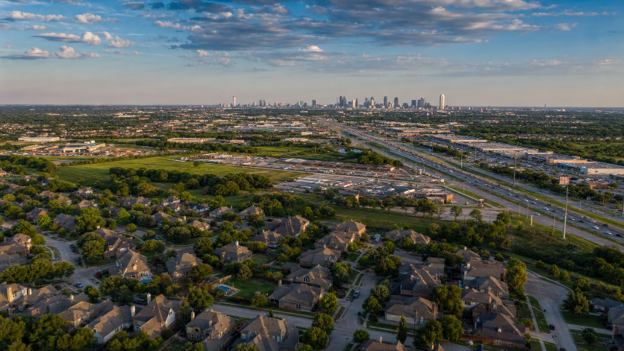
If you own a home in Mansfield, you’ve probably noticed the cranes, the new subdivisions going up along the edges of town, and the traffic that seems to get a little heavier every year. That’s not your imagination. Dallas-Fort Worth is one of the fastest-growing metro areas in the country, and Mansfield sits right in the middle of that expansion.
Growth headlines can feel abstract — population numbers, job counts, corporate press releases. But if you own a home here, or you’re thinking about buying one, this growth touches your daily life in very concrete ways: what your home might be worth, how long your commute takes, what new employers show up nearby, and how much new housing gets built around you.
Here’s what’s actually happening across the Metroplex right now, and what it means if you own a home — or plan to — in Mansfield.
The Numbers Behind DFW’s Growth
The scale of DFW’s growth is genuinely unusual for a metro this size. The region added around 234,000 new residents in a recent 12-month period, pushing the total population past 8.7 million. That’s an annual growth rate near 2.8%, well above the national average, and it’s enough to put DFW on pace to potentially pass Chicago as the country’s third-largest metro sometime this decade.
Mansfield itself is growing even faster than the regional average. The city has grown from about 72,800 residents at the 2020 census to more than 86,000 today — an increase of nearly 19% in just a few years. City leaders expect that number to keep climbing, with projections showing Mansfield’s population could roughly double by 2040.
Job growth is following the same pattern. DFW added tens of thousands of jobs over the past year, with professional and business services, trade and transportation, construction, and government all adding positions. That job growth matters because it’s the engine behind population growth — people move where the jobs are, and right now, a lot of jobs are here.
Corporate relocations are a big part of that story. DFW has led the nation in corporate headquarters relocations for several years running, with major companies moving operations — and jobs — into the region. When a company relocates its headquarters to North Texas, it doesn’t just bring a handful of executives. It brings a supply chain of employees who need somewhere to live, which ripples outward into every suburb within a reasonable commute, including Mansfield.
What Continued Growth Means for Mansfield Home Values and Housing Supply
Growth and home values are connected, but not in a simple, straight-line way. More people moving into a region generally means more demand for housing, which tends to support prices over time — especially in cities like Mansfield that still have room for new development but also plenty of established neighborhoods that aren’t getting any bigger.
A few things tend to hold true in a growing market like this one:
• Demand stays steady even when the broader market cools. When new employers and new residents keep arriving, there’s a consistent pool of buyers looking for homes, which helps cushion Mansfield against the kind of sharp value swings you sometimes see in slower-growing markets.
• New construction and resale homes compete for the same buyers. As builders add new subdivisions to keep up with demand, existing homeowners are competing with brand-new inventory. That affects pricing strategy, timing, and what buyers expect in terms of condition and updates. If you’re weighing whether to buy new or existing, it’s worth understanding how new construction and resale homes compare in Mansfield before you commit to either path.
• Infrastructure investment follows population growth, and it affects value street by street. Road expansions, new interchanges, and utility upgrades are a direct response to growth, and they can meaningfully change what a specific property is worth. We’ve written before about how a specific road project has shifted home values in Mansfield, and that kind of local infrastructure change is a good example of why growth trends matter down to the individual street, not just the metro as a whole.
• Housing supply hasn’t fully caught up with demand. Even with new construction happening across the outer edges of the Metroplex, the pace of building hasn’t always kept up with how fast people are moving in, which keeps upward pressure on both home prices and rents in established areas.
None of this means every home in Mansfield appreciates at the same rate, or that growth guarantees a certain outcome for your specific property. Your home’s value depends on its condition, location within the city, lot size, and dozens of other details. But understanding the broader growth trend gives you useful context for why the market behaves the way it does.
How Infrastructure and New Employers Shape Your Day-to-Day
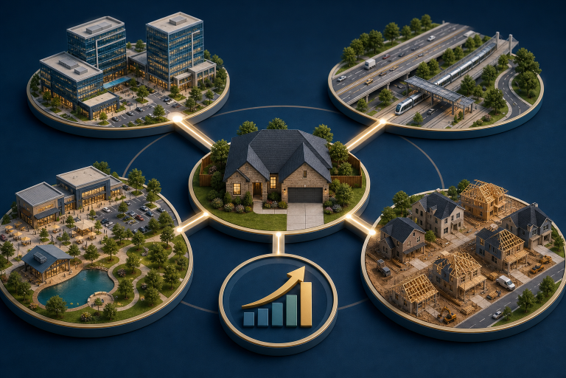
Growth isn’t just a number on a chart — it shows up in your commute, your errands, and the amenities within reach of your front door.
Mansfield’s own city plan reflects this directly. Local leaders have approved plans for new business districts, including an innovation corridor designed to house office space and company headquarters, and an entertainment district anchored by a new soccer complex built in partnership with FC Dallas, timed around the 2026 FIFA World Cup activity in North Texas. There’s also a broader downtown redesign in progress, aimed at improving traffic flow, parking, and walkability as more people move through the city center.
Further out, Heritage Parkway is being developed with a new city hall, town center, and mixed housing, giving the city another hub of activity beyond its historic downtown.
For homeowners, these projects matter in a few practical ways:
• New employers close by can shorten commutes. As companies establish offices and operations closer to Mansfield, some residents may find they no longer need to drive as far for work, which is one of the quieter but more meaningful benefits of regional job growth.
• New retail, dining, and entertainment options often follow residential growth. As population density increases, it tends to support more businesses opening nearby, giving homeowners more options within a short drive.
• Road and infrastructure projects can mean short-term disruption for long-term benefit. Construction on roads, utilities, or new developments can be inconvenient in the moment, but it’s usually a sign that the city is investing in capacity to handle more residents and more traffic over time.
It’s worth remembering that growth also brings practical costs. More residents and more development typically mean local governments need more revenue to fund roads, schools, and services, which can influence property tax rates over time. If you want a deeper look at how that plays out locally, our breakdown of Tarrant County property taxes is a useful next step.
What This Means If You’re Buying or Selling in Mansfield
If you already own a home in Mansfield, continued regional growth is generally a favorable long-term backdrop — it supports demand, brings new amenities and employers within reach, and tends to keep your home competitive in the broader DFW market.
If you’re thinking about buying, growth means you’re likely competing with other buyers who are also drawn to Mansfield’s mix of established neighborhoods and new development. Understanding where the city is investing — new business districts, road projects, town centers — can help you think through which parts of town might see the most change over the next several years.
Either way, growth trends are useful context, not a substitute for a property-specific conversation. Your home, or the home you’re considering, has its own story that regional numbers can’t tell you.
If you’re curious how these broader DFW growth trends connect to your specific home or your home search in Mansfield, we’re happy to talk through it. No pressure, no obligation — just a conversation grounded in what’s actually happening in this market.
Frequently Asked Questions
Is Dallas-Fort Worth still growing as fast as it used to?
Yes. DFW continues to add well over 200,000 residents a year and remains one of the fastest-growing large metro areas in the country, driven by both international migration and continued job creation, even as the pace has moderated slightly from its peak years.
Does DFW’s population growth mean Mansfield home values will keep rising?
Sustained population and job growth generally support housing demand, which tends to help home values over time, but individual property values still depend on condition, location, and local supply. Growth is a helpful backdrop, not a guarantee for any specific home.
Why are so many companies relocating their headquarters to Dallas-Fort Worth?
DFW has led the nation in corporate headquarters relocations for several years, drawing companies with its central location, workforce availability, and business-friendly environment. Those relocations bring jobs, which brings more residents, which is a major driver behind the region’s continued housing demand.
How is Mansfield specifically responding to regional growth?
Mansfield has approved plans for new business districts, including an innovation corridor for office and headquarters space and an entertainment district with a new soccer complex, along with a downtown redesign focused on traffic flow and walkability. These projects are the city’s direct response to a population that’s grown nearly 19% since 2020.
Should growth affect my timeline for buying or selling in Mansfield?
Growth trends are useful for understanding the broader market, but your personal timeline should be driven by your own circumstances — your finances, your home’s condition, and your goals. A local market analysis is the best way to understand how growth trends apply to your specific situation.
If you’re thinking through what any of this means for your own home or your next move in Mansfield, we’re happy to walk through it with you. Reach out anytime — no pressure, just answers.
About The Chad Smith Team
The Chad Smith Team at Realty of America is one of the top-producing real estate teams in the Dallas-Fort Worth Metroplex, with more than 22 years of experience, 2,915 homes sold, and recognition by RealTrends among the top 1% of real estate professionals nationwide. The team helps first-time buyers, sellers, relocation clients, and new construction buyers throughout Arlington, Mansfield, Fort Worth, Midlothian, Waxahachie, and surrounding DFW communities. Through this blog, the Chad Smith Team shares expert market insights and practical advice to help North Texas buyers and sellers make informed real estate decisions.