Straddling Two Counties: What Burleson Buyers Should Know About Taxes
Why Do Some Burleson Homes Have Higher Property Taxes Than Others Nearby?
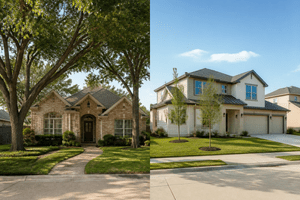
Two homes a few streets apart in Burleson can carry noticeably different tax bills, and the reason usually isn’t the house — it’s the county line running through the city. Burleson sits mostly in Johnson County, with its northern edge extending into Tarrant County, and each county sets its own county-level tax rate on top of the shared city and school district rates. The Johnson County side tends to run higher overall, largely because Johnson County’s county-level rate is close to double Tarrant County’s. Before you write an offer on a specific Burleson address, check which appraisal district it falls under — Johnson Central Appraisal District or Tarrant Appraisal District — because that answer changes your actual carrying cost.
By The Chad Smith Team | November 12, 2026
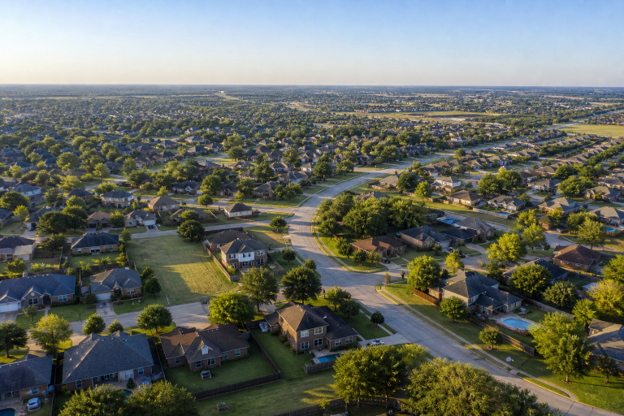
Burleson doesn’t sit neatly inside one county, and that trips up more buyers than you’d expect. If you’re comparing two listings in Burleson and the tax estimates look different for no obvious reason, this is almost always why.
How Burleson Ended Up Split Between Two Counties
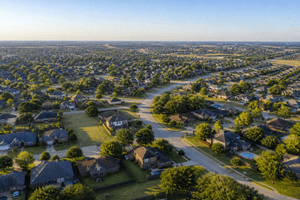
Burleson’s city limits grew outward over decades, expanding north toward Fort Worth and south along the I-35W corridor toward Alvarado. Somewhere along that growth, the city crossed from Johnson County into Tarrant County. Today, the older core of Burleson and most of its southern and central neighborhoods sit in Johnson County, while a smaller stretch of the city’s northern edge falls into Tarrant County.
The city itself doesn’t change. Burleson city services, the Burleson city tax rate, and — in most cases — Burleson Independent School District boundaries apply regardless of which county a given address sits in. What changes is who appraises the property and who collects the county-level portion of the tax bill.
That distinction matters because the county-level rate is where the real gap shows up:
• Johnson County taxes a Burleson property through the county’s general fund rate plus a farm-to-market/lateral road (FMLR) rate and an emergency services district rate, which together add up to roughly $0.44–$0.45 per $100 of assessed value.
• Tarrant County’s general fund rate, by comparison, runs closer to $0.19 per $100 of assessed value for the same fiscal year.
Layer on the shared pieces — a Burleson city rate around $0.72 per $100 and a Burleson ISD rate around $1.26 per $100, both approved in 2025 — and you get two different totals depending on which side of the line you’re on. Blended effective rates for Burleson properties tend to land in the neighborhood of 2.2% to 2.4% of assessed value on the Johnson County side versus roughly 1.7% to 1.8% on the Tarrant County side. On a $400,000 home, that gap can mean a difference of a few thousand dollars a year — enough to matter when you’re comparing two homes at the same list price.
This isn’t a hidden fee or a surprise closing cost. It’s public information. But it’s easy to miss if you’re comparing listings by price and square footage alone and never look at which appraisal district actually values the property.
How to Confirm Which County a Burleson Property Falls Into
You don’t have to guess, and you shouldn’t rely on the mailing ZIP code or which side of a particular road a house sits on — county lines don’t always follow the roads you’d expect. A few reliable ways to check:
• Look up the address directly. Both Johnson Central Appraisal District and Tarrant Appraisal District let you search by address. Whichever one returns a match is the appraisal district — and the county — that governs that property’s valuation.
• Use the state’s property tax database. Texas.gov’s property tax lookup tool links out to the correct local appraisal district for any address in the state, which is a quick way to confirm you’re looking at the right jurisdiction.
• Check the listing’s tax record. MLS listings typically show the appraisal district and account number for a property. If it’s not listed, ask your agent to pull it before you tour or write an offer.
• Don’t assume based on a neighboring house. Because the county line cuts through parts of Burleson rather than following a highway or river, adjacent subdivisions — sometimes adjacent lots — can fall on opposite sides.
If you’re comparing a shortlist of Burleson homes, it’s worth checking this for every address on the list, not just the one you’re most interested in. It takes a few minutes and it can reorder your priorities once you see the actual numbers side by side.
What This Means for Your Offer and Your Monthly Payment
Property taxes get baked into your monthly payment through escrow, so a higher effective rate doesn’t just show up once a year — it raises what your lender collects every month. When you’re comparing two similarly priced Burleson homes, run the tax math for both before you decide which one to pursue. A slightly lower purchase price on the Tarrant County side, or a slightly larger home on the Johnson County side, might net out very differently once you factor in the ongoing tax difference.
The homestead exemption helps regardless of which county you land in. Texas voters raised the school district homestead exemption to $140,000 starting with the 2025 tax year, and that reduces the taxable value used to calculate your Burleson ISD portion no matter which appraisal district handles your account. Homeowners who are 65 or older or who qualify as disabled can claim an additional $60,000 school district exemption, along with a tax ceiling that locks their school taxes from rising further. Some cities and counties layer on their own optional exemptions too, which is another reason to check the specific rates and exemptions tied to your exact address rather than relying on a general estimate. Our guide to reading a DFW-area property tax statement walks through how to interpret the line items once your bill arrives, and the same breakdown applies whether you land in Johnson or Tarrant County.
Since Texas doesn’t publish exact sold prices, tax records and appraisal district values are some of the most useful public numbers you have when comparing homes. That makes it worth getting right before you’re under contract, not after.
Burleson’s growth is part of why this keeps coming up. The city has approved Tallgrass, a planned community of roughly 4,000 homes and a million square feet of commercial space near the Chisholm Trail Parkway and FM 1902, with the first phase breaking ground in 2026. As new subdivisions fill in on both sides of the county line, more buyers are running into this exact question — and more agents are fielding it. If you want a sense of how this growth fits into the broader Fort Worth market, our post on what DFW Metroplex growth means for homeowners is a good next read.
The only way to know for sure which side of the line your target property falls on is to check with someone who works this market every day. We pull the appraisal district and tax history on every Burleson property we show, so you’re comparing real numbers instead of guessing based on a neighborhood name.
Frequently Asked Questions
Does Burleson have one city tax rate or two? Burleson has one city tax rate that applies citywide, regardless of whether a specific address sits in Johnson or Tarrant County. The difference in your overall bill comes from the county-level rate and, in some cases, differing local exemption rules — not from the city portion itself.
Is Burleson ISD affected by which county a home is in? In most cases, no — Burleson Independent School District boundaries don’t follow the county line, so a home’s school tax rate is typically determined by which school district it’s zoned to, not which county appraises it. It’s still worth confirming your specific address’s ISD assignment, since district boundaries can be irregular near city edges.
Can I choose which county appraisal district values my home? No. Your property is appraised by whichever county it physically sits in, based on the parcel’s location, and you can’t select the other district even if its rates are lower. The only way to end up on a particular side is to buy a home whose address already falls there.
How much difference does this actually make on a monthly payment? It depends on the home’s value, but the gap between Johnson County’s and Tarrant County’s combined rates can run several hundred to a few thousand dollars a year on a typical Burleson home, which shows up as a real difference in your monthly escrow payment. Running the numbers for your specific price range and target address is the only way to know your actual figure.
Where do I find my property’s exact tax rate before I make an offer? Search the address directly on Johnson Central Appraisal District’s or Tarrant Appraisal District’s website, or ask your agent to pull the account before you write an offer. Both sites show the appraised value, taxing entities, and current rates tied to that specific parcel.
Buying in Burleson means paying attention to a detail most buyers in other DFW cities never have to think about — which county your address falls into. Get that answer early, and the rest of your tax math is straightforward. If you’re thinking through this for your own situation, we’re happy to walk you through the numbers. Reach out anytime.
About The Chad Smith Team
The Chad Smith Team at Realty of America is one of the top-producing real estate teams in the Dallas-Fort Worth Metroplex, with more than 22 years of experience, 2,915 homes sold, and recognition by RealTrends among the top 1% of real estate professionals nationwide. The team helps first-time buyers, sellers, relocation clients, and new construction buyers throughout Arlington, Mansfield, Fort Worth, Midlothian, Waxahachie, and surrounding DFW communities. Through this blog, the Chad Smith Team shares expert market insights and practical advice to help North Texas buyers and sellers make informed real estate decisions.