Established vs. Newer Arlington Neighborhoods: The Trade-offs
Should You Buy in an Established or Newer Arlington Neighborhood?
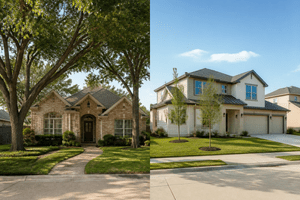
Established Arlington neighborhoods generally offer larger, mature lots, more tree canopy, lower HOA fees, and renovation potential at a lower price per square foot. Newer subdivisions, concentrated mostly in south Arlington, offer modern floor plans, amenity-rich HOAs, and less maintenance up front, usually at a higher price point. The right choice comes down to whether you’d rather pay for updates now or take them on yourself later.
By The Chad Smith Team | November 10, 2026
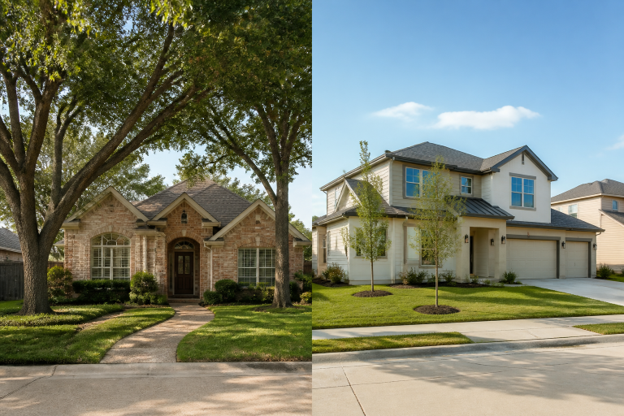
Arlington sits in an unusual spot for a Dallas-Fort Worth suburb: it’s largely built out, but it’s still adding new subdivisions along its southern edge. That means buyers here aren’t choosing between one uniform housing stock — they’re choosing between two genuinely different ownership experiences that happen to sit inside the same city limits.
If you’ve been touring homes in both directions, you’ve probably noticed the split already. A 1970s brick home on a quarter-acre lot in central or southwest Arlington feels nothing like a 2022-built home in a master-planned community near the southern edge of the city. Neither is the “right” answer across the board. It depends on what you want to spend your time and money on.
Lot Size and Tree Canopy
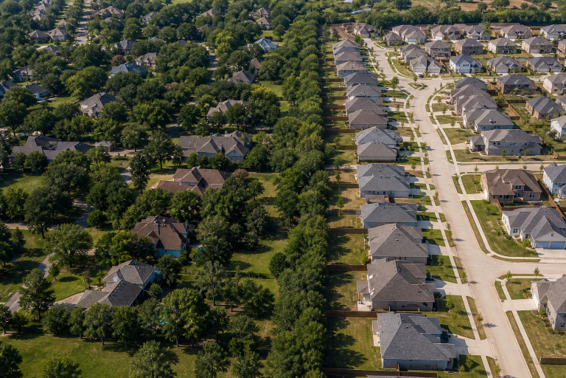
This is usually the first thing buyers notice when they cross from an established neighborhood into a newer one.
Older subdivisions in central, north, and southwest Arlington were platted decades ago, often with wider lots and mature trees that have had 30, 40, or even 50 years to grow in. Areas like the Southwest Corridor near Pantego and Dalworthington Gardens, along with pockets like Country Club Hills, are known for winding streets, established landscaping, and lot sizes that are hard to replicate in new construction. That mature canopy does more than look good — it provides real shade coverage that can meaningfully affect cooling costs and outdoor comfort during a North Texas summer.
Newer subdivisions, concentrated mostly along Arlington’s southern edge, are built on land that was cleared and graded for development. Lots tend to be efficiently sized to fit more homes per street, and landscaping starts from scratch — a few young trees and sod that will take a decade or more to reach the coverage an established block already has. Some newer communities are building in larger lots as a selling point to compete with resale inventory, so this isn’t universal, but tree canopy is the one thing a builder genuinely cannot deliver on day one.
HOA Structure and Amenities
Established neighborhoods in Arlington often have light or no HOA involvement — some have a voluntary civic association, others have nothing at all. That means lower recurring costs, but also fewer shared amenities and less consistency in how neighbors maintain their properties.
Newer subdivisions almost always come with a mandatory HOA, and the dues buy something tangible: community pools, walking trails, playgrounds, and maintained common areas. Communities on Arlington’s growing edge have leaned into this model, building out trail systems and neighborhood parks as core selling points rather than afterthoughts. If you value having amenities within walking distance and don’t mind paying a monthly or annual fee for them, that’s a real point in favor of newer construction. If you’d rather control your own budget and skip the HOA meetings, an established neighborhood gives you more flexibility.
Price Per Square Foot and Renovation Potential
Across Arlington, the average price per square foot has been running in the high $180s to around $190 in 2026, but that figure hides a wide range depending on age and condition.
Established homes — particularly ones that haven’t been updated in a while — typically sell at a lower price per square foot than comparable new construction. That gap is the trade-off: you’re buying equity in a home that may need a new roof, updated electrical, or a kitchen remodel within the first few years. For buyers who are comfortable managing a renovation or want to build sweat equity, that gap can be the difference between affording a bigger lot in a location they love versus stretching for new construction farther out.
Newer homes carry a premium for exactly the opposite reason — you’re paying for the fact that the roof, HVAC, water heater, and appliances are new and under warranty. There’s real value in that if avoiding a renovation project is a priority, but it does mean less room to negotiate and a smaller gap between list price and what you’ll actually spend to move in and stay comfortable.
If you’re weighing this trade-off for a specific budget, it helps to look at actual inventory side by side rather than city-wide averages — our Arlington community page is a good starting point for comparing what’s currently listed in both older and newer pockets of the city.
Proximity to the Entertainment District
Arlington’s Entertainment District — home to AT&T Stadium, Globe Life Field, and Texas Live! — sits roughly in the center of the city, and it shapes value differently depending on which side of it you’re on.
Homes closest to the stadiums, largely in the 76011 area, tend to be part of Arlington’s older housing stock, mixed in with apartments and townhomes. That central location comes with genuine convenience — quick access to games, concerts, and entertainment venues without a long drive — but also with event-day traffic, parking overflow into residential streets, and noise on game days and during major concerts. Homes here have historically carried lower median values than comparable properties farther from the stadium footprint, which reflects both the older housing stock and those trade-offs.
Move a few miles out in almost any direction — north, south, or west — and that stadium-day disruption fades quickly while the drive to a game or event stays reasonable. Most of Arlington’s newer subdivisions sit far enough south that stadium noise and event traffic aren’t a daily consideration at all.
Where Older and Newer Housing Stock Sits
Broadly speaking, Arlington’s age gradient runs from the center outward. North and central Arlington, along with the areas around the Entertainment District and Six Flags, hold the oldest housing stock — mid-century brick homes and 1970s-80s construction. Southwest Arlington, including the Dalworthington Gardens and Pantego enclaves, mixes established, larger-lot homes with steady, low-turnover demand. South Arlington is the most mixed zone in the city, with 1980s and 90s subdivisions giving way to the newest construction as you move farther south toward the edge of the city limits, where most of the active new-home building has happened over the last decade.
Knowing this pattern helps narrow your search fast. If you want mature trees and renovation upside, you’re generally looking north, central, or southwest. If you want a new build with a builder warranty and a fresh HOA amenity package, you’re looking south. If you’re comparing options across the whole city, our page covering Arlington real estate communities breaks down current listings by area so you can see both ends of that spectrum at once.
Making the Call
Neither established nor newer Arlington neighborhoods are the better choice in the abstract — they solve for different priorities.
Choose established if you want a larger, mature lot, more tree coverage, and you’re comfortable paying less per square foot in exchange for taking on updates yourself over time. Choose newer construction if you want move-in-ready systems, an amenity-rich HOA, and you’d rather pay a premium upfront than manage a renovation later.
Every situation is different, and the right answer often comes down to your budget, your timeline, and how much renovation work you actually want to take on. That’s exactly the kind of trade-off we walk buyers through before they ever write an offer.
Frequently Asked Questions
Are established Arlington neighborhoods cheaper than newer subdivisions?
Generally, yes, on a price-per-square-foot basis — established homes typically sell for less per square foot than comparable new construction, though the total price depends heavily on lot size, condition, and how much updating the home needs.
Do newer Arlington subdivisions always have an HOA?
Almost always. Newer subdivisions are typically built with a mandatory HOA that funds shared amenities like pools, trails, and common-area maintenance, while many established neighborhoods have light or no HOA at all.
How much does proximity to AT&T Stadium and Globe Life Field affect home value?
Homes closest to the Entertainment District tend to carry lower median values than comparable homes farther out, reflecting both older housing stock and event-day traffic and noise. Moving even a few miles away typically keeps the convenience while reducing the disruption.
Where in Arlington do I find the newest construction?
The southern edge of Arlington has been the city’s primary growth area for new construction over the past decade, with master-planned subdivisions offering modern floor plans and larger lots compared to the city’s older, more central neighborhoods.
Is it worth buying an older Arlington home to renovate instead of buying new?
It can be, if you have the budget and timeline for updates and want a larger or more mature lot than newer construction typically offers. It comes down to whether you’d rather pay more upfront for a move-in-ready newer home or pay less now and invest in updates over time.
If you’re weighing an established Arlington neighborhood against a newer one for your own move, we’re happy to walk through current inventory and help you compare the real trade-offs for your budget. Reach out anytime.
About The Chad Smith Team
The Chad Smith Team at Realty of America is one of the top-producing real estate teams in the Dallas-Fort Worth Metroplex, with more than 22 years of experience, 2,915 homes sold, and recognition by RealTrends among the top 1% of real estate professionals nationwide. The team helps first-time buyers, sellers, relocation clients, and new construction buyers throughout Arlington, Mansfield, Fort Worth, Midlothian, Waxahachie, and surrounding DFW communities. Through this blog, the Chad Smith Team shares expert market insights and practical advice to help North Texas buyers and sellers make informed real estate decisions.