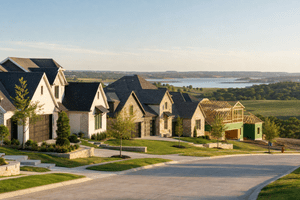
New Construction on Fort Worth’s Edges vs. Established Neighborhoods
Is New Construction on Fort Worth’s Edges Worth It Compared to an Established Neighborhood?
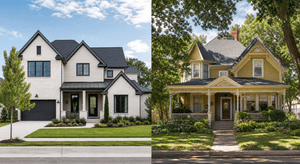
New construction on Fort Worth’s growth corridors — far north around Alliance and far southwest along Chisholm Trail Parkway — typically runs 10% to 20% more per square foot than a comparable existing home closer to the urban core, and it almost always comes with an HOA. In exchange, you get a house under full builder warranty, modern systems, and a longer runway before anything needs replacing. Established neighborhoods trade that premium for a lower price per square foot, bigger and more mature lots, and decades of resale history that make appraisals more predictable. Which one wins depends less on the sticker price and more on how long you plan to stay and how much you value certainty over character.
By The Chad Smith Team | November 13, 2026
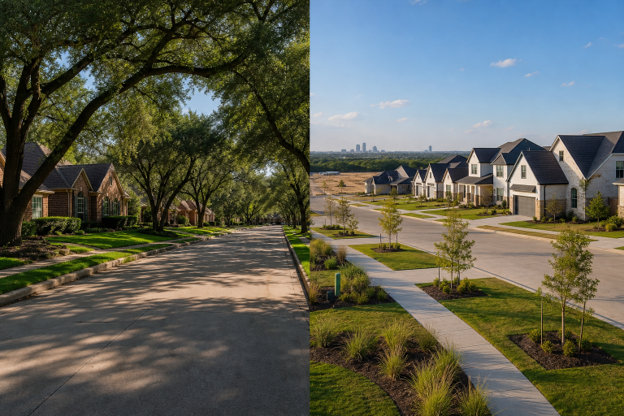
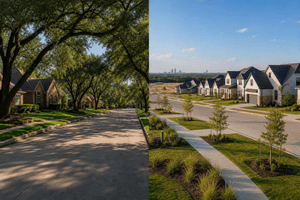
Fort Worth isn’t growing evenly, and that’s the first thing to understand before you start comparing listings. The city is expanding outward in two clear directions right now: far north, anchored by the AllianceTexas corridor around 76177 and pushing toward Haslet, Argyle, and Northlake along I-35W, and far southwest, following Chisholm Trail Parkway through Walsh Ranch, Veale Ranch, and Chisholm Trail Ranch. Those two corridors are where nearly all of the city’s new-build inventory is concentrated, and they’re worlds apart from the tree-lined, decades-old streets closer to downtown, TCU, and the near west side.
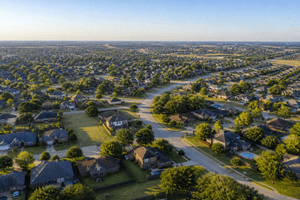
The city itself is putting real money behind the far north growth — Fort Worth recently approved roughly $47.2 million in road improvements for that area, drawing on 2018 and 2022 bond programs plus Tarrant County infrastructure funds, specifically because roads like Avondale-Haslet and Bonds Ranch can’t keep up with the pace of rooftops going in. On the southwest side, the numbers are even bigger: Walsh Ranch alone is a 7,267-acre master-planned community with roughly 3,500 homesites planned in its first phase, and the adjacent Veale Ranch could eventually add another 5,000 homes over the next 15 years. Planners expect the broader Chisholm Trail Parkway corridor to add close to 90,000 residents by 2045. That’s not a niche pocket of growth — that’s a second Fort Worth being built on the edges of the first one.
The Real Trade-Off: Price, Lot Size, and What’s Included
Here’s where the comparison actually gets useful. Fort Worth’s citywide median sale price sits around $176 per square foot, but that number blends everything from 1940s bungalows to brand-new builds, so it’s not the whole story.
On the new-construction side of the edges:
• Entry-level new builds in Fort Worth’s growth corridors generally start in the $295,000 to $312,000 range.
• Mid-range new construction — more square footage, more upgrades — runs $350,000 to $550,000.
• Premium builds in communities like Walsh push past $550,000.
• New construction typically costs 10% to 20% more per square foot than a comparable existing home nearby, because you’re paying for zero wear, current code compliance, and builder-grade everything.
• Almost every one of these master-planned communities carries an HOA, usually $100 to $300+ per month ($1,200 to $3,600+ a year), covering amenity centers, common-area landscaping, and community upkeep.
• Lots tend to run smaller than what you’d find closer in — production builders maximize homesites per acre to keep base prices competitive, so don’t assume “new” means “more yard.”
On the established-neighborhood side:
• Many closer-in Fort Worth neighborhoods carry no HOA at all, which changes your real monthly carrying cost more than people expect.
• Lots are frequently larger and less uniform in shape, with mature trees that took thirty-plus years to grow — something no builder can hand you on day one.
• Price per square foot is generally lower, but you’re buying into a home with an unknown mechanical history unless the seller can document recent replacements.
• Resale comps are deep and reliable. When a neighborhood has sold homes steadily for decades, appraisers and agents have a clear, defensible range to work from.
That last point matters more than buyers usually realize. Texas is a non-disclosure state, so exact sold prices aren’t published anywhere — but agents pull comps through the MLS every day, and in an established neighborhood there’s usually a rich set of recent, comparable sales to lean on. In a brand-new phase of a growth-corridor community, the only real “comp” for the first year or two is the builder’s own price sheet. That’s not necessarily bad, but it does mean your appraisal and your resale value ride on the builder’s pricing discipline rather than an independent market track record.
What to Weigh Before You Choose a Side

Price per square foot is the headline, but it’s not the decision. These four factors usually settle it.
Build time and how much certainty you need
A production spec home in one of Fort Worth’s growth communities generally takes somewhere in the neighborhood of six to nine months from contract to close, and that window stretches if you’re customizing a lot of selections or building on your own lot. If you need to be in a home by a specific date — a school year, a job start, a lease expiration — that timeline is a real planning variable. Buying an existing home in an established neighborhood removes that variable almost entirely; once your offer is accepted and financing clears, you’re looking at a standard closing timeline through a title company, typically 30 to 45 days.
Builder warranty vs. inspection-driven confidence
New homes in Texas generally come with a tiered builder warranty — commonly structured around workmanship coverage in year one, systems coverage in year two, and structural coverage for a longer stretch after that. Warranty terms vary meaningfully by builder, and structural coverage periods have shifted with recent changes to Texas law, so don’t rely on a sales brochure summary — read the actual warranty documentation, and ask your agent or an attorney to walk through it if anything’s unclear. In an established neighborhood, you don’t get a builder warranty, but you do get a full home inspection before closing and, in most cases, a completed Texas Seller’s Disclosure Notice that tells you what the current owner knows about the home’s condition and history.
Commute and how fast the roads are catching up
Distance to downtown Fort Worth varies more than you’d think between the two corridors. Some phases of Walsh Ranch sit roughly 12 minutes from downtown, while far north communities near Alliance can run closer to 25 to 35 minutes depending on traffic and which arterial road you’re relying on — which is exactly why the city is investing tens of millions in road expansion out there right now. If your daily commute matters more than your home’s square footage, map the actual drive at rush hour before you commit to a corridor, not just the distance on paper.
Lot character and what you can’t buy new
You can’t order mature trees, established landscaping, or a lot with real topography from a builder’s options list. If character and privacy matter more to you than move-in-ready systems, an established Fort Worth neighborhood usually delivers something a first-phase new community simply can’t yet. This is the same dynamic playing out across the DFW Metroplex’s growth patterns — the edges get the new inventory and the infrastructure investment, while the core holds the character and the comp history. If you’ve been watching how Mansfield’s own growth corridors have played out over the past few years, Fort Worth’s far north and far southwest are following a similar arc, just a few years behind.
None of this means one option beats the other — it means they solve different problems. Buyers who want predictability, a warranty, and don’t mind an HOA tend to land well on the edges. Buyers who want character, no HOA, and a deep bench of resale comps tend to land well closer in. Sellers in established neighborhoods should also know that new-construction competition on the edges can pull certain buyer segments away, which is worth factoring into your pricing strategy if you’re listing this year.
Frequently Asked Questions
Is new construction actually more expensive than an existing home in Fort Worth? Per square foot, usually yes — new construction typically runs 10% to 20% more than a comparable existing home, largely because you’re paying for unused systems, current materials, and builder overhead. Whether that premium is worth it depends on how much you value not having deferred maintenance on day one.
Do all new-build communities on Fort Worth’s edges have an HOA? Nearly all of them do, generally running $100 to $300 or more per month for amenities and common-area upkeep. If avoiding an HOA is a priority, an established neighborhood closer to the core is more likely to have you covered, though it’s not guaranteed everywhere.
How long does it take to close on a new construction home in Fort Worth? A production spec home generally takes about six to nine months from contract to close, longer if you’re customizing selections or building on your own lot. If your timeline is tight, ask the builder for their current build schedule before you sign, since it shifts with material and labor availability.
Are lots smaller in new communities than in established Fort Worth neighborhoods? Generally, yes. Builders in growth corridors maximize homesites per acre to keep base prices competitive, so don’t assume new construction means more yard — established neighborhoods often have larger, less uniform lots with mature landscaping already in place.
Why does it matter that Texas doesn’t publish sold home prices? Because it means resale comps come from agent-accessible MLS data rather than public record, and that data is far deeper in established neighborhoods with years of sales history than in a brand-new community’s first phase, where the builder’s price sheet is often the only real reference point.
Fort Worth’s edges and its established neighborhoods aren’t competing for the same buyer — they’re solving different problems, and the right answer depends on your timeline, your tolerance for an HOA, and how much you value a warranty over a mature lot. If you’re thinking through this for your own situation, we’re happy to walk you through the numbers. Reach out anytime.
About The Chad Smith Team
The Chad Smith Team at Realty of America is one of the top-producing real estate teams in the Dallas-Fort Worth Metroplex, with more than 22 years of experience, 2,915 homes sold, and recognition by RealTrends among the top 1% of real estate professionals nationwide. The team helps first-time buyers, sellers, relocation clients, and new construction buyers throughout Arlington, Mansfield, Fort Worth, Midlothian, Waxahachie, and surrounding DFW communities. Through this blog, the Chad Smith Team shares expert market insights and practical advice to help North Texas buyers and sellers make informed real estate decisions.