Mansfield vs. Midlothian: Comparing Commute, Price, and Space
How do Mansfield and Midlothian, TX compare for home buyers?
Mansfield and Midlothian sit about 17 miles apart along US-287 in the southern Dallas-Fort Worth Metroplex. Midlothian generally offers lower home prices (roughly $430,000 median versus Mansfield’s $486,000) and a notably lower property tax rate (around 1.37% versus 1.82%), but Mansfield has more established retail, dining, and mature neighborhoods, plus a somewhat shorter average commute into the core Metroplex.
By The Chad Smith Team | August 17, 2026
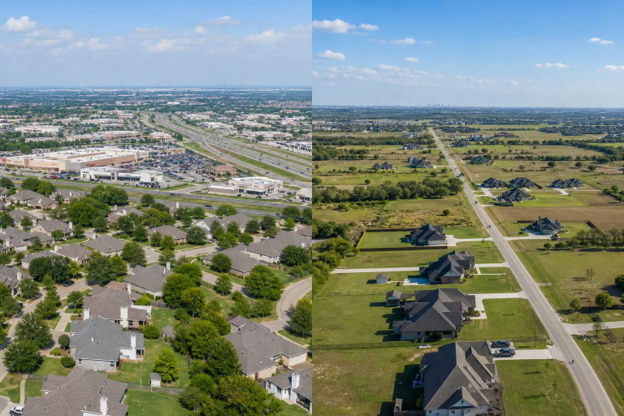
If you’re house hunting in the southern DFW Metroplex, Mansfield and Midlothian end up on the same shortlist a lot. They’re close enough that many buyers cross-shop both, and the trade-offs between them come down to three things: what you’ll pay upfront, what you’ll pay every year after, and how far you’re willing to drive.
Home Prices: Close, But Midlothian Runs Lower
As of late 2025 into early 2026, median home prices in the two markets are closer than a lot of buyers expect, but Midlothian consistently comes in lower:
• Midlothian: roughly $430,000–$525,000 depending on the data source and time of year
• Mansfield: roughly $430,000–$520,000, with a more recent median closer to $486,000
The overlap is real — you can find comparable homes in either city at a similar price point. The bigger difference shows up in what that price actually buys. Midlothian’s newer subdivisions tend to offer more square footage per dollar since land has historically been cheaper further south, while Mansfield’s inventory includes a broader mix of established neighborhoods with mature trees alongside its own newer construction.
Property Taxes: A Meaningful Gap
This is where the two cities diverge more clearly. Midlothian’s effective property tax rate runs around 1.37%, while Mansfield’s runs closer to 1.82%. On a $475,000 home, that difference works out to roughly $2,100 more per year in Mansfield — money that shows up in your monthly escrow payment whether you notice it or not.
That said, tax rate alone doesn’t tell the whole story. Local rates shift year to year based on school district and municipal budgets, and any new development financed through a MUD or PID can add its own assessment on top of the base rate in either city. It’s worth pulling the actual tax bill for a specific property rather than relying on a citywide average when you’re comparing two homes head to head.
Commute: A Real but Modest Difference
Mansfield to Midlothian itself is about 17 miles, roughly a 20-minute drive via US-287. But the commute that matters most for most buyers is the drive into Dallas or Fort Worth for work.
• Mansfield’s average commute time runs around 28–29 minutes
• Midlothian’s rush-hour commute to Dallas can stretch to 40–55 minutes, depending on the route and time of day
If your job pulls you toward downtown Dallas or Fort Worth regularly, that gap adds up fast over a work week. If you’re remote, hybrid, or working somewhere closer to the southern Metroplex, the commute difference matters a lot less.
Retail, Dining, and Day-to-Day Convenience
Mansfield has a longer track record as an established suburb, which shows up in the density of retail, restaurants, and everyday conveniences already built out. Midlothian is still catching up on that front — you’ll find fewer dining and shopping options directly in town, though that gap has been narrowing as the city grows.
Neither of these differences is about one city being objectively “better” — it’s about which trade-off fits how you actually live. If having a wide range of restaurants and shopping minutes from home matters more than a lower tax bill, that points one direction. If minimizing your annual tax bill and finding more new-build inventory matters more, that points the other way.
How to Actually Decide

The honest answer is that neither city is the “right” choice in a vacuum — it depends on your commute, your price ceiling, and how much you value established infrastructure versus a lower ongoing tax bill. If comparing new construction to resale is also part of your decision, that adds another variable, since both cities have active new-home communities at different price points.
The best way to know which city actually pencils out for your specific budget and commute is to run the numbers on real listings in both, side by side, rather than relying on citywide averages.
Housing Stock and Lot Sizes
Beyond price and tax rate, the physical character of what you’re buying differs between the two cities. Mansfield’s inventory spans several decades of development, so you’ll find everything from established 1990s and 2000s neighborhoods with larger, mature trees and varied lot sizes to brand-new construction in communities like Westhill Park and M3 Ranch. That range gives buyers more flexibility to choose between an established feel and a newer build within the same city.
Midlothian’s housing stock skews newer overall, since much of its growth has happened more recently. That tends to mean more uniform, larger new-construction lots in planned subdivisions, but fewer options if you specifically want an older home with decades-old landscaping already in place. Buyers who want a newer home with a more predictable maintenance timeline sometimes gravitate toward Midlothian for that reason alone, independent of the tax rate difference.
Weighing Growth Trajectory
Both cities are still growing, but they’re at different points in that curve. Mansfield has already built out a substantial share of its available land and has a mature retail and service base to show for it. Midlothian is earlier in that growth cycle, which is part of why its inventory skews newer and why its day-to-day amenities are still catching up.
That difference cuts both ways depending on what you’re looking for. If you’d rather buy into an area that’s already built out and established, Mansfield’s maturity works in your favor. If you’re comfortable with a still-developing area in exchange for newer construction and potentially more room for appreciation as infrastructure catches up, Midlothian’s earlier growth stage might be the better fit.
Frequently Asked Questions
Is Midlothian cheaper than Mansfield overall?
On a pure home-price basis, Midlothian tends to run slightly lower, and its property tax rate is meaningfully lower — around 1.37% versus Mansfield’s 1.82%. But specific neighborhoods and homes vary, so it’s worth comparing actual listings rather than citywide medians.
Which city has a shorter commute to Dallas or Fort Worth?
Mansfield generally has a shorter average commute, around 28–29 minutes, compared to Midlothian’s rush-hour commute to Dallas, which can run 40–55 minutes depending on route and timing.
Does Midlothian have as much shopping and dining as Mansfield?
Not yet. Mansfield has a longer-established retail and restaurant base, while Midlothian’s is still growing, though new development is adding options over time.
Are property taxes the only ongoing cost difference between the two cities?
No. HOA dues, MUD or PID assessments in newer developments, and homeowners insurance rates can all vary by neighborhood in either city, so it’s worth reviewing the full cost picture for a specific property.
Can I compare specific listings in both cities before deciding?
Yes, and that’s the most reliable way to make the comparison real rather than theoretical — actual tax bills, HOA dues, and commute times for specific addresses tell you more than any citywide average.
If you’re trying to decide between Mansfield and Midlothian for your own move, we’re happy to pull comparable listings in both and walk through the real numbers with you. Reach out anytime.
About The Chad Smith Team
The Chad Smith Team at Realty of America is one of the top-producing real estate teams in the Dallas-Fort Worth Metroplex, with more than 22 years of experience, 2,915 homes sold, and recognition by RealTrends among the top 1% of real estate professionals nationwide. The team helps first-time buyers, sellers, relocation clients, and new construction buyers throughout Arlington, Mansfield, Fort Worth, Midlothian, Waxahachie, and surrounding DFW communities. Through this blog, the Chad Smith Team shares expert market insights and practical advice to help North Texas buyers and sellers make informed real estate decisions.