Financing a Weatherford Ranch or Acreage Home
How do you finance a ranch or acreage property in Weatherford, TX?
Financing acreage in Weatherford typically means one of three paths: a conventional mortgage if the land is a smaller parcel with a primary residence and the land value doesn’t dominate the purchase, a dedicated agricultural or land loan through a lender like Farm Credit for larger acreage or working ranches, or owner financing, which is common in Parker County’s rural land market. Down payment requirements are meaningfully higher than a standard home purchase — often 20–35% for raw or unimproved land through agricultural lenders — so budgeting for that upfront is the first step.
By The Chad Smith Team | September 30, 2026
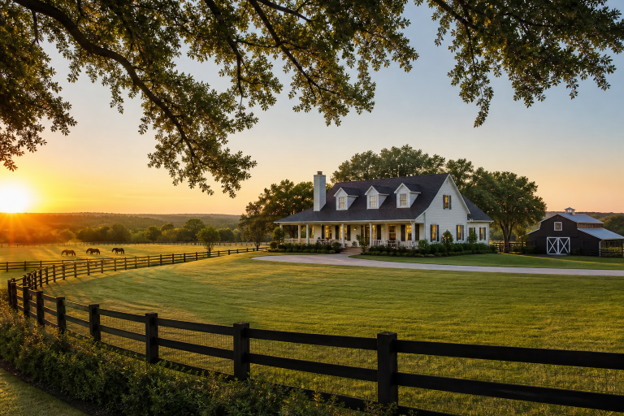
Parker County ranks fourth in Texas for total acreage currently listed for sale, and Weatherford sits right in the middle of that market. Whether you’re looking at a small horse property just outside town or a working ranch further out, financing acreage works differently than financing a standard home purchase — and knowing which loan type fits your situation before you start shopping saves real time.
Why Acreage Financing Is Different From a Standard Mortgage
Conventional mortgages are built around a home’s value, with land treated as a relatively minor factor. Acreage financing flips that — the land itself becomes central to the underwriting, and lenders view it as a different risk profile than a typical suburban purchase.
That shows up in a few consistent ways:
• Higher down payments. Raw, unimproved land often requires 25–35% down. Improved parcels with utilities and access typically require 20–25%. Larger working ranches financed through agricultural lenders commonly require around 25% down.
• Shorter loan terms in some cases, particularly for raw land without a home already on it
• Different appraisal standards, since land value depends heavily on factors like water rights, mineral rights, road access, and agricultural exemption status
• More lender specialization — not every mortgage lender handles acreage well, and working with one who doesn’t regularly finance rural property in Parker County can slow the process considerably
Option 1: Conventional Financing (When It Fits)
If you’re buying a smaller acreage parcel — often under 10 acres, though this varies by lender — with a primary residence where the home value clearly exceeds the land value, a standard conventional mortgage may still work. Lenders generally want the land-to-home value ratio to stay reasonable; once acreage starts to dominate the purchase price, most conventional lenders step back and refer you toward a specialized land or agricultural loan instead.
This path offers the most familiar process and often the best rates, so it’s worth confirming with your lender early whether your specific property qualifies before assuming you need a different loan type.
Option 2: Agricultural and Land Loans
For larger acreage, working ranches, or properties where land value is the primary driver of the purchase price, agricultural lenders like Farm Credit are the more common path in the Weatherford area.
What to expect:
• Down payments around 25% are typical for ranch-scale purchases through Farm Credit-style lenders, though this varies with the specific property and borrower profile
• Longer amortization schedules are common — 20 to 30 years is typical for larger land purchases
• Rates tied to a benchmark plus a margin (often quoted as prime plus a set percentage) rather than the fixed-rate structure most home buyers are used to
• Additional loan products for ranch improvements, equipment, or livestock, if you’re planning to actively work the land rather than simply hold it
Agricultural lenders also tend to understand agricultural exemption status, water rights, and easements in ways a typical residential mortgage lender may not — which matters a great deal when the property includes existing agricultural use.
Option 3: Owner Financing
Owner financing is genuinely common in Parker County’s rural land market, more so than in most suburban DFW transactions. In this arrangement, the seller acts as the lender, and you make payments directly to them under terms negotiated in the sale contract rather than through a bank.
This can work well when:
• You don’t meet a traditional lender’s requirements for the property type
• You want more flexible terms than a conventional agricultural loan offers
• The seller is motivated to close a deal outside conventional financing timelines
It also carries real risks worth understanding before you sign. Owner-financed contracts vary enormously in their terms — interest rate, balloon payments, default consequences — and should be reviewed carefully, ideally with a real estate attorney, since these aren’t standardized like a bank mortgage.
What Lenders Look at Beyond Your Credit Score
Acreage lending involves more property-specific due diligence than a standard home purchase:
1. Water rights and well status — whether the property has an existing well, its production rate, and any water rights attached to the land
2. Access and road frontage — how the property connects to a public road, and whether that access is legally documented
3. Agricultural exemption status — whether the land currently qualifies for an ag exemption, which affects both taxes and how lenders may value the property
4. Fencing, cross-fencing, and existing improvements — barns, outbuildings, and other structures affect both appraisal and loan type
5. Flood zone and floodplain status, particularly relevant for properties near the Brazos River or other waterways in Parker County
Get answers on all of these before you’re deep into a financing application — they affect which loan type even applies to the property.
Building Your Budget Before You Shop
Given the higher down payment requirements across most acreage financing paths, the real first step in a Weatherford ranch or acreage purchase is figuring out your actual available down payment and matching it to the right loan type — not falling in love with a property first and discovering the financing doesn’t fit.
Every property in this market is different, from a small horse property just outside town to a multi-hundred-acre working ranch, and the right financing path depends heavily on the specific parcel. We work with lenders who understand acreage and agricultural financing regularly, and we’re happy to help you figure out which path fits your situation before you start touring properties. Reach out anytime.
Frequently Asked Questions
How much down payment do I need for a ranch in Weatherford?
It depends on the loan type and property. Raw or unimproved land often requires 25–35% down through agricultural lenders, while improved land with utilities may require 20–25%. Conventional financing on a smaller acreage parcel with a primary home may allow a lower down payment.
Can I get a conventional mortgage for acreage in Parker County?
Sometimes, if the parcel is relatively small and the home’s value clearly exceeds the land value. Once land value starts to dominate the purchase price, most conventional lenders refer buyers to agricultural or land-specific loan products instead.
Is owner financing common for ranch properties in Weatherford?
Yes, owner financing is more common in Parker County’s rural land market than in typical suburban DFW transactions. Terms vary significantly by seller, so any owner-financed contract should be reviewed carefully before signing.
Does an agricultural exemption affect financing on a Weatherford property?
It can affect both property taxes and how some lenders value the land, particularly agricultural lenders familiar with ag-exempt property. Confirm the exemption status of any parcel you’re considering early in the process.
What’s the difference between a land loan and a mortgage?
A mortgage is built primarily around the value of an existing home. A land loan is built around the value of the land itself, which typically means a shorter term, higher down payment, and different underwriting criteria than a standard home mortgage.
About The Chad Smith Team
The Chad Smith Team at Realty of America is one of the top-producing real estate teams in the Dallas-Fort Worth Metroplex, with more than 22 years of experience, 2,915 homes sold, and recognition by RealTrends among the top 1% of real estate professionals nationwide. The team helps first-time buyers, sellers, relocation clients, and new construction buyers throughout Arlington, Mansfield, Fort Worth, Midlothian, Waxahachie, and surrounding DFW communities. Through this blog, the Chad Smith Team shares expert market insights and practical advice to help North Texas buyers and sellers make informed real estate decisions.