Uptown Condo vs. Suburban House: The Dallas Trade-Offs
Is It Cheaper to Buy a Condo in Uptown Dallas or a House in the Suburbs?
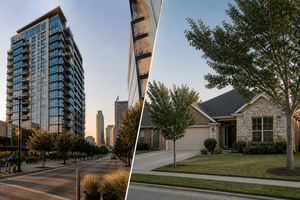
A suburban single-family home in Dallas typically costs less per square foot to buy than an Uptown condo, but a condo trades yard work and a longer commute for HOA dues that can run $200 to $1,000+ a month. Uptown’s median home price sits around $640,000, while a comparable single-family home in an inner Dallas suburb like Lake Highlands runs closer to $600,000 for more square footage. The right answer depends on whether you’re optimizing for commute time and low maintenance or for space and lower fixed monthly costs.
By The Chad Smith Team | October 1, 2026
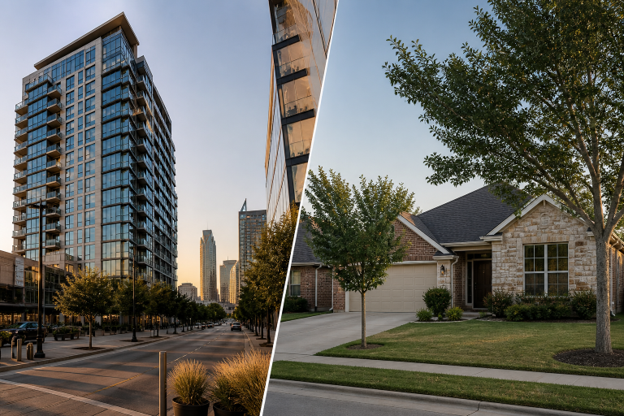
If you’re choosing between a high-rise in Uptown and a house in the suburbs, you’re really choosing between two different cost structures — not just two different neighborhoods. One trades a bigger mortgage-adjacent line item (HOA dues) for a shorter commute and zero yard work. The other trades space and appreciation potential for more time behind the wheel.
We get this question constantly from buyers who work downtown or in Uptown’s office corridor and are trying to decide whether the lifestyle premium of walking to dinner on McKinney Avenue is worth what it costs every month compared to a house 20 minutes north. Here’s how the numbers and the trade-offs actually break down.
Price and Carrying Costs: Uptown Condo vs. Suburban House
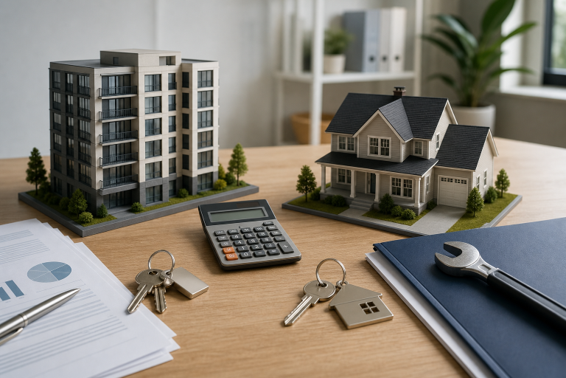
Uptown Dallas condos aren’t cheap, but the range is wide. Listings run from roughly $240,000 for a smaller one-bedroom to well over $2 million for a full-service tower unit, with a neighborhood median around $639,500 as of mid-2026. Because Uptown’s inventory skews toward larger, amenity-heavy buildings, the average sale price climbs closer to $900,000 — so the median is the more useful number for a typical buyer.
By comparison, a single-family home in an inner suburb like Lake Highlands carries a median price closer to $600,000, at roughly $256 per square foot — often for a three- or four-bedroom home with a yard. Farther-out North Dallas neighborhoods vary enormously; some pockets run well above $1 million, so “suburb” pricing in Dallas isn’t uniform and depends heavily on which part of the city or which suburb you’re comparing.
Across Dallas County as a whole, the median home sale price is around $389,000 at roughly $198 per square foot, up about 6.5% year-over-year — a reasonable benchmark for what a broader single-family search looks like once you move outside the closer-in, higher-priced pockets.
HOA dues are where the Uptown math changes. Condo dues in Dallas typically range from $200 to $700 a month, though luxury towers with concierge service, valet parking, and resort-style amenities can push past $1,000. A common rule of thumb is $0.40 to $1.50 per square foot per month — so a 1,000-square-foot unit at $0.75 per square foot runs about $750 a month in dues alone. Add principal, interest, and property taxes, and a typical Uptown condo’s total monthly housing cost often lands somewhere in the $3,850 to $4,340 range before insurance, which is a real number to run against your budget before you fall for the skyline view.
Suburban single-family homes carry their own costs — property taxes, insurance, and maintenance you pay for out of pocket instead of through a monthly due — but no HOA dues line item of that size, unless the home sits in a deed-restricted community with its own (usually much smaller) assessment.
On property taxes specifically: Dallas County’s adopted county tax rate is $0.2155 per $100 of assessed value for tax year 2025, but that’s only one layer. Your total bill also includes your city and school district rates, so the combined effective rate on a Dallas-area property commonly lands in the 2.0% to 2.5% range of assessed value — condo or house, the county doesn’t tax them differently. Verify your specific combined rate with the Dallas Central Appraisal District or your title company before you budget, since it varies by exact address.
Commute and Daily Life: Uptown Walkability vs. Suburban Drive Time
This is usually the deciding factor for buyers choosing between the two.
Uptown living puts you within walking distance — or a short ride on the free McKinney Avenue Trolley — of restaurants, offices, and the Katy Trail. If you work downtown or in Uptown itself, your commute can shrink to a walk or a five-minute drive. For those commuting farther, Uptown’s Cityplace/Pearl DART station connects to the Red, Orange, and Green rail lines, and driving out via the Dallas North Tollway typically runs 25 to 35 minutes to job centers in North Dallas or Plano — though that same drive can stretch toward an hour during the heaviest stretch of morning rush, roughly 6:30 to 9 a.m.
Suburban living flips that equation. From Lake Highlands or North Dallas, you’re commuting into Uptown or downtown via US-75 or the Tollway, and that trip commonly runs 20 to 40 minutes depending on exactly where you start and how bad traffic is that day. You gain more house and more yard, but you’re trading walkability for a longer, car-dependent commute — and DART access varies significantly by suburb. If commute time is the deciding factor in your search, it’s worth mapping your actual daily route before you commit to either lifestyle. We’ve broken down commute times across the Dallas-Fort Worth Metroplex in more detail, and the same logic applies whether you’re comparing Uptown to Lake Highlands or comparing suburbs to each other.
Daily life differs beyond the commute, too. Uptown residents typically don’t own a lawnmower, and building staff often handle package delivery, common-area upkeep, and sometimes even valet parking. Suburban homeowners get a yard, a garage, and more separation between units — but they’re also the ones calling the roofer, the HVAC tech, and the lawn service.
Maintenance, Appreciation, and Resale
Maintenance responsibility is one of the clearest lines between the two.
In a condo, your HOA dues typically cover exterior maintenance, the building’s master insurance policy, common-area upkeep, and shared amenities. You’re not responsible for the roof or the elevator — but you are exposed to special assessments if the building’s reserve fund falls short on a major repair, so it’s worth reviewing a building’s reserve study and recent board minutes before you buy.
In a single-family home, you own every repair — the roof, the HVAC system, the foundation, the fence — but you also control the timeline and the contractor, and you’re not subject to an association’s decisions or dues increases.
On appreciation, the data leans toward single-family homes over the broader condo market in Dallas right now. Dallas County home prices overall were up roughly 6.5% year-over-year as of mid-2026, and single-family inventory in high-demand suburbs has generally held up better than the broader condo segment, which has seen more new supply and longer time on market — Uptown-area condos are averaging around 59 days on market. That said, the luxury high-rise niche in Uptown has behaved differently: price per square foot in that segment reportedly rose about 17% year-over-year in the first half of 2026, suggesting well-located, well-maintained towers can hold their own even while the broader condo market cools. The takeaway: condo appreciation in Dallas is far more building-specific than house appreciation, which tends to track the broader neighborhood.
Which One Actually Fits You
There’s no universally “better” answer here — it comes down to what you’re optimizing for.
• Choose Uptown if: your commute matters more than square footage, you want to walk to dinner and skip yard work, and you’re comfortable factoring HOA dues into your monthly budget the same way you would a car payment.
• Choose the suburbs if: you want more space and a yard for the money, you’re comfortable with a longer commute or already work closer to home, and you’d rather control your own maintenance than pay into a shared reserve fund.
For buyers just starting to weigh their budget against either path, it’s also worth looking at what financing assistance is available — our guide to the best first-time home buyer programs in Dallas-Fort Worth covers options that can apply whether you land on a condo or a house.
Your specific number — the real monthly cost, the realistic commute, and the resale outlook for the exact building or block you’re considering — depends on details a market-wide comparison can’t capture. That’s where a local walk-through of the actual listings makes the difference.
If you’re weighing Uptown against the suburbs for your own move, we’re happy to run the numbers with you side by side. Reach out anytime.
Frequently Asked Questions
Is it cheaper to buy a condo in Uptown Dallas or a house in the suburbs?
On a price-per-square-foot basis, suburban single-family homes generally cost less than Uptown condos, and suburbs like Lake Highlands offer more square footage for a similar median price. But Uptown condos avoid separate yard-maintenance and repair costs, so the true monthly comparison depends on HOA dues, taxes, and how much space you actually need.
How much are HOA dues on an Uptown Dallas condo?
Uptown condo dues typically run $200 to $700 a month, though luxury towers with concierge service and extensive amenities can exceed $1,000 a month. Dues are often calculated by square footage, so a larger unit carries a proportionally higher due.
What’s the commute like from Uptown Dallas compared to the suburbs?
From Uptown, many job centers are a 25 to 35 minute drive via the Dallas North Tollway, and the Cityplace/Pearl DART station offers rail access without a car. From suburbs like Lake Highlands or North Dallas, commuting into Uptown or downtown typically runs 20 to 40 minutes depending on traffic and starting point.
Do Uptown condos or suburban homes appreciate faster in Dallas?
Single-family homes have generally shown steadier appreciation across Dallas County, while the broader condo market has cooled somewhat due to new supply. However, well-located luxury towers in Uptown have seen strong price-per-square-foot growth recently, so condo appreciation is much more building-specific than house appreciation.
Is Dallas County property tax different for a condo versus a single-family home?
No — the county tax rate applies the same way to both property types, based on assessed value. Your total combined rate, including city and school district taxes, commonly falls in the 2.0% to 2.5% range in the Dallas area, but you should verify your exact combined rate for your specific address.
About The Chad Smith Team
The Chad Smith Team at Realty of America is one of the top-producing real estate teams in the Dallas-Fort Worth Metroplex, with more than 22 years of experience, 2,915 homes sold, and recognition by RealTrends among the top 1% of real estate professionals nationwide. The team helps first-time buyers, sellers, relocation clients, and new construction buyers throughout Arlington, Mansfield, Fort Worth, Midlothian, Waxahachie, and surrounding DFW communities. Through this blog, the Chad Smith Team shares expert market insights and practical advice to help North Texas buyers and sellers make informed real estate decisions.