Well and Septic Inspections for Aledo Country Properties: What Buyers Need to Know
What do well and septic inspections cost when buying acreage near Aledo, TX?
Budget $300 to $600 for a full septic inspection and $300 to $600 for a well inspection package that includes flow rate and water quality testing — roughly $600 to $1,200 total. Lenders financing acreage in Parker County typically require both, along with a licensed septic permit on file with Parker County Environmental Health and a water test showing safe bacteria and nitrate levels.
By The Chad Smith Team | October 14, 2026
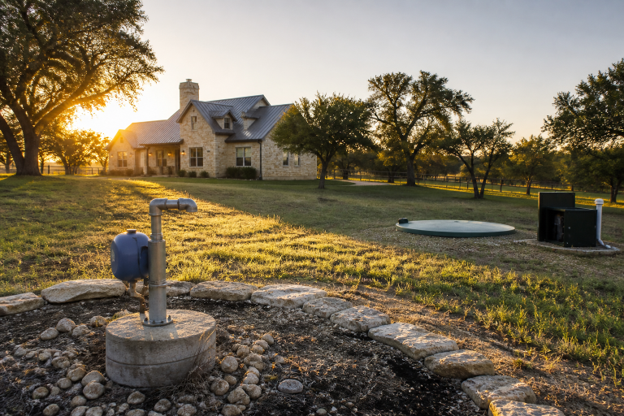
Buying a home on acreage around Aledo means buying two utility systems most in-town buyers never think about: the well that supplies your water and the septic system that handles your wastewater. Neither is optional, and neither is something you can skip inspecting just because the house looks great.
We walk buyers through this constantly. Aledo’s appeal — space, privacy, room for horses or a shop — comes from being outside city water and sewer service. That’s the tradeoff. You’re now responsible for a private water system and an on-site sewage facility (OSSF), and so is your lender.
Here’s exactly what gets inspected, what it costs, and what can stall your closing if you skip it.
Septic Inspections: What Gets Checked and What It Costs
Most homes on acreage around Aledo and elsewhere in Parker County run one of two septic system types:
• Conventional systems — a septic tank and a buried drain field, common on properties with good soil percolation.
• Aerobic treatment units (ATUs) — a mechanical system that treats and often sprays effluent above ground, common where soil conditions or lot size don’t support a conventional drain field.
A real estate septic inspection typically runs $300 to $600 in the Aledo area and covers:
• Tank levels, scum and sludge depth, and baffle condition
• Pumping the tank if needed (sometimes included, sometimes billed separately)
• Drain field condition, including standing water or odor that signals a failing field
• For aerobic systems: pump function, spray heads, chlorinator or UV disinfection, and alarm operation
If the property has an aerobic system, Texas law requires it to carry an active maintenance contract with inspections three times a year (every four months) under Texas Health and Safety Code 366.0515. Ask the seller for the current maintenance provider’s records before you’re under contract — a lapsed contract is a red flag, and reinstating one can take weeks.
Parker County Environmental Health, acting as the TCEQ-authorized permitting agent for the county, keeps records of every permitted OSSF. Before you write an offer, you (or your agent) can request the septic permit file to confirm the system was installed legally, sized correctly for the home’s bedroom count, and hasn’t had unresolved repair permits. New installation permits in the county generally run $200 to $500, and repair permits run $100 to $300 — numbers worth knowing if the inspection turns up problems you’ll need to negotiate.
One exemption to know: properties of 10 acres or more with a single-family home may qualify for an exemption from standard OSSF permitting requirements. That doesn’t mean skip the inspection — it means the paperwork trail may look different, so confirm with Parker County Environmental Health directly.
Water Well Testing: What Gets Checked and What It Costs
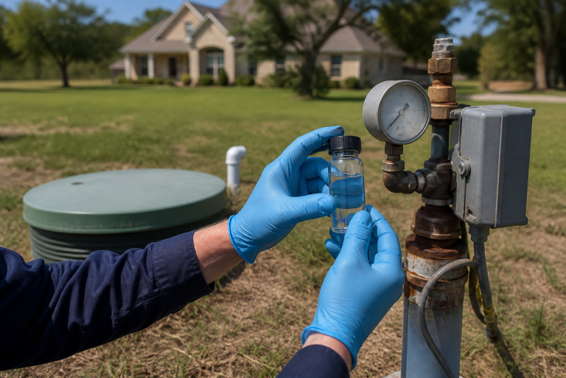
A private well inspection package for a home purchase generally runs $300 to $600 and includes:
• A visual inspection of the wellhead, casing, pump, and pressure tank
• A flow rate test, usually run for one to two hours, to confirm the well produces enough water for daily household use
• A water quality panel from a certified lab testing for coliform bacteria, nitrates, and often additional parameters like arsenic or total dissolved solids depending on what’s common in the area
Most households need a minimum of 3 to 5 gallons per minute to run appliances, irrigation, and daily use without the well running dry. If a flow test comes back under that threshold, you’re looking at either a negotiation point or a conversation about whether the property can support your household as-is.
Individual bacteria tests run about $20 to $75, and nitrate tests run $15 to $30 on their own, but most buyers order the full inspection-and-testing package rather than piecing it together.
Well Permitting Through Upper Trinity Groundwater Conservation District
Parker County falls under the Upper Trinity Groundwater Conservation District (UTGCD), which regulates new well drilling and registers existing wells across Parker, Wise, Hood, and Montague counties. If you’re buying a property with an existing well, registration should already be on file — ask your agent to confirm during option period. If you ever plan to drill a new well or a replacement well, UTGCD rules require:
• The property to be at least 2 acres
• The new well to sit at least 50 feet from the nearest property line
• The new well to sit at least 150 feet from any other registered well
These setback rules matter even when you’re not drilling — they explain why the well on the property you’re touring sits where it does, and why moving a barn, shop, or fence line near a wellhead later can create compliance headaches.
What Lenders Require Before They’ll Fund the Loan
This is where well and septic inspections stop being optional and start being a closing requirement. FHA, VA, and most conventional lenders require both a water quality test and confirmation that the septic system is functioning before they’ll fund a loan on a property with private water and wastewater systems.
Specific lender requirements to plan around:
• Water quality test results are only valid for a set window — FHA accepts results for 180 days, VA for 90 days — so timing your test too early in a slow closing can mean retesting.
• Minimum flow rate of roughly 3 to 5 gallons per minute, depending on the loan program and number of bedrooms.
• Minimum separation distances between the well and septic components — generally at least 50 feet between the well and septic tank, and 100 feet between the well and drain field (sometimes reduced to 75 feet if the local authority allows it). If Parker County’s local standards are stricter than the federal minimums, the stricter standard applies.
• A functioning septic system confirmed by inspection, not just a working toilet on your walkthrough.
If you’re comparing loan types for a purchase like this, it’s worth understanding how the underwriting process differs before you fall in love with a specific property — our breakdown of FHA vs. conventional financing walks through how each program treats these situations.
Red Flags to Watch For on Aledo Acreage
Every acreage property has a story. Here’s what tends to turn into an expensive one:
• Straight-piped systems — wastewater running directly to a ditch or creek instead of a permitted septic system. This shows up more often on older rural properties and is a hard stop for financing until corrected.
• No permit on file — if Parker County Environmental Health has no record of the septic system, you have no way to confirm it was sized or installed correctly.
• Lapsed aerobic maintenance contracts — a red flag that the current owner hasn’t kept up with required inspections.
• Low or inconsistent well flow — especially relevant in late summer when regional water tables drop and marginal wells show their weaknesses.
• Wells or septic components too close together — a problem you may not catch on a walkthrough but that a proper inspection and survey will flag immediately.
• Undisclosed well-sharing arrangements — some older Parker County properties share a well across more than one parcel, which complicates both financing and future maintenance responsibility.
None of these automatically kill a deal. They’re negotiation points — repair credits, price adjustments, or seller-completed repairs before closing. But you need the inspection results in hand before you can negotiate from a position of knowledge instead of guesswork.
Timing matters too. Well and septic inspections need to happen early enough in your option period that you still have leverage to negotiate or exit if something significant turns up. Once you’re past option and deep into the lender’s underwriting timeline, your ability to walk away cleanly narrows. If you want a refresher on how the pieces of a Texas closing fit together once inspections are done, our guide to what happens during escrow in a Texas transaction covers the full sequence.
Where This Fits Into Your Timeline
Order both inspections as soon as you’re under contract — don’t wait until the middle of your option period. Between scheduling, lab turnaround on water samples, and the possibility of needing a re-test or repair estimate, these two items can eat more calendar time than a standard home inspection.
Your total out-of-pocket for both inspections runs roughly $600 to $1,200, on top of your standard home inspection. That’s a small number compared to what a failing septic system or an unreliable well can cost you after closing — full septic replacement in Parker County can run well into five figures, and a new well isn’t cheap either.
This is exactly the kind of due diligence we walk buyers through before they ever write an offer on acreage. Every property outside city utilities comes with its own well history, septic permit trail, and inspection needs, and the only way to know what you’re really buying is to get the right professionals out there while you still have time to act on what they find.
Frequently Asked Questions
Do I need both a well inspection and a septic inspection to buy a home in Aledo?
If the property is on private water and wastewater systems — which most acreage around Aledo is — yes. Most lenders financing the purchase, including FHA and VA programs, require both before they’ll fund the loan, and it’s smart due diligence even on a cash purchase.
How much does it cost to inspect a well and septic system together in Parker County?
Plan on roughly $600 to $1,200 total: $300 to $600 for the septic inspection and $300 to $600 for the well inspection and water testing package. Costs vary based on system type and whether the septic tank needs to be pumped as part of the inspection.
Who pays for the well and septic inspection, buyer or seller?
Texas law doesn’t require either party to pay — it’s negotiable and typically spelled out in your purchase contract. In most transactions we handle, the buyer orders and pays for these inspections as part of their option period due diligence.
What happens if the septic system fails inspection?
You and the seller negotiate next steps, which usually means a repair credit, a price adjustment, or the seller completing repairs before closing. Repair permits through Parker County Environmental Health generally run $100 to $300, though actual repair costs depend on what’s wrong.
Can I finance a home in Parker County if the well flow rate is too low?
It depends on the loan program and how far below the minimum the flow rate falls. FHA and VA typically want at least 3 to 5 gallons per minute; if your test comes back lower, your lender may require remediation, a new well, or a different financing path before closing.
If you’re thinking through this for your own situation, we’re happy to walk you through the numbers. Reach out anytime.
About The Chad Smith Team
The Chad Smith Team at Realty of America is one of the top-producing real estate teams in the Dallas-Fort Worth Metroplex, with more than 22 years of experience, 2,915 homes sold, and recognition by RealTrends among the top 1% of real estate professionals nationwide. The team helps first-time buyers, sellers, relocation clients, and new construction buyers throughout Arlington, Mansfield, Fort Worth, Midlothian, Waxahachie, and surrounding DFW communities. Through this blog, the Chad Smith Team shares expert market insights and practical advice to help North Texas buyers and sellers make informed real estate decisions.