In-Town vs. Country Living in Weatherford: The Trade-offs
In-Town vs. Country Living in Weatherford: Which Costs More?
In-town Weatherford homes near the courthouse square sit on smaller lots with city water and sewer already connected, while country properties in outlying Parker County trade that convenience for acreage, wells, and septic systems — usually at a lower cost per square foot but with added utility and maintenance costs. The right choice comes down to how much land you actually want, your tolerance for well and septic upkeep, and how far you’re willing to drive on I-20. Both options put you in Parker County’s tax jurisdiction, but the total tax bill and monthly cost of ownership can look very different depending on which side of that line you land on.
By The Chad Smith Team | October 13, 2026
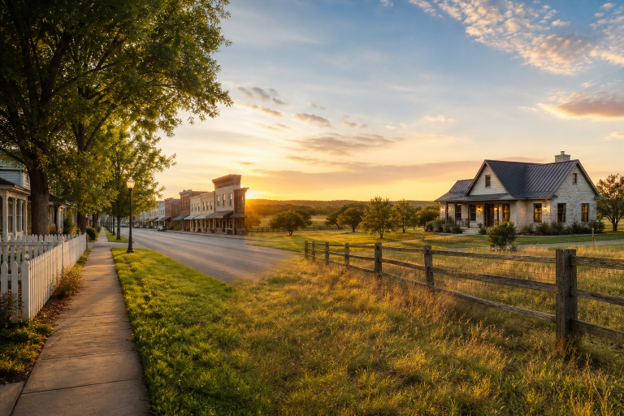
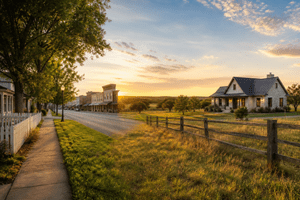
Weatherford draws two very different kinds of buyers. Some want the walkable, small-town feel of the historic downtown. Others want room for horses, a shop, or just space between neighbors. Both are available within a few miles of each other — but they come with different price structures, different utility setups, and different day-to-day realities.
Here’s how the two actually compare, with real numbers.
In-Town Weatherford: What You Get for the Price
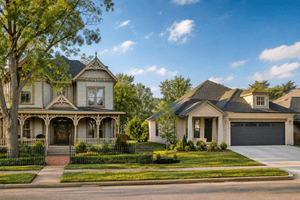
Homes in Weatherford’s historic downtown and surrounding established neighborhoods sit close to the courthouse square, on smaller, city-platted lots. These are the craftsman, bungalow, and traditional homes that give Weatherford its small-town character, and they connect directly to municipal water, sewer, and trash service — no wells, no septic tanks, no additional systems to maintain.
A few things to know about buying in-town:
• Lot sizes are smaller. In-town lots are typically standard residential parcels, not acreage — expect a yard, not a pasture.
• Aggregate market data (from sources like Redfin and Zillow) puts Weatherford’s citywide median sold price in the roughly $450,000–$550,000 range through mid-2026, though this reflects the whole city, not just the historic core, and individual sold prices aren’t public record in Texas. Ask an agent for recent comparable sales pulled directly from the MLS for a specific neighborhood.
• Building permits and city code apply. Renovations, additions, and fencing typically require permits through the City of Weatherford.
• Walkability is the trade-off you’re paying for — proximity to restaurants, shops, and city offices around the square, plus shorter drives for everyday errands.
If you’re comparing this kind of trade-off to what buyers face elsewhere in the Metroplex, our breakdown of the cost of living in Mansfield covers a lot of the same math — smaller lots and city services generally cost more per square foot than land further out.
For buyers deciding between an established in-town home and something newer, it’s also worth reading our comparison of new construction versus resale trade-offs, since many in-town Weatherford homes are older housing stock with the maintenance considerations that come with age.
Country Living: Acreage, Wells, and Septic Systems
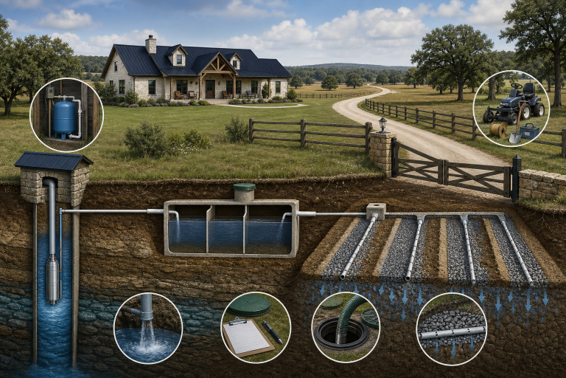
Once you leave city limits, the math changes. Land listings across Parker County average around 60 acres, but the small-acreage horse and hobby-farm properties that draw most buyers to the Weatherford area tend to run smaller — often in the 5- to 20-acre range, with a home, barn, or arena already in place.
Here’s what typically factors into pricing:
• Raw, unimproved land in the Weatherford area has recently listed in the roughly $14,000–$16,000 per acre range, though this varies significantly by location, road frontage, and utility access.
• Improved horse properties — land with a home, fencing, and outbuildings already built — carry a much higher blended price, since you’re paying for the structures as well as the dirt. Recent listing data for equestrian properties near Weatherford has averaged close to $1 million for parcels around 10–12 acres, though pricing swings widely based on the quality of improvements.
• Wells and septic systems replace city utilities. Parker County requires a TCEQ-permitted On-Site Sewage Facility (OSSF) for septic, administered locally by Parker County Environmental Health. A licensed soil evaluation is required before a permit is issued, and setbacks apply between wells, septic drainfields, and property lines.
• Properties of 10 acres or more with a single-family home may qualify for an exemption from the standard septic permitting process — but this needs to be confirmed directly with Parker County Environmental Health, since exemption rules and site conditions vary.
• Road access matters more than buyers expect. Some rural Parker County properties sit on paved county roads; others are reached by unpaved or caliche roads. Road maintenance responsibility, financing implications, and insurance can all be affected by this, so it’s worth confirming directly with the county and your lender before you get attached to a property.
None of this makes country living more complicated than it’s worth — it just means the due diligence list is longer. A well inspection, a septic inspection, and a call to the county about road maintenance status belong on every rural offer.
There’s also an ongoing cost difference worth planning for. In-town homeowners generally pay a monthly city utility bill and budget for periodic maintenance like roof and HVAC replacement. Country homeowners take on those same costs, plus well pump repairs, periodic septic tank pumping, and sometimes a longer drive for basic services like plumbers or septic technicians who may charge a trip fee for rural addresses. Homeowners insurance can also price differently for a home on a private well and septic system versus one on city utilities — that’s a conversation worth having with your insurance agent before you write an offer, not after.
Commute, Taxes, and the Full Cost Comparison
Location inside or outside city limits also affects two things buyers consistently underestimate: drive time and total tax burden.
Commute to Fort Worth:
• Weatherford sits about 30 miles west of Fort Worth, connected primarily by I-20.
• Under normal conditions, the drive runs close to 35 minutes.
• During morning and evening peak windows — roughly 6:45–8:15 a.m. and 4:30–6:15 p.m. — that same drive can stretch toward an hour or more, especially around the Walsh Ranch merge and the I-20/Aledo corridor.
• Country properties further from I-20 access points will generally add extra minutes on either end, so it’s worth mapping the actual route from a specific property, not just the distance to Weatherford’s city limits.
If commute time is a major factor in your decision, our look at commute times across the Dallas-Fort Worth Metroplex walks through how drive time trades off against home price in other parts of the region — the same principle applies heading west on I-20.
Property taxes:
• The City of Weatherford’s 2025 tax rate was $0.392246 per $100 of valuation.
• Parker County and Weatherford College each levied $0.106087 per $100 of valuation in 2025.
• Buying in the county outside city limits removes the city’s portion of the rate, though you’ll still pay county, school district, and any applicable emergency services district rates.
• Reported effective property tax rates for Weatherford properties have run roughly 1.1%–1.8% depending on which taxing jurisdictions apply and where the property falls.
• The 2025 statewide increase to the school district homestead exemption — raising the standard exemption from $100,000 to $140,000 — applies to qualifying primary residences in Parker County, whether the home is in-town or on acreage, as long as it’s your homestead.
For a deeper look at how property tax rates stack up across different parts of DFW, see our comparison of property tax rates across Mansfield, Arlington, and Fort Worth — the underlying rate structure (city, county, school district, and special districts) works the same way in Parker County.
Putting it together: an in-town home generally costs more per square foot but comes with lower ongoing utility complexity and a shorter list of systems to maintain. A country property often costs less per square foot of living space but adds well and septic maintenance, potentially more commute time, and due diligence steps that in-town buyers skip entirely. Neither is the “better” option — it depends on how you weigh land, upkeep, and drive time against walkability and convenience.
It’s also worth knowing what you’re buying into culturally, if not financially: Weatherford has been known as the “Cutting Horse Capital of the World” since the National Cutting Horse Association relocated its headquarters there in 1969, and the equestrian industry remains a visible part of the local economy — a detail that matters more to some acreage buyers than others.
Frequently Asked Questions
Is it cheaper to buy acreage or an in-town home in Weatherford?
It depends on what you’re comparing. Raw land in the Weatherford area has recently listed around $14,000–$16,000 per acre, which can make the land itself cheaper per square foot than an in-town lot. But once you add a home, barn, well, and septic system, an improved acreage property can easily cost as much or more than an in-town home. Ask an agent to run comparable sales for the specific type of property you want.
Do I need a well and septic system if I buy outside Weatherford city limits?
Most rural Parker County properties are not connected to city water and sewer, so yes — you’ll typically need a private well and a septic system. Parker County requires a TCEQ-permitted septic system through Parker County Environmental Health, including a soil evaluation. Some properties of 10 acres or more may qualify for a septic permitting exemption, but you should confirm this directly with the county before assuming it applies.
How long is the commute from Weatherford to Fort Worth?
Weatherford is about 30 miles west of Fort Worth via I-20. The drive takes roughly 35 minutes under normal conditions but can stretch to 60 minutes or more during morning and evening peak traffic, particularly near the Walsh Ranch merge and the Aledo corridor.
Are property taxes lower in the county than inside Weatherford?
Properties outside city limits avoid the City of Weatherford’s tax rate, which was $0.392246 per $100 of valuation in 2025, but you’re still subject to Parker County, school district, and any applicable special district rates. Whether your total bill is lower depends on your specific taxing jurisdictions and the property’s appraised value — it’s worth requesting a full rate breakdown from the Parker County Appraisal District for any specific address.
What should I check before buying acreage without paved road access?
Confirm with Parker County who maintains the road — county-maintained roads are treated differently than private or unpaved roads for both financing and long-term maintenance costs. Some lenders and insurers ask about road surface and access, so it’s worth checking with your lender early, along with getting a well flow test and septic inspection before you’re under a tight contract deadline.
If you’re thinking through this for your own situation, we’re happy to walk you through the numbers. Reach out anytime.
About The Chad Smith Team
The Chad Smith Team at Realty of America is one of the top-producing real estate teams in the Dallas-Fort Worth Metroplex, with more than 22 years of experience, 2,915 homes sold, and recognition by RealTrends among the top 1% of real estate professionals nationwide. The team helps first-time buyers, sellers, relocation clients, and new construction buyers throughout Arlington, Mansfield, Fort Worth, Midlothian, Waxahachie, and surrounding DFW communities. Through this blog, the Chad Smith Team shares expert market insights and practical advice to help North Texas buyers and sellers make informed real estate decisions.