Historic Downtown vs. New Construction Living in Waxahachie
Should You Buy a Historic Home in Downtown Waxahachie or a New Construction House Instead?
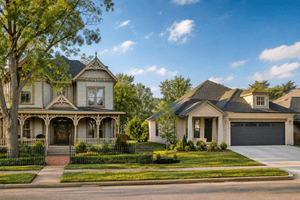
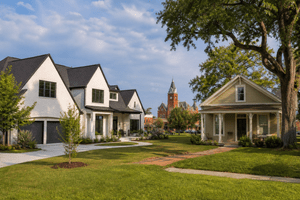
Historic homes near downtown Waxahachie generally sit on smaller lots (roughly 4,000 to 9,500+ square feet) and require a bigger renovation budget for foundation, electrical, and plumbing updates, while new construction communities on the city’s growth edges offer larger standardized lots, builder warranties, and HOA-maintained amenities — usually starting in the high $300,000s and climbing well past $700,000 depending on the community. The right choice comes down to how much renovation risk you’re willing to take on versus how much you value a move-in-ready floor plan.
By The Chad Smith Team | October 13, 2026
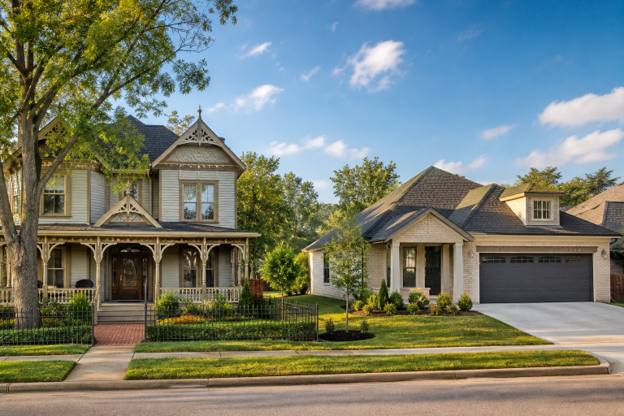
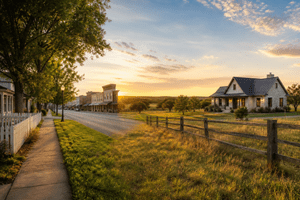
Waxahachie draws two very different kinds of buyers right now. One group wants the wraparound porches, brick storefronts, and courthouse-square charm that earned the city its “Gingerbread City” nickname. The other wants a brand-new floor plan, a builder warranty, and a driveway that’s never needed a foundation repair.
Both paths lead to the same city. They do not lead to the same monthly budget, maintenance timeline, or lot size. Here’s how they actually compare.
What You’re Buying in Waxahachie’s Historic Downtown
Waxahachie has five National Register Historic Districts and more than 80 buildings on the National Register of Historic Places, including Queen Anne-style Victorians in the West End Historic District dating to the 1890s. This is a big part of why the city has been used as a filming location for close to 90 movies and TV productions over the decades, including Bonnie and Clyde, Tender Mercies, and Places in the Heart — the 1897 Ellis County Courthouse and the surrounding brick storefronts read as a ready-made period set. Recent renewed film interest in the North Texas region has kept that reputation active.
That character comes with real trade-offs once you’re the one holding the deed.
Size and lot patterns. Historic-area homes vary widely — some Victorian-era houses run around 1,800 square feet, while restored Craftsman homes in the same districts can reach 4,000+ square feet. Lot sizes in the historic core typically fall between about 4,000 and 9,500 square feet, though some larger parcels approach an acre.
What older homes typically need. Homes built before 1940 average significantly higher annual maintenance costs than homes built in the last few years, and it’s common for a downtown Victorian to need real investment in:
• Foundation leveling or pier work, since North Texas clay soil shifts with moisture changes
• Electrical rewiring if knob-and-tube wiring is still present
• Plumbing replacement where galvanized pipe has corroded or foundation movement has caused “pipe bellies” that slow drainage
• Kitchen and bath system updates behind original-looking finishes
A restored, move-in-ready historic home will cost more upfront but shift that renovation risk to a previous owner. A home priced as a “project” can look like a bargain on paper and still need $60,000 to $80,000 or more in system updates before it’s fully current.
Historic district rules. Properties inside the Downtown Historic Overlay or the Oldham Avenue Historic Overlay are subject to additional design review, and most exterior work — plus a fair amount of electrical and plumbing work — requires a permit. The city does offer a tax incentive program that can credit 50% of qualifying reinvestment costs of $1,250 or more, covering structural, electrical, plumbing, mechanical, and interior work. We are not the source for how these overlay rules or incentive applications work in your specific case — verify current requirements directly with the City of Waxahachie’s planning department before you buy or budget a renovation.
If you want a sense of how this same historic-vs-new question plays out a little farther north, our look at what’s still standing in historic downtown Mansfield covers a lot of the same texture — walkable brick storefronts, older housing stock, and what’s changed around them.
New Construction on Waxahachie’s Growth Edges
Waxahachie’s new-home market looks nothing like its downtown core. More than two dozen builders are active in the city across 45-plus communities, with new-build pricing spanning roughly $316,000 to nearly $790,000 depending on the community, floor plan, and lot.
Builders currently active in and around Waxahachie include:
• David Weekley Homes — communities including Mustang Lakes and Parks at Wilson Creek
• Bloomfield Homes — North Grove and Sunrise at Garden Valley
• Century Communities
• Trophy Signature Homes
• Texas Heritage Custom Homes — custom and semi-custom builds
Lot sizes in these communities are far more standardized than downtown, commonly running 60- to 80-foot-wide home sites — generally larger and more uniform than the older in-town lots, though narrower than a rural acreage lot.
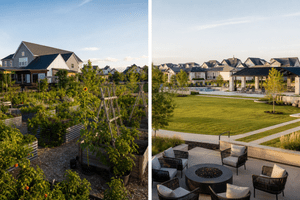
HOA presence. Most of these newer communities are amenity-driven, with community parks, trails, playgrounds, and pools that come with a mandatory homeowners association and its associated dues. Historic downtown properties, by contrast, typically do not carry an HOA. That’s a real monthly-cost and rules difference worth factoring in alongside the sale price.
What you’re trading for the newer price tag. New construction gives you current wiring, current plumbing, a builder warranty, and (in many cases) energy-efficient systems that an original 1900s home simply won’t have without a full retrofit. What you give up is the walkability, mature trees, and architectural character of the historic core — new-build communities sit on the city’s growth edges, generally a longer drive from the courthouse square and downtown shops than the historic districts themselves.
For a deeper side-by-side on what resale versus new construction actually means for your budget and timeline, our comparison of new construction and resale homes in Mansfield walks through the same math in a neighboring DFW market.
Property Taxes, Commute, and Waxahachie’s Growth Trajectory
Property taxes. Ellis County’s combined property tax rate — county, city, and school district layered together — runs in the neighborhood of 2.05% of taxable value for Waxahachie properties, with rates elsewhere in the county ranging roughly 2.1% to 2.6% depending on the specific taxing entities involved. That rate applies whether the home is a restored Victorian or a brand-new build; what changes is the taxable value the rate is applied against. Every Texas homeowner who claims their property as a primary residence also benefits from the statewide school district homestead exemption increase that took effect for the 2025 tax year, which raised the standard exemption applied against Waxahachie ISD’s portion of the bill. The Ellis County Appraisal District (400 Ferris Avenue, Waxahachie) is the source to confirm your specific exemption status and current valuation. For a sense of how Ellis County’s rate structure compares to other parts of the Metroplex, see our breakdown of property tax rates across Mansfield, Arlington, and Fort Worth.
Commute. Waxahachie sits at the junction of I-35E and US-287, which is a big part of why both the historic core and the newer communities have stayed in demand. From most parts of Waxahachie, downtown Dallas is roughly 30 miles and under 35 minutes away outside peak traffic, while downtown Fort Worth runs closer to 45 minutes. Where you land inside the city — closer to downtown versus out toward a new-build community — can add or subtract meaningful minutes depending on which side of town your commute route runs through. If commute planning is a major factor in your decision, our look at commute times from Mansfield into Dallas and Fort Worth breaks down how DFW’s highway grid affects daily drive times in a comparable outer-ring city.
Growth trajectory. Waxahachie’s film and TV production history — nearly 90 productions filmed here, from Bonnie and Clyde to more recent projects — has kept the downtown district active and visible even as the city’s population and new-construction footprint expand outward. That combination of a historic core with ongoing cultural relevance and rapid new-home development on the edges is part of why both segments of this market continue to move.
Which One Fits Your Situation?
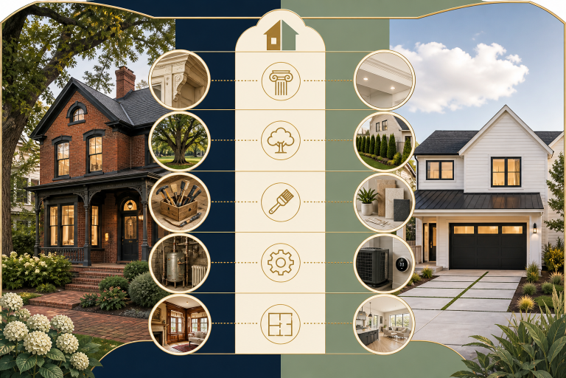
If you want predictable maintenance costs, a warranty, and a larger standardized lot, new construction is the more turnkey answer — you’ll pay for that predictability in price per square foot and, often, an HOA. If you want walkability, architectural character, and you’re comfortable budgeting for foundation, electrical, or plumbing work as you go, a historic downtown home can be the better long-term value — provided you go in with real renovation numbers, not guesses.
Either way, the exact numbers depend on the specific property, its condition, and current market activity — that’s where pulling comparable listings and running your actual budget matters more than any general rule of thumb.
If you’re thinking through this for your own situation, we’re happy to walk you through the numbers. Reach out anytime.
Frequently Asked Questions
Are homes in Waxahachie’s historic downtown more expensive than new construction?
It depends on the specific property and its condition. A fully restored historic home can list well above a comparable new-build starter home, while an unrenovated historic property may list lower upfront but require tens of thousands of dollars in foundation, electrical, or plumbing updates. New construction in Waxahachie currently spans roughly $316,000 to nearly $790,000 depending on the community and floor plan.
What should I know before buying an older home in Waxahachie’s historic district?
Budget for a thorough inspection that specifically checks foundation, wiring, and plumbing condition, since homes built before 1940 tend to carry higher ongoing maintenance costs. Properties inside the Downtown or Oldham Avenue Historic Overlay districts also require design review and permits for most exterior and system work — confirm current rules directly with the City of Waxahachie before you buy.
Do new construction communities in Waxahachie have HOA fees?
Most of the amenity-driven new-build communities around Waxahachie — the ones with community parks, trails, and pools — do carry a mandatory HOA and monthly or annual dues. Older homes in the historic downtown districts typically do not have an HOA, though they may fall under historic overlay design rules instead.
How long is the commute from Waxahachie to Dallas and Fort Worth?
Waxahachie sits at the intersection of I-35E and US-287, putting downtown Dallas roughly 30 miles and under 35 minutes away outside of peak traffic, with downtown Fort Worth closer to a 45-minute drive. Exact commute time shifts depending on which part of the city you live in and which highway leg you’re using.
Will my property taxes differ between a historic home and a new build in Waxahachie?
The combined Ellis County tax rate — roughly 2.05% for Waxahachie properties — applies the same way regardless of the home’s age. What differs is the taxable value the rate is applied to, along with the statewide school district homestead exemption increase that took effect for the 2025 tax year, which lowers the taxable value for any owner-occupied home. Confirm your specific valuation and exemptions with the Ellis County Appraisal District.
About The Chad Smith Team
The Chad Smith Team at Realty of America is one of the top-producing real estate teams in the Dallas-Fort Worth Metroplex, with more than 22 years of experience, 2,915 homes sold, and recognition by RealTrends among the top 1% of real estate professionals nationwide. The team helps first-time buyers, sellers, relocation clients, and new construction buyers throughout Arlington, Mansfield, Fort Worth, Midlothian, Waxahachie, and surrounding DFW communities. Through this blog, the Chad Smith Team shares expert market insights and practical advice to help North Texas buyers and sellers make informed real estate decisions.