What Happens During Escrow in a Texas Transaction?
What Happens During Escrow in a Texas Real Estate Transaction?
Escrow in Texas is handled by your title company, which holds your earnest money, verifies there are no ownership disputes, and only releases funds once every condition of your contract is satisfied. The two biggest risks during that window aren’t paperwork — they’re wire fraud and earnest money disputes, and Texas title companies now build specific safeguards, including remote online notarization, around both.
By The Chad Smith Team | July 30, 2026
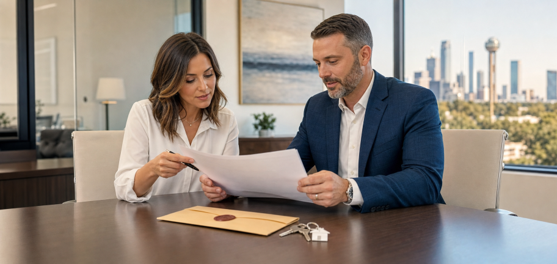
Most people picture escrow as a stack of paperwork sitting in a drawer somewhere. In practice, it’s your money sitting in a title company’s trust account while a handful of very specific things get verified — and it’s also the single point in a real estate transaction where criminals try hardest to intercept your funds. If you’re buying or selling in Mansfield, understanding how escrow actually protects you — and where it can go wrong — matters more than knowing the calendar dates.
Wire Fraud Is the Real Threat During Escrow, Not Paperwork Delays
Real estate wire fraud has become one of the fastest-growing financial crimes in the country. According to FBI Internet Crime Complaint Center data, reported losses from real estate wire fraud have climbed into the hundreds of millions of dollars annually, and Texas consistently ranks among the top states for cybercrime victims.
Here’s how the scam works: criminals gain access to an email account — yours, your agent’s, or someone at the title company — and monitor the conversation until closing day approaches. Then they send a message with “updated” wiring instructions, often using urgent language like “please confirm today” or “your closing is at risk.” The account name looks close enough to the title company’s real name that most people don’t catch it. The money goes to the scammer instead of your escrow account, and it is very rarely recovered.
A few protections are non-negotiable if you’re wiring any money during a Texas closing:
• Never trust wiring instructions that arrive by email, even if the email looks like it came from your title company or lender.
• Call your title company directly, using a phone number you got at the start of the transaction — not one included in the email with the new instructions.
• Treat any “updated” or “corrected” wiring instructions as a red flag, especially if they arrive close to your closing date or use pressure language.
• Confirm the receiving account name matches the title company exactly before you send anything.
This is also why title companies increasingly encourage buyers to fund earnest money and closing costs through secure portals rather than a standard wire whenever possible — it removes email from the chain entirely. If you’re still deciding where to keep the money you’ll eventually wire, it’s worth reading how we think about where to keep your down payment savings in the months leading up to a purchase.

What Actually Happens If You and the Other Side Disagree About Earnest Money
Most closings never touch this, but it’s worth understanding before you’re in the middle of it. If a Texas contract falls apart and buyer and seller disagree about who should keep the earnest money, the title company will not release a dollar of it without either both signatures on a release form or a court order. It legally can’t pick a side.
The process usually runs like this:
1. A written demand. Either party — or the title company itself — sends a formal written demand asking that the earnest money be released to a specific party.
2. A 15-day objection window. The other party has 15 days to formally object in writing. If they don’t, the title company can typically release the funds to whoever made the demand, minus any expenses owed.
3. Mediation, if there’s an objection. Most Texas contracts require mediation before litigation. It typically costs $500 to $2,000, split between the parties, and takes 30 to 60 days to schedule.
4. Interpleader, as a last resort. If the parties still can’t agree, the title company can deposit the disputed funds with the court and let a judge decide, removing itself from the fight entirely.
In practice, the overwhelming majority of these disputes settle in mediation, because the legal cost of fighting over earnest money usually exceeds the amount actually in dispute. The best protection against ever reaching this point is a clean, well-documented contract with clear termination language from the start — which is exactly why the option period and every deadline after it matter so much.
Remote Online Notarization: You May Not Need to Sit at the Title Company
One of the more useful shifts in how Texas closings work is remote online notarization, or RON. Texas has permanently authorized RON since 2018, and by 2026, it’s a standard option most title companies in the DFW area offer, not a novelty.
With RON, you meet your notary through a live, recorded video call instead of sitting across a desk from them. The notary verifies your identity using ID verification technology, watches you sign electronically in real time, and applies a digital notarial seal. Deeds, closing packages, and most of the documents in your closing stack can be handled this way.
It’s particularly useful if you’re:
• Relocating to Mansfield from out of state and can’t be physically present at closing
• Selling a Mansfield home while already living elsewhere
• Juggling a schedule that makes an in-person appointment difficult
Not every lender or every document in every transaction qualifies for RON — some still require in-person or “hybrid” signing depending on the loan program — so it’s worth asking your title company early which parts of your specific closing can be done remotely.
The Bottom Line on Escrow Protection
Escrow exists to protect your money until every condition of the deal is met, but the title company can only do its job if you do yours — verifying wiring instructions by phone, understanding what happens if a dispute arises, and knowing what signing options are actually available to you. Every closing has its own wrinkles depending on your lender, your timeline, and how the contract is written, which is exactly the kind of detail worth walking through with someone who does this every day. If you want a clear picture of what your specific transaction will look like — including the cash you’ll actually need to bring to the table — our guide to understanding cash to close is a good next stop.
Frequently Asked Questions
What’s the biggest scam risk during a Texas closing, and how do I avoid it?
Wire fraud is the biggest risk. Criminals intercept email communication and send fake “updated” wiring instructions right before closing. Always confirm wiring instructions by phone, using a number you obtained independently, before sending any money.
Who is responsible if I wire money to the wrong account because of a scam?
Generally, you bear the loss if you wire money based on fraudulent instructions, since the funds never reached a legitimate account the title company controls. This is why verifying instructions by phone before every wire is non-negotiable, not optional.
What happens if the buyer and seller disagree about who gets the earnest money back?
The title company can’t release the funds without both parties’ signatures or a court order. The process typically starts with a written demand, allows 15 days for objection, moves to mediation if there’s a dispute, and can end in an interpleader action if it’s still unresolved.
Can I close on my home without physically going to the title company?
In many cases, yes. Texas has permanently authorized remote online notarization, which lets you sign closing documents through a live video call with a commissioned online notary. Availability depends on your lender and loan type, so confirm with your title company early.
Does Texas allow remote online notarization for real estate closings?
Yes. Texas authorized RON in 2018 and it remains a standard option offered by most DFW-area title companies today, covering deeds, closing packages, and most real estate documents.
If you’re getting ready to buy or sell in Mansfield and want a clear-eyed walk-through of how your specific closing will work, including how to protect your funds along the way, we’re happy to lay it out step by step. Reach out anytime.
About The Chad Smith Team
The Chad Smith Team at Realty of America is one of the top-producing real estate teams in the Dallas-Fort Worth Metroplex, with more than 22 years of experience, 2,915 homes sold, and recognition by RealTrends among the top 1% of real estate professionals nationwide. The team helps first-time buyers, sellers, relocation clients, and new construction buyers throughout Arlington, Mansfield, Fort Worth, Midlothian, Waxahachie, and surrounding DFW communities. Through this blog, the Chad Smith Team shares expert market insights and practical advice to help North Texas buyers and sellers make informed real estate decisions.