Buying a Horse Property in Aledo: Barns, Fencing, and Land Use
What should you check before buying a horse property in Aledo, TX?
Before buying a horse property in Aledo, evaluate the fencing type and condition (no-climb wire and pipe fencing hold up better than barbed wire), the barn’s structural soundness and drainage, the property’s ag exemption status with the Parker County Appraisal District, and whether the tract sits in a deed-restricted subdivision or on unrestricted acreage. Each of these affects both how the land functions day to day and what it’s worth at resale.
By The Chad Smith Team | November 9, 2026
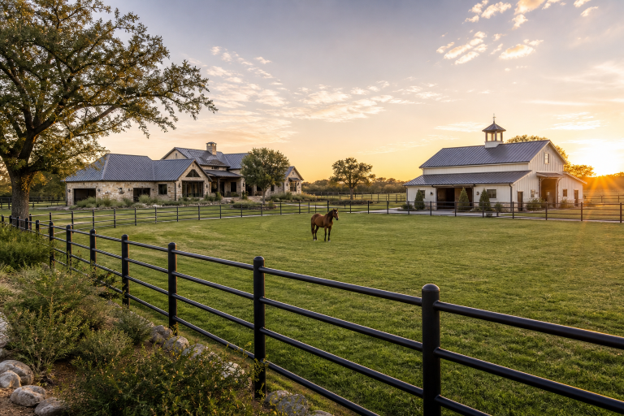
Aledo has become one of the go-to spots in Parker County for buyers who want acreage without giving up a short drive into Fort Worth. Old Annetta Road, FM 5, and the pockets of unrestricted land ringing the city pull in a steady stream of horse owners every year. But “horse property” covers a lot of ground — literally and figuratively — and not every listing that says it’s horse-ready actually is.
If you’re comparing properties in the Aledo area, the decision usually comes down to four things: fencing, barns and outbuildings, how the land is classified for tax purposes, and whether the property carries deed restrictions. Here’s how to size each one up.
Fencing: what’s already there and what it will cost you
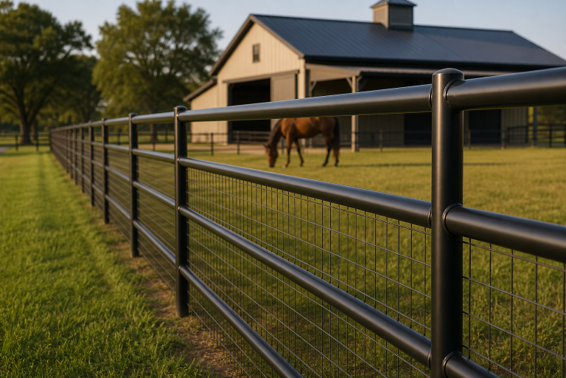
Fencing is the first thing to walk when you tour a horse property, because it tells you a lot about how the previous owner actually used the land.
Barbed wire shows up on a lot of older Parker County acreage because it’s cheap and it works fine for cattle. It does not work well for horses. A spooked horse can catch a leg or shoulder in barbed wire and cause a serious injury, so if a property you’re considering is fenced entirely in barbed wire, plan on replacing at least the perimeter and any paddocks before you move horses in.
No-climb wire fencing (sometimes called V-mesh) is the safer standard for horses. The tight diamond pattern keeps hooves from getting caught and holds up well over time, though it’s pricier than barbed wire to install new.
Pipe fencing, often paired with no-climb wire along the bottom rails, is what you’ll see on a lot of the nicer Aledo-area horse properties. It’s durable, visible to horses (so they don’t test it), and it holds the classic North Texas ranch look that shows well at resale. It’s also the most expensive option, so a property that already has good pipe fencing in place carries real value that’s easy to overlook if you’re focused only on the house.
When you walk a property, check for rusted or sagging pipe, loose wire, rotted wood posts, and any sections patched with materials that don’t match the rest — that’s usually a sign of an unresolved problem, not a finished repair.
Barns and outbuildings: structure first, style second
A barn that looks great in photos can still have real problems. Focus on a few things during your showing or inspection:
• Roof and drainage — check for sagging rooflines, water stains on the underside of the roof, and whether the barn sits high enough that runoff drains away from stalls rather than into them.
• Foundation and framing — wood posts set directly in soil rot from the ground up over time; posts set in concrete or on metal brackets last longer.
• Stall footing and ventilation — good airflow matters as much as square footage for horse health, especially through a Texas summer.
• Electrical and water lines — ask when they were last updated, and whether any work was done with permits, since this varies a lot on older Parker County properties.
• Arenas, loafing sheds, and hay storage — these add real usability, but confirm they’re structurally sound rather than just present.
A standard home inspector may not dig deep into agricultural outbuildings, so for a property with a barn, arena, or multiple outbuildings, it’s worth bringing in someone with equine or agricultural building experience for a closer look before you close.
Land use, ag exemptions, and what they mean for your tax bill
One of the biggest questions we get from buyers looking at acreage in and around Aledo is whether the property qualifies for an agricultural valuation — commonly called an “ag exemption” — through the Parker County Appraisal District.
A few basics worth knowing as you compare properties:
• Parker County generally looks for a minimum of around 10 acres actively devoted to agricultural use, including grazing horses, to qualify for open-space (1-d-1) agricultural valuation, though the appraisal district evaluates each application individually.
• The land has to show a genuine history of agricultural use — simply owning horses on a smaller lot doesn’t automatically qualify.
• If a property currently carries an ag valuation, ask the seller how long it’s been in place and what qualifying use has supported it. Losing that valuation triggers a rollback tax, so if you plan to keep the exemption, you’ll want to maintain the qualifying use after closing.
• Wildlife management valuation is a related option for landowners already under an ag valuation who want to shift toward habitat management rather than livestock, but it requires an approved management plan on file with the appraisal district.
None of this is a substitute for advice from the Parker County Appraisal District or a property tax professional, but knowing the basics helps you compare two similarly priced properties with very different long-term carrying costs.
Easements, wells, and septic — the things you can’t see from the road
Rural Aledo properties commonly run on private wells and septic systems rather than city water and sewer, and that changes what you need to verify before closing.
• Well output and water quality — ask for well records if available, and consider a pump test and water quality check, since output and mineral content can vary significantly from one parcel to the next even in the same area.
• Septic system age and capacity — an older on-site sewage facility sized for a small house may not support a larger barn, guest quarters, or an expanded household.
• Easements — review the title commitment closely for utility easements, shared driveway or access easements, and any pipeline or mineral right reservations. These show up in Schedule B of the title commitment and can affect where you’re able to build fencing, barns, or arenas later.
Your title company will walk you through what’s recorded against the property, but it’s worth reviewing those items early in your option period rather than waiting until just before closing.
Deed-restricted subdivisions vs. unrestricted acreage
This is where a lot of horse-property searches in the Aledo area get complicated, because the rules can change from one road to the next.
Some newer subdivisions around Aledo carry deed restrictions that limit livestock — for example, capping horses at a certain number per acre or requiring architectural approval for barns and outbuildings. Others, particularly older acreage tracts and unrestricted parcels along roads like Old Annetta Road, don’t carry those limits at all.
Before you fall in love with a property, confirm:
• Whether the property sits in a platted subdivision with recorded restrictions, or on unrestricted acreage.
• If restrictions apply, exactly how many horses or other livestock are allowed, and whether structures like barns or arenas need approval.
• Whether an HOA exists, and if so, what it governs beyond livestock — fencing style, outbuilding size, or setback requirements are common.
If you’re weighing Aledo against nearby areas, our Aledo community page is a good starting point for seeing the range of acreage and horse-friendly listings currently on the market, from restricted subdivisions to unrestricted tracts.
The bottom line
A horse property in Aledo isn’t just a house with more land attached — the fencing, the barn, the tax classification, and the deed restrictions all shape how usable and how valuable the property actually is. Two properties at the same price point can carry very different costs and limitations once you look past the listing photos.
If you’re comparing horse properties in Aledo or elsewhere in Parker County, we walk buyers through exactly these details before they write an offer — from checking fencing and barn condition to pulling deed restrictions and reviewing ag exemption status. Reach out anytime, and we’re happy to run through what a specific property offers.
Frequently Asked Questions
Is barbed wire fencing acceptable for a horse property in Aledo?
Barbed wire is common on older Parker County acreage, but it’s not considered safe for horses because it can cause serious injury if a horse gets tangled in it. If a property you’re considering only has barbed wire, plan to budget for replacing perimeter and paddock fencing with no-climb wire or pipe fencing.
How many acres do you need for an ag exemption in Parker County?
Parker County generally looks for a minimum of around 10 acres in active agricultural use, such as grazing horses, to qualify for open-space agricultural valuation, though each application is reviewed individually by the appraisal district. Confirm current qualifying status directly with the Parker County Appraisal District before assuming a property carries or will keep its exemption.
Do all Aledo-area properties allow horses?
No. Some subdivisions around Aledo carry deed restrictions that limit the number of horses or other livestock, or require approval for barns and outbuildings, while unrestricted acreage tracts typically don’t have those limits. Always confirm a property’s deed restrictions and HOA rules before assuming it will work for your horses.
What should I check on a barn before buying a horse property?
Focus on the roof and drainage, the condition of the foundation and framing, stall ventilation, and the age of electrical and water lines. A standard home inspection may not fully cover agricultural outbuildings, so consider a separate inspection for the barn and any arenas on a property with significant equine infrastructure.
Do horse properties in Aledo typically use well water and septic systems?
Yes, most rural properties in and around Aledo rely on private wells and on-site septic systems rather than city utilities. It’s worth reviewing well output, water quality, and septic capacity relative to the property’s current and planned use before closing.
About The Chad Smith Team
The Chad Smith Team at Realty of America is one of the top-producing real estate teams in the Dallas-Fort Worth Metroplex, with more than 22 years of experience, 2,915 homes sold, and recognition by RealTrends among the top 1% of real estate professionals nationwide. The team helps first-time buyers, sellers, relocation clients, and new construction buyers throughout Arlington, Mansfield, Fort Worth, Midlothian, Waxahachie, and surrounding DFW communities. Through this blog, the Chad Smith Team shares expert market insights and practical advice to help North Texas buyers and sellers make informed real estate decisions.