Understanding Dallas Historic District Overlays Before You Buy
What is a historic district overlay in Dallas, and how does it affect buying a home?
Dallas protects its older neighborhoods through two distinct zoning tools — Landmark Historic Districts and Conservation Districts — both of which add design review requirements for exterior changes, additions, and demolition. Before you write an offer on a home in one of Dallas’s established neighborhoods, it’s worth confirming whether the property sits inside one of these overlays, because the designation can change your renovation timeline, the materials you’re allowed to use, and what future owners can and can’t do to the house.
By The Chad Smith Team | October 27, 2026
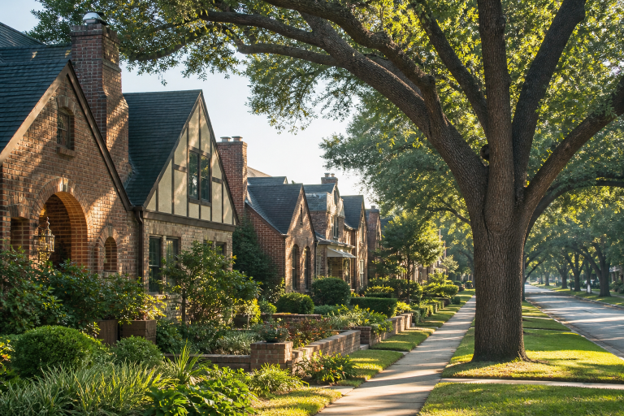
Dallas has no shortage of neighborhoods with real character — mature trees, 1920s bungalows, Tudor cottages, and blocks that look much the same today as they did decades ago. A lot of that comes down to zoning. Large sections of East Dallas, the M Streets, Lakewood, and other established pockets of the city carry an overlay that regulates what owners can change on the outside of a home.
If you’re shopping in one of these neighborhoods, here’s what that overlay actually means and what to check before you get attached to a house.
Two different kinds of protection
Dallas uses two separate tools, and they work differently.
• Landmark Historic Districts are individually designated by the city’s Landmark Commission. Neighborhoods like Swiss Avenue, Munger Place, and the Wilson Historic District fall into this category. Exterior changes typically go through a more formal review process.
• Conservation Districts are zoning overlays with their own minimum development and architectural standards — things like setbacks, lot coverage, roof pitch, and exterior materials. The M Streets and parts of Lakewood are conservation districts. Review here tends to be more administrative and predictable than the landmark process, but it’s still a real requirement.
A property can also be individually designated as a landmark on its own, sit outside any overlay entirely, or fall under more than one set of standards depending on its exact address. The only way to know for sure is to check the specific parcel, not just the neighborhood name.
Why this matters before you buy
If you’re planning to update a kitchen, add a second story, replace windows, or build a fence, the overlay determines how that project works.
• Interior work — Dallas requires a residential permit for most construction, renovation, or major repairs. Some nonstructural interior remodeling on a single-family home may not need a permit, but that exception doesn’t extend to structural work.
• Exterior work — In a conservation or historic district, exterior changes — siding, roofing materials, additions, fences, window replacement — usually require a separate design review on top of the standard building permit. The city looks at whether the change fits the district’s standards.
• Demolition — Tearing down or substantially altering a home in a landmark district involves additional review that doesn’t apply outside these areas.
None of this means you can’t renovate. It means the process has an extra step, and that step can add time to a project. If you’re buying a fixer-upper with big renovation plans, you’ll want to understand the district’s specific standards before you close, not after.
What this looks like in practice

Say you’re touring a 1930s bungalow in the M Streets with plans to add a primary suite over the garage. In a conservation district, that addition would likely need to match the district’s standards for roof pitch, setbacks, and exterior materials — matching brick, keeping the roofline consistent with the block, or staying within a certain height. None of that makes the project impossible, but it does mean your architect or contractor needs to design around the district’s rules from the start rather than submitting standard plans and hoping they pass.
That’s worth budgeting extra design and approval time for, especially if you’re planning to start renovations soon after closing.
Other Dallas neighborhoods with overlays
The M Streets and Lakewood aren’t the only areas where this comes up. Dallas has designated Landmark Historic Districts covering neighborhoods like Swiss Avenue, Munger Place, and the South Boulevard-Park Row area, plus conservation districts in parts of Winnetka Heights, Kessler Park, and elsewhere around the city. Each has its own set of standards, and a district’s name doesn’t tell you much on its own — the actual rules can range from fairly permissive to quite restrictive depending on when the district was established and what it was designed to preserve.
This is part of why it’s worth treating “historic neighborhood” as a starting point for research rather than a complete answer. Two homes in two different Dallas historic areas can have very different rules for something as simple as replacing a garage door or repainting the exterior.
How long design review actually takes
For buyers with renovation plans on a tight timeline, this is often the real question. Conservation district review in Dallas tends to be more predictable and administrative — many routine exterior changes move through in a matter of weeks once a complete application is submitted. Landmark district review, especially for more significant changes or additions, can take longer and may involve a public hearing before the Landmark Commission or a subcommittee, depending on the scope of the work.
If you’re buying with immediate renovation plans, it’s worth asking a contractor or architect who has worked in that specific district recently what their real-world timeline looked like — general city guidelines are a starting point, but recent project experience tends to be a better predictor.
These districts are still evolving
Historic and conservation districts in Dallas aren’t fixed forever — the city continues to review, update, and in some cases expand them. Lakewood’s original conservation district dates back to 1988, and a newer expansion, Lakewood CD-2, was approved in 2025 and took effect that spring. Dallas has also been working through a broader Historic and Cultural Preservation Strategy that could shape how these overlays are managed going forward.
The practical takeaway: even if a neighborhood you’re considering doesn’t currently carry an overlay, it’s worth asking whether one has been proposed or discussed. And if a home is already inside a district, confirm which version of the standards currently applies, since boundaries and rules do get updated.
How to check before you make an offer
A few ways to confirm a property’s status:
1. Ask your agent to pull the zoning classification for the specific address, not just the neighborhood.
2. Check the City of Dallas Development Services records for the property, which will show any landmark or conservation district overlay.
3. Ask the seller or listing agent directly whether any exterior work has gone through district review in the past — that history can tell you a lot about how the process actually runs on that block.
4. Review the property survey as part of your due diligence. It’s one of several documents worth understanding before you close — see our overview of property surveys in Texas for what to look for.
What to ask before you write an offer
Before you get too attached to a specific house, it’s worth asking:
• Is this property inside a Landmark District, a Conservation District, both, or neither?
• What specific standards apply — setbacks, materials, roof pitch, window style?
• Has the current owner made any exterior changes, and did those go through district review?
• If you have renovation plans, would they realistically be approved under the current standards?
• How does this affect your overall commute and timeline if you’re relocating from outside Dallas?
Our DFW commute breakdown can help you weigh a close-in Dallas neighborhood against a suburb further out.
These are the kinds of questions that are much easier to answer before you’re under contract than after.
The bottom line
Dallas’s historic and conservation districts are part of what gives neighborhoods like the M Streets, Lakewood, and East Dallas their character — and that character is exactly why buyers are drawn to them in the first place. The overlay isn’t something to avoid. It’s something to understand going in, especially if you’re planning any exterior work down the road.
If you’re touring homes in one of these Dallas neighborhoods and want a clear read on what a specific property’s zoning actually allows, we’re happy to help you sort through it before you make an offer. Reach out anytime.
Frequently Asked Questions
What’s the difference between a Dallas historic district and a conservation district?
Landmark Historic Districts are individually designated by the city’s Landmark Commission and typically involve a more formal review process for exterior changes. Conservation Districts are zoning overlays with their own architectural and development standards — like setbacks and exterior materials — and generally follow a more administrative review process.
How do I find out if a home is in a Dallas historic or conservation overlay?
Check the property’s zoning classification through the City of Dallas Development Services records, or ask your agent to confirm the specific parcel’s status. The neighborhood name alone isn’t enough — overlay boundaries can follow specific streets and blocks rather than an entire area.
Do I need city approval to renovate a home in a Dallas conservation district?
For most exterior changes — additions, roofing, siding, fences, window replacement — yes, in addition to a standard building permit. Interior, nonstructural work is less likely to require the extra review, but structural changes generally still need a permit.
Does buying in a conservation district limit what I can build later?
It limits what you can build on the exterior without going through district review, but it doesn’t prevent renovation. Each district has its own standards for materials, scale, and design, so what’s approved in one district may not be approved in another.
Are Dallas conservation districts still being created or expanded?
Yes. The city has approved new districts and expansions in recent years, including the Lakewood CD-2 expansion in 2025, and continues to review its broader preservation strategy. It’s worth checking whether a neighborhood you’re considering has any pending changes.
Considering a home in one of Dallas’s historic neighborhoods?
Buying in a district with character means understanding the rules that come with it. If you’d like help figuring out what a specific Dallas property’s overlay status actually means for your plans, we’re happy to walk through it with you. Reach out anytime.
About The Chad Smith Team
The Chad Smith Team at Realty of America is one of the top-producing real estate teams in the Dallas-Fort Worth Metroplex, with more than 22 years of experience, 2,915 homes sold, and recognition by RealTrends among the top 1% of real estate professionals nationwide. The team helps first-time buyers, sellers, relocation clients, and new construction buyers throughout Arlington, Mansfield, Fort Worth, Midlothian, Waxahachie, and surrounding DFW communities. Through this blog, the Chad Smith Team shares expert market insights and practical advice to help North Texas buyers and sellers make informed real estate decisions.