Selling Your Midlothian Home When Builders Are Your Competition
Do you have to compete with new construction to sell your home in Midlothian, TX?
Yes — and understanding how gives you the advantage. Midlothian is one of the fastest-growing cities in Ellis County, with builders actively selling in communities like Villages of Walnut Grove, Mockingbird Heights, Westside Preserve, and Oak Creek Ranch. Resale sellers who price competitively, highlight what new construction can’t offer, and understand builder incentive structures typically sell just as fast — sometimes faster — than the new-build inventory down the street.
By The Chad Smith Team | October 23, 2026
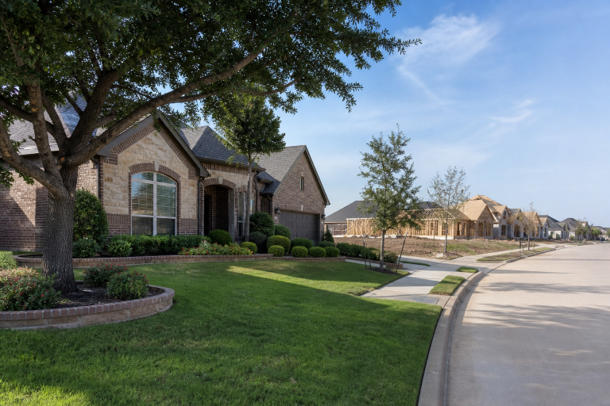
Selling in Midlothian right now means selling next to a builder, not just next to your neighbor.
That’s a different competitive landscape than most sellers are used to. You’re not just up against other resale listings — you’re up against builders with marketing budgets, model homes, and financing tools you can’t match dollar for dollar.
The good news: you have advantages builders don’t. You just need to use them correctly.
Midlothian’s Growth Is Reshaping the Resale Market
Midlothian’s population has grown from roughly 35,469 in the 2020 census to an estimated 45,000-48,000 residents today — growth of nearly 38% in just a few years. That makes it Ellis County’s fastest-growing city.
The city logged around 160 new single-family building permits in just the first quarter of 2026 alone. Multiply that pace across the year, and you get a sense of how much new inventory resale sellers are competing against.
Several large communities are actively selling or breaking ground:
• Villages of Walnut Grove — Bloomfield Homes, with floor plans like the Bellflower and Primrose series
• Mockingbird Heights — Bloomfield Homes, Primrose II and V plans
• Westside Preserve — Kindred Homes, from the $400s on 60-foot lots
• Oak Creek Ranch — Lillian Homes, 1-acre-plus homesites starting in the $600s
This isn’t a handful of scattered builders. It’s sustained, multi-community development that’s going to keep adding new-build inventory to your competitive set for the next several years.
What Builders Are Offering That You Need to Know About

Here’s what makes new construction tough competition right now: builders aren’t really competing on price. They’re competing on payment.
Builders across DFW are advertising:
• Rate buydowns bringing effective rates down into the high-4% to low-5% range, compared to roughly 6.3% for a typical resale buyer using conventional financing
• Closing cost credits often in the $10,000+ range
• Bundled incentive packages — buydown plus credits plus design upgrades — that can add up to $15,000-$40,000 in total value on a single sale
That’s a meaningful gap. A buyer comparing your resale listing to a builder’s model home isn’t just comparing square footage and finishes — they’re comparing monthly payments. And builders can move that number in ways an individual seller can’t.
This doesn’t mean you’re at a disadvantage everywhere. It means your pricing and marketing need to account for it directly instead of ignoring it.
Where Resale Homes Still Win
New construction has real limits that builders’ marketing doesn’t advertise.
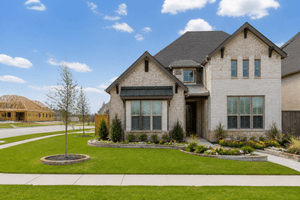
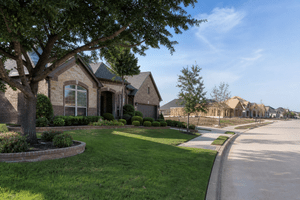
Established landscaping and mature lots. New-build lots are graded dirt with sod and a couple of saplings. A resale home with established trees, a fenced yard, and settled landscaping offers something a buyer can’t get from a builder at any price — it takes years to grow in. If you’ve invested in your yard, this is a legitimate selling point worth featuring prominently in photos and showings. Knowing which upgrades actually pay off before you list is worth understanding — our breakdown of landscaping ROI covers exactly which projects matter to buyers versus which ones don’t move the needle.
No construction timeline uncertainty. Buyers under contract for new builds often face delayed completion dates, supply chain hiccups, or last-minute change-order costs. A resale home is done. Buyers can walk through the actual finished product, not a model home three doors down from their real lot.
Location within established neighborhoods. Many resale homes sit closer to existing retail, schools already built and operating, and mature street networks — not areas still under active construction with truck traffic and unfinished amenities.
No builder lot premiums or structural options games. With new construction, upgraded lots, structural changes, and popular floor plan options routinely add tens of thousands of dollars to the base “from” price advertised online. What you see in your resale listing is closer to the real, all-in number.
Pricing Strategy: Match the Payment, Not Just the Price
Since builders compete on monthly payment rather than sticker price, your pricing strategy should account for that gap rather than pretend it doesn’t exist.
A few approaches that work in Midlothian’s current market:
1. Price at or slightly under comparable new-build square footage pricing in your immediate area, adjusted for your home’s age and condition.
2. Consider offering a rate buydown or closing cost credit of your own, funded through your net proceeds, rather than dropping your list price outright. This keeps your price anchor intact for appraisal purposes while still closing the payment gap for buyers.
3. Price to reflect condition honestly. If your home needs updates a builder’s finish package doesn’t, buyers will do that math whether you price for it or not.
Your specific pricing strategy depends on what’s actively being built and sold within a few miles of your address — that’s where a local market analysis showing real, agent-accessible sold data (not just public estimates) makes the difference between guessing and pricing with confidence.
Days on Market: What to Expect
Midlothian’s resale market has been moving at a moderate pace, with reported median days on market ranging from the low 60s to well over 100 depending on price point, condition, and how a listing is marketed. New construction, by contrast, often “sells” faster on paper because builders count a home as sold at contract signing, even months before closing.
Don’t compare your timeline to a builder’s marketing claims. Compare it to actual closed resale activity in your specific ZIP code and price range, which is a conversation worth having with someone who can pull those numbers directly.
Timing your listing also matters more than most sellers assume — activity and buyer traffic shift meaningfully by season in North Texas, a pattern we’ve broken down in our guide to the best month to list your home, which applies just as directly to Midlothian’s market rhythms.
Ellis County Property Taxes: A Point Worth Understanding
Ellis County’s effective property tax rate runs around 1.35%, with combined rates (county, city, school district, and any special districts) landing closer to 2% in many areas once you include Midlothian ISD’s rate.
Midlothian ISD’s adopted 2025-2026 tax rate is $1.0708 per $100 of valuation, among the lower rates in the surrounding area, and the district offers a 10% local homestead exemption on top of the state exemption.
Buyers comparing a new build to your resale home will often ask about taxes early — new construction in newer developments sometimes carries additional PID (Public Improvement District) or MUD (Municipal Utility District) assessments that older, established neighborhoods don’t have. If your home doesn’t carry those extra assessments, that’s worth pointing out clearly in your listing and during showings.
Texas has no state income tax and no transfer tax on real estate sales, so property tax context and any special district fees are genuinely the numbers buyers should be weighing — not manufactured comparisons.
Staging and Presentation Against a Model Home Standard
Builders sell an experience: a clean, fully staged model home with new-smell carpet and coordinated finishes. Your resale home needs to hold its own against that standard, not against an empty house.
Practical steps that matter most:
• Declutter aggressively — model homes have almost nothing in them beyond staged furniture
• Refresh paint in neutral tones if your walls show wear or dated color choices
• Address obvious deferred maintenance before listing — buyers comparing you to new construction will notice a worn fence or aging fixtures faster than they would in a home with no new-build alternative nearby
• Professional photography that matches the polish of builder marketing materials
• Highlight mature trees, established landscaping, and finished yard space in your primary listing photos — this is your visual advantage over a dirt lot
Concessions: When and How to Offer Them
Builders offer concessions as a matter of routine business. Resale sellers sometimes resist offering any, worried it signals desperation. In a new-build-heavy market like Midlothian, a well-structured concession is simply how you stay competitive.
Options worth discussing before you list:
• A rate buydown credit toward the buyer’s closing costs, structured through the title company at closing
• A home warranty to offset the “peace of mind” advantage new construction naturally has
• Repair credits in lieu of completing repairs yourself, giving buyers flexibility
None of these require you to reduce your list price. They let you meet builder-style incentives on their own terms while keeping your equity position intact.
Frequently Asked Questions
Is it harder to sell a resale home in Midlothian right now because of all the new construction? It’s more competitive, not harder in an absolute sense. Resale homes still sell regularly in Midlothian — the key is pricing and marketing that accounts for what builders are offering nearby, rather than pricing as if that competition doesn’t exist.
Should I offer a rate buydown like builders do? It depends on your price point, your equity, and what similar new construction nearby is offering. A buydown or closing cost credit can close the payment gap for buyers without dropping your list price, but the right structure depends on your specific numbers.
Do new-build homes in Midlothian really sell faster than resale homes? Builder “sold” numbers often reflect contract signings, not closings, and can happen months before the home is actually complete. Comparing your resale timeline to actual closed resale activity in your area gives a more accurate picture than comparing it to builder marketing claims.
Are there extra fees with new construction that resale buyers don’t pay? Some new developments include PID or MUD assessments that fund infrastructure, which can add to a buyer’s monthly costs beyond the base mortgage payment. Established resale neighborhoods often don’t carry these, which is worth highlighting to buyers directly.
How do Ellis County property taxes compare between a new build and an older resale home? Both are subject to the same Ellis County, city, and Midlothian ISD tax rates, but new-construction valuations can rise quickly once the home is fully assessed after the first year. An established home’s tax history is already known, which some buyers find easier to plan around.
If you’re thinking through this for your own situation, we’re happy to walk you through the numbers. Reach out anytime.
About The Chad Smith Team
The Chad Smith Team at Realty of America is one of the top-producing real estate teams in the Dallas-Fort Worth Metroplex, with more than 22 years of experience, 2,915 homes sold, and recognition by RealTrends among the top 1% of real estate professionals nationwide. The team helps first-time buyers, sellers, relocation clients, and new construction buyers throughout Arlington, Mansfield, Fort Worth, Midlothian, Waxahachie, and surrounding DFW communities. Through this blog, the Chad Smith Team shares expert market insights and practical advice to help North Texas buyers and sellers make informed real estate decisions.