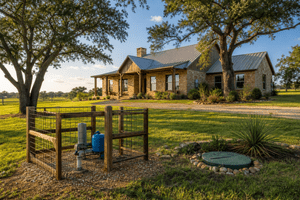
Well, Septic, and Water Rights for Weatherford Country Homes
What do you need to know about well water, septic systems, and water rights before buying a country home near Weatherford, TX?
Most acreage properties around Weatherford and across Parker County run on a private well and an on-site septic system instead of city utilities. Before you close, plan on a water test ($50–$400), a septic inspection ($300–$600), and confirmation of the system’s permit history with Parker County Environmental Health. Texas is a Rule of Capture state, which means the landowner above an aquifer generally controls the groundwater beneath their own property, subject to Upper Trinity Groundwater Conservation District rules.
By The Chad Smith Team | October 26, 2026
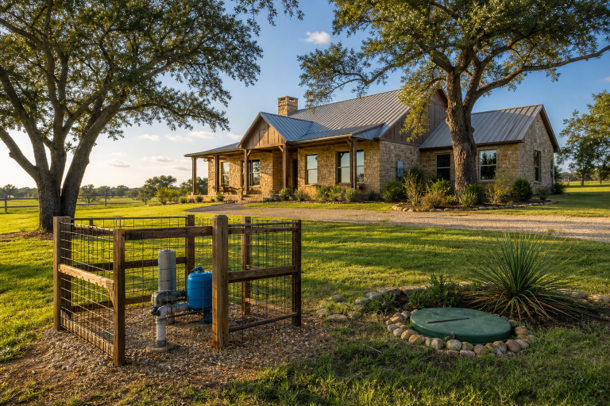
If you’re looking at acreage outside Weatherford’s city limits, there’s a good chance the property doesn’t hook into a municipal water line or a city sewer system. Instead, you’re dealing with a private well and an on-site septic system — and both come with their own inspection process, cost range, and closing timeline.
This is one of the most common questions we field from buyers moving from a subdivision in Fort Worth or Arlington out to five, ten, or twenty acres in Parker County. The rules are different out here, and getting them wrong can delay your closing or cost you money you didn’t budget for.
Private Well Water: What to Test and What It Costs
Texas doesn’t require most private well owners to test their water on any set schedule. That’s exactly why you, as a buyer, need to build it into your due diligence — nobody else is going to do it for you.
A standard water test panel for a Parker County well should cover:
• Total coliform bacteria and E. coli — the baseline safety check
• Nitrates — often tied to nearby septic systems or agricultural runoff
• pH, hardness, and total dissolved solids — affect taste, plumbing, and appliance life
• Iron and manganese — common in North Texas groundwater and can stain fixtures
• Arsenic and fluoride — naturally occurring in some Parker County aquifers, worth confirming
Basic bacteria-and-nitrate testing runs about $50–$100 through a certified lab. A comprehensive first-year panel that adds arsenic, heavy metals, and other trace elements can run $200–$400. The Texas Groundwater Protection Committee maintains a list of certified labs, and it’s worth using one your lender or inspector recognizes, since some loan types require documentation from an accredited source.
Beyond water quality, you also want a flow and yield test. A well that produces less than 3–5 gallons per minute can struggle to keep up with a household during peak use — showers, laundry, and irrigation all at once. This matters even more if the property has livestock or a garden that depends on well output.
If the well was drilled or altered recently, confirm it was registered with the Upper Trinity Groundwater Conservation District, which covers Parker, Hood, Wise, and Montague Counties. Registration doesn’t cost the seller anything after the fact, but a missing registration is worth flagging before you close.
Septic Systems: Inspection, Permitting, and Lifespan
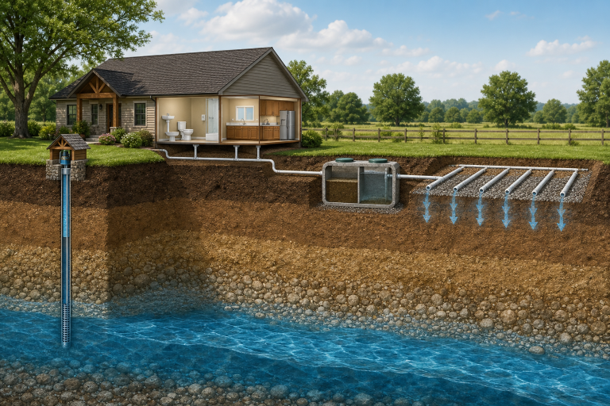
Parker County Environmental Health, operating as a TCEQ-authorized agent, handles all on-site sewage facility (OSSF) permitting in the county — including anything on Weatherford-area acreage outside city sewer service. Before you get too far into a purchase, you’ll want the seller’s permit record pulled, which tells you what type of system is installed and when it was last inspected.
There are two main types of systems you’ll run into on Parker County properties:
Conventional (septic tank and drain field) systems: - Not legally required to be inspected annually, though it’s smart practice - Tank typically lasts 25–40 years; drain field lasts 15–25 years with proper care - Annual maintenance runs $350–$850
Aerobic treatment systems (more common on smaller lots or where soil doesn’t perc well): - Texas requires inspections three times a year under a mandatory maintenance contract - A 2-year initial maintenance contract is required on new installations - Annual maintenance runs $700–$1,500, since components like blowers and pumps typically need replacing every 5–10 years
A pre-purchase septic inspection — checking tank integrity, sludge levels, drain field function, and aerobic component condition where applicable — typically costs $300–$600. This is separate from your general home inspection and should be done by a licensed OSSF inspector, not assumed to be covered by a standard inspector’s walkthrough.
If you’re a seller, having a current inspection and maintenance contract on hand before you list can prevent a septic issue from stalling your contract midway through option period. It’s one of the same due-diligence steps we recommend covering in a full property survey — something we walk through in more detail in our guide to property surveys in Texas, which also matters for confirming exactly where your well, septic system, and drain field sit relative to property lines and easements.
Texas Water Rights: The Rule of Capture
Texas follows the Rule of Capture for groundwater, and it’s worth understanding in plain terms before you buy acreage that depends on a well.
Under this rule, a landowner generally has the right to pump groundwater from beneath their own property — even if that pumping affects a neighbor’s well. The Texas Supreme Court established this back in 1904, and it still governs most groundwater use across the state today, including in Parker County.
A few things to know:
• Groundwater is treated as the private property of the landowner once it’s captured.
• The Upper Trinity Groundwater Conservation District has authority to regulate pumping, spacing, and well registration within Parker County and its neighboring counties, so the Rule of Capture doesn’t mean unlimited, unregulated use.
• If you’re buying property near a larger operation — agricultural, commercial, or another high-volume user — it’s worth understanding how nearby wells might affect your own well’s yield over time.
This is exactly the kind of question where general education only gets you so far. If you have specific concerns about water rights, well-sharing agreements, or an easement affecting access to water, that’s a conversation for a Texas water rights attorney or the Upper Trinity Groundwater Conservation District directly — not something to guess your way through in a contract.
How Well and Septic Systems Affect Your Financing
Your loan type determines how much scrutiny the well and septic system get during underwriting.
• Conventional loans are the most flexible — inspections are typically only required if the appraiser flags a visible problem.
• FHA loans require both a water test and septic certification. The well needs to produce at least 3 gallons per minute, and there are minimum distance requirements between the well and septic system — generally 50 feet on existing homes, 100 feet on new construction.
• VA loans always require a water test, and while a septic inspection isn’t automatically required, the appraiser will flag any visible condition or functionality concerns and can require a full inspection if something looks off.
• USDA loans, common on rural Parker County acreage, tend to follow guidelines similar to FHA for water and waste system standards.
Because of this, the well and septic condition can directly affect your closing timeline. If a test comes back with bacteria present or the septic system fails inspection, you’ll need remediation — chlorination and retesting for a well, or repairs and re-inspection for a septic system — before the lender will clear you to close. Building 10–14 extra days into your timeline for retesting is a reasonable cushion if either system raises a flag.
This is also where your homeowners insurance conversation comes in. Rural properties with private wells and septic systems sometimes carry different coverage considerations than a home on city utilities, and it’s worth reviewing your policy details early — our breakdown on homeowners insurance in Mansfield, TX covers the coverage questions that carry over to rural DFW properties as well.
Practical Due-Diligence Steps
Whether you’re buying or selling a Weatherford-area country home, here’s the checklist we walk clients through:
If you’re buying: 1. Order a water quality test as soon as you’re under contract — don’t wait until the week before closing. 2. Schedule a licensed septic inspection separate from your general home inspection. 3. Pull the septic permit history from Parker County Environmental Health. 4. Confirm the well is registered with the Upper Trinity Groundwater Conservation District. 5. Ask about maintenance contracts, especially if the property has an aerobic system. 6. Budget for retesting time in your closing timeline if your loan type requires it.
If you’re selling: 1. Have a current septic inspection and maintenance records ready before you list. 2. Consider testing your well water proactively — a clean report is a selling point. 3. Disclose known well or septic issues on your Texas Seller’s Disclosure Notice; material defects need to be disclosed regardless of loan type. 4. Gather your permit paperwork now, so it’s not a scramble once you’re under contract.
Your specific situation — the age of the system, the loan type your buyer is using, and how the property is currently registered — changes what steps matter most. That’s exactly the kind of detail worth reviewing with someone who works these transactions in Parker County regularly.
Frequently Asked Questions
How much does it cost to test well water in Weatherford, TX?
A basic bacteria and nitrate test through a certified lab runs about $50–$100. A comprehensive panel covering arsenic, heavy metals, and other trace elements typically costs $200–$400. Costs vary by lab and how many parameters you test for.
Does Parker County require septic inspections before you can sell a home?
Texas doesn’t mandate a septic inspection as a condition of sale statewide, but most buyers request one as part of their due diligence, and lenders on FHA, VA, and USDA loans typically require septic certification. Aerobic systems in Parker County are already required to carry ongoing maintenance contracts with regular inspections, regardless of a sale.
What is the Rule of Capture and how does it affect my well?
The Rule of Capture is the Texas legal doctrine allowing a landowner to pump groundwater from beneath their own property, even if it affects a neighboring well. It’s subject to regulation by local groundwater conservation districts, including the Upper Trinity Groundwater Conservation District that covers Parker County — so it’s not entirely unregulated. For specific water rights questions, a water rights attorney or the district itself is the right resource.
Can I get a mortgage on a home with a well and septic system near Weatherford?
Yes. Conventional, FHA, VA, and USDA loans all allow financing on well-and-septic properties, but requirements differ. FHA and VA require a water test, FHA also requires septic certification and minimum well-to-septic distances, and conventional loans are generally the most flexible unless the appraiser flags a concern.
How long do septic systems typically last in Parker County?
A well-maintained conventional septic tank can last 25–40 years, with the drain field lasting 15–25 years. Aerobic systems have similar tank lifespans, but mechanical components like blowers and pumps usually need replacement every 5–10 years, which is part of why they require more frequent inspections.
If you’re thinking through this for your own situation, we’re happy to walk you through the numbers. Reach out anytime.
About The Chad Smith Team
The Chad Smith Team at Realty of America is one of the top-producing real estate teams in the Dallas-Fort Worth Metroplex, with more than 22 years of experience, 2,915 homes sold, and recognition by RealTrends among the top 1% of real estate professionals nationwide. The team helps first-time buyers, sellers, relocation clients, and new construction buyers throughout Arlington, Mansfield, Fort Worth, Midlothian, Waxahachie, and surrounding DFW communities. Through this blog, the Chad Smith Team shares expert market insights and practical advice to help North Texas buyers and sellers make informed real estate decisions.