Understanding 1970s and 1980s Construction in Bedford Homes
What era are most Bedford, Texas homes built in?
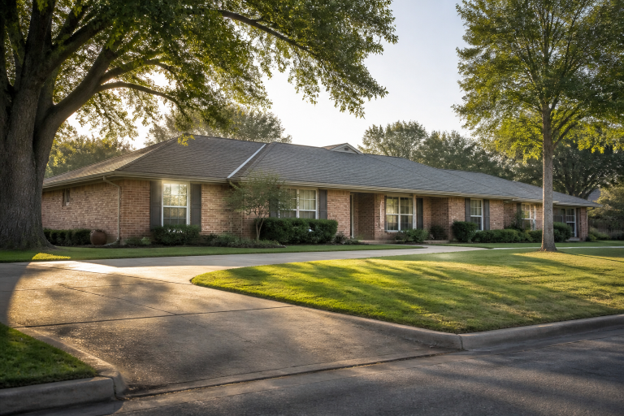
Most Bedford homes date to the city’s brick ranch boom of the 1970s and 1980s — roughly six in ten homes went up between 1975 and 1989, giving Bedford a median construction year of 1983. That means buyers touring Bedford should expect to evaluate systems and materials typical of homes now 40 to 50 years old, even in properties that have been well maintained.
By The Chad Smith Team | October 29, 2026
Bedford’s housing stock tells the story of one of the Mid-Cities’ fastest growth periods. If you’re shopping here, understanding what era you’re buying into helps you know what to look for — and what to budget for — before you close.
Why so much of Bedford was built in this window
Bedford’s population exploded from roughly 20,800 in 1980 to about 44,000 by 1990, one of the sharpest growth spurts anywhere in the Mid-Cities during that stretch. That growth tracked closely with the completion of nearby Dallas-Fort Worth International Airport, which brought new employers, an industrial park, shopping centers, and restaurants to the area through the 1970s.
The result: Bedford’s housing stock spans an unusually wide range for a single Texas suburb — from established ranch and Craftsman-style homes dating to the late 1950s, through the brick ranch boom of the 1970s and 1980s that makes up the bulk of the city, into one- and two-story brick homes built in the early 2000s. But that middle stretch — the 1970s and 1980s — is where most of Bedford’s homes actually sit.
What that construction era means for buyers
Homes from this window aren’t old enough to carry historic-district protections, but they are old enough that original systems and materials are typically at or past their expected lifespan. A few things worth watching for on a 1970s or 1980s Bedford home:
• Plumbing. Homes built through the late 1970s and into the 1990s sometimes used polybutylene piping, a material that was common nationally during that era and is prone to failure decades later. It’s worth confirming what supply lines are actually in the walls.
• Electrical panels. Panels from this period can be original, and older panel brands from that era have a documented history of reliability issues. An electrician can confirm whether the panel has been updated.
• HVAC systems. Even with regular replacement over the decades, a home this age has likely been through several systems — ask for service history and the age of the current unit.
• Roofing. Original or early-generation roofing is long gone by now in most cases, but it’s worth confirming the replacement history rather than assuming a recent roof.
• Foundation. North Texas’s expansive clay soil moves with moisture over time, and older slabs have had more decades of that movement to contend with. Our guide to foundation care on North Texas clay soil covers what normal settling looks like versus a real concern.
None of this means a 1970s or 1980s Bedford home is a bad buy — most have been updated multiple times over the decades. It means the inspection period is where you confirm what’s actually been replaced versus what’s original.
Insulation and energy efficiency
Beyond plumbing and electrical, it’s worth thinking about how a 1970s or 1980s home performs against today’s energy standards. Insulation levels, window efficiency, and ductwork sealing that were standard when these homes were built generally fall well short of current building code minimums. That doesn’t mean an older Bedford home is inefficient by definition — many owners have upgraded insulation, replaced windows, or added attic ventilation over the years — but it’s a reasonable area to ask about, especially if summer or winter utility bills are a concern. An energy audit alongside your standard inspection can flag easy wins, like attic insulation top-offs, that pay for themselves fairly quickly.
Which Bedford neighborhoods reflect this era
Some of Bedford’s most established neighborhoods date almost entirely from this construction window. In the Bedford Estates and Bedford Place area, over 90% of homes were built between 1970 and 1999. Other long-established pockets of the city — including Oak Ridge Heights, Bedford Park Estates, Woodhaven District, and Martin Drive Estates — reflect that same era of growth, with mature trees and established lots that are hard to replicate in newer construction.
What to check during your inspection

For any home from this era, it’s worth going beyond a standard inspection checklist:
1. Ask for permit history on any major system replacements — roof, HVAC, electrical panel, water heater.
2. Request a plumbing material disclosure if it isn’t already clear from the seller’s disclosure.
3. Have the foundation evaluated if there’s any visible cracking, uneven floors, or doors that don’t close properly.
4. Budget for updates even if nothing shows up as an immediate problem — a 40- to 50-year-old home is due for some combination of these systems in the coming years regardless of current condition.
How Bedford’s growth compares to its neighbors
Bedford’s growth story ran alongside similar booms in the surrounding Mid-Cities during the same window, as DFW Airport’s opening reshaped the whole corridor between Dallas and Fort Worth. That means buyers cross-shopping Bedford against nearby cities will find a lot of the same construction-era considerations apply broadly across the area — this isn’t a Bedford-specific quirk so much as a defining feature of the Mid-Cities as a region. What can differ city to city is the pace of updates and remodeling in specific neighborhoods, which is worth asking a local agent about directly.
The upside of buying in this era
There’s a real trade-off that works in buyers’ favor here. Homes from Bedford’s 1970s and 1980s boom tend to sit on more established lots with decades of tree growth, in neighborhoods with a settled, walkable feel that newer subdivisions haven’t caught up to yet. For buyers who value character and space over brand-new finishes, this era of Bedford’s housing stock offers a lot to like — as long as you go in with clear eyes about what’s original and what’s been updated.
Working with an inspector who knows this era
Not every home inspector approaches an older property the same way. When you’re touring 1970s and 1980s Bedford homes, it’s worth asking your inspector directly about their experience with plumbing materials, panel brands, and foundation patterns typical of that construction period in North Texas. An inspector who routinely works this vintage of home will know what specific red flags to look for and can often point you toward a specialist — a plumber, electrician, or foundation engineer — for a closer look at anything that warrants it, rather than leaving you to interpret a general inspection report on your own.
The bottom line
Bedford’s housing stock is dominated by 1970s and 1980s construction, a direct result of the city’s explosive growth alongside DFW Airport’s development. That means most homes here are at an age where plumbing, electrical, and major systems deserve a closer look — but it also means mature, established neighborhoods that are hard to find in newer parts of the Metroplex.
If you’re touring Bedford homes from this era and want help understanding what’s original versus updated on a specific property, we’re happy to walk through it with you. Reach out anytime.
Frequently Asked Questions
What year were most homes in Bedford, TX built?
Bedford’s median construction year is 1983, with roughly six in ten homes built between 1975 and 1989 during the city’s fastest growth period.
Do 1970s and 1980s Bedford homes have outdated plumbing or electrical?
Not necessarily — many have been updated over the decades — but original systems from this era can include materials and electrical panels that are now past their typical lifespan. It’s worth confirming replacement history during inspection rather than assuming updates have been made.
Which Bedford neighborhoods have the most 1970s-80s homes?
Bedford Estates and Bedford Place are among the most concentrated, with over 90% of homes built between 1970 and 1999. Oak Ridge Heights, Bedford Park Estates, Woodhaven District, and Martin Drive Estates also reflect this construction era.
Should I get extra inspections on an older Bedford home?
It’s a smart precaution. Beyond a standard inspection, consider a closer look at plumbing materials, the electrical panel, foundation condition, and HVAC age and service history given the age of most homes in the city.
Are there newer homes in Bedford too?
Yes, though they’re a smaller share of the market. Bedford’s housing stock spans from 1950s ranch homes through the 1970s-80s boom into early-2000s brick construction, so newer infill and updated properties do exist alongside the older majority.
Touring older homes in Bedford?
Understanding what era a home comes from — and what that means for its systems — helps you make a clear-eyed decision. We’re happy to walk you through what to expect on any Bedford property you’re considering. Reach out anytime.
About The Chad Smith Team
The Chad Smith Team at Realty of America is one of the top-producing real estate teams in the Dallas-Fort Worth Metroplex, with more than 22 years of experience, 2,915 homes sold, and recognition by RealTrends among the top 1% of real estate professionals nationwide. The team helps first-time buyers, sellers, relocation clients, and new construction buyers throughout Arlington, Mansfield, Fort Worth, Midlothian, Waxahachie, and surrounding DFW communities. Through this blog, the Chad Smith Team shares expert market insights and practical advice to help North Texas buyers and sellers make informed real estate decisions.