Foundation Care Tips for North Texas Clay Soil Homeowners
How do you take care of your foundation in North Texas clay soil?
Protecting a foundation in North Texas comes down to keeping moisture around it consistent year-round, making sure the ground slopes away from the house, and keeping gutters and downspouts clear so water never pools near the slab. The clay soil under most Mansfield homes expands when it’s wet and shrinks when it’s dry, and that constant swelling and contracting is what drives seasonal foundation movement. Steady watering during hot, dry stretches and good drainage habits are the two biggest things a homeowner can control.
By The Chad Smith Team | August 12, 2026
Every home in Mansfield sits on some version of the same soil story. North Texas is part of the Blackland Prairie, and the clay-heavy ground underneath most neighborhoods here is naturally reactive — it soaks up water and expands, then dries out and contracts as the seasons change. That movement is normal. It’s also exactly why foundation care looks a little different here than it does in places with sandier or more stable soil.
The good news is that most of what protects a foundation in Mansfield isn’t complicated or expensive. It’s a handful of habits repeated consistently through the year. Here’s what we tell homeowners who ask us how to stay ahead of it.
Why Clay Soil Moves With the Seasons
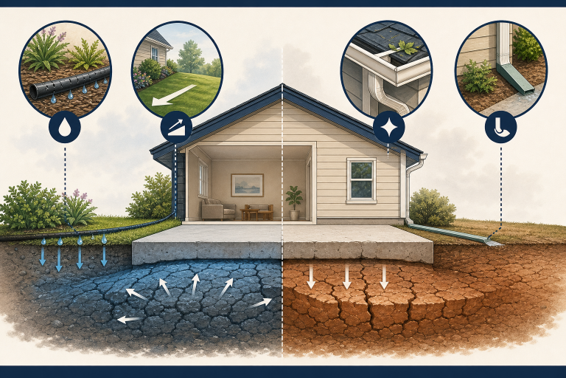
Clay soil is made up of tiny mineral particles that absorb water readily. When rain soaks into the ground, those particles swell. When the soil dries out during a hot North Texas summer, they shrink back down. Depending on how much clay is in the soil and how dry conditions get, that shrink-swell cycle can move soil volume dramatically from wet season to dry season.
That movement doesn’t stay contained to the yard. As the soil under and around a slab expands and contracts unevenly, it can put pressure on different parts of the foundation at different times. A foundation that sits on soil moving unevenly is more likely to experience stress over time than one sitting on soil with steady, even moisture.
This is why so much of foundation care here isn’t really about the concrete at all — it’s about managing the soil around it.
A few things make the shrink-swell cycle worse:
• Long stretches without rain, especially during a Texas summer
• Large trees planted close to the house, which pull significant amounts of water from the soil
• Poor drainage that lets water pool unevenly around one side of the home
• Sudden swings between very dry and very wet conditions
None of these are unusual for a North Texas yard. They’re just things worth being aware of as you think about maintenance.
Watering Your Foundation During Dry Spells
The single most useful habit for a Mansfield homeowner is keeping the soil moisture around the foundation consistent, especially from late spring through early fall when temperatures climb and rain becomes less reliable.
A few practical guidelines:
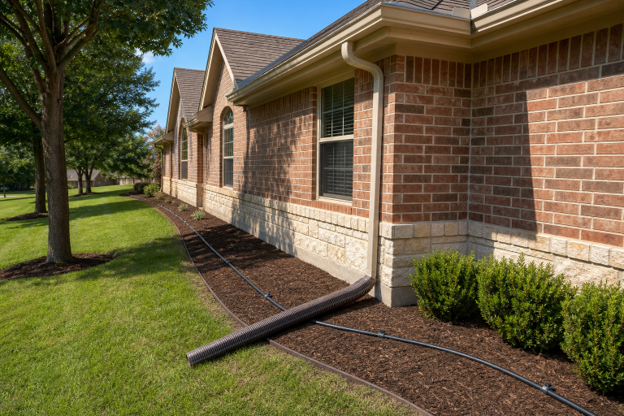
• Use a soaker hose, not a sprinkler. A soaker hose placed 12 to 18 inches from the foundation delivers water slowly and evenly along the perimeter, letting it soak into the clay instead of running off across the yard.
• Water in short, regular sessions rather than one long soak. Many North Texas homeowners water for roughly 15 to 30 minutes, several times a week during hot, dry stretches, rather than a single long watering. Gradual, consistent moisture works better than an occasional heavy soak.
• Water early in the day. Watering in the early morning reduces evaporation and gets moisture into the soil before the heat of the afternoon.
• Aim for “moist,” not “muddy.” The goal is steady, even dampness in the soil, not standing water or soggy ground. Overwatering can create its own problems, so consistency matters more than volume.
• Don’t stop completely in winter. North Texas winters are usually milder and wetter than summer, but during dry cold stretches it still helps to water occasionally rather than letting the soil dry out completely.
If your neighborhood or the City of Mansfield has watering restrictions in place during a drought, most municipal ordinances make an exception for foundation watering with a soaker hose or a hand-held hose with an automatic shutoff — it’s worth checking current guidelines before setting a schedule.
Grading and Drainage: Keeping Water Moving Away From the House
Watering is only half the equation. The other half is making sure water doesn’t pool against the foundation after a heavy North Texas thunderstorm.
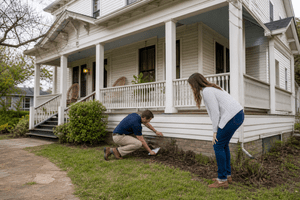
Grading refers to the slope of the ground immediately around your home. Ideally, the ground should slope gently away from the foundation for the first several feet — enough that rainwater runs away from the house rather than settling against the slab. Over time, mulch buildup, landscaping changes, or settling soil can flatten that slope, so it’s worth walking the perimeter of your home after a big rain to see where water is collecting.
A few signs your grading or drainage may need attention:
• Standing water near the foundation more than a few hours after rain
• Visible erosion or bare soil channels running toward the house
• Mulch or flower beds that sit higher than the foundation, trapping water against it
• Downspouts that dump water within a few feet of the house instead of directing it away
If you notice pooling, simple fixes like adding soil to restore a gentle slope, extending downspouts, or adding splash blocks can go a long way before you need anything more involved like a French drain.
Gutter Maintenance: A Small Job With a Big Payoff
Gutters and downspouts are one of the most overlooked parts of foundation care, but they do a lot of quiet work. When gutters are clogged, water overflows straight down along the foundation instead of being carried away from the house — which undermines everything else you’re doing to keep soil moisture even.
A simple gutter maintenance routine:
• Clean gutters at least twice a year — once in late spring and once in fall after leaves drop
• Check more often if you have large trees near the roofline
• Make sure downspouts extend at least several feet away from the foundation, using extensions or splash blocks if needed
• Look for sagging sections or loose brackets that can create low points where water collects and overflows
This is genuinely one of the easiest maintenance items on any homeowner’s list, and it directly protects the investment you’ve made in your home.
Building a Simple Seasonal Routine
You don’t need a complicated system to stay ahead of foundation issues in Mansfield. Most homeowners we work with settle into a rhythm like this:
1. Spring: Clean gutters, check grading after winter rains, and start a regular watering schedule as temperatures rise.
2. Summer: Water consistently during hot, dry stretches, and keep an eye out for cracks in the yard that signal the soil is drying out.
3. Fall: Clean gutters again after leaves drop, and adjust watering as temperatures cool.
4. Winter: Water occasionally during dry spells, and use the season to check drainage and grading before spring rains return.
This kind of routine maintenance is exactly the sort of thing that keeps small issues small. It’s also the kind of habit that pays off later — a well-maintained foundation is one less question that comes up during a home inspection, whether you’re staying in your home for years to come or thinking ahead to a future sale.
If you’re already noticing warning signs — cracks in walls or floors, doors that stick, or gaps around windows — that’s a different conversation than routine care, and it’s worth getting a professional opinion sooner rather than later. We’ve put together more detail on what those warning signs mean for Mansfield homeowners if that’s where you find yourself.
Frequently Asked Questions
How often should I water my foundation in Mansfield, TX?
During hot, dry stretches, most North Texas homeowners water the soil around their foundation two to three times a week for 15 to 30 minutes per session using a soaker hose. During milder or wetter months, watering less frequently is usually fine — the goal is consistent moisture, not a fixed schedule.
Can I water my foundation during a drought watering restriction?
Most municipal drought ordinances in North Texas include an exception for foundation watering using a soaker hose or a hand-held hose with an automatic shutoff nozzle. Always check current restrictions with your city before watering, since rules can change during severe drought conditions.
How far should a soaker hose be from my foundation?
A soaker hose should generally sit about 12 to 18 inches away from the foundation wall, running along the full perimeter of the house. This placement lets water soak into the soil close enough to keep it consistently moist without pooling directly against the slab.
Do trees near my house affect my foundation?
Yes. Large trees planted close to a home can pull significant amounts of moisture from the surrounding soil, which can create uneven dry zones near the foundation on that side of the house. This doesn’t mean trees need to be removed, but it’s worth paying closer attention to watering on the side of the house where large trees are present.
How is foundation maintenance different from foundation repair?
Maintenance is about consistent watering, grading, and drainage habits that reduce stress on the foundation over time — it’s preventive and something every homeowner can do. Repair becomes a conversation once you notice actual warning signs, like new cracks, sticking doors, or uneven floors, and at that point it’s worth having a foundation professional take a look.
If you’re thinking about how foundation care fits into your bigger picture — whether that’s getting ready to sell, evaluating a home you’re about to buy, or just settling into ongoing maintenance as a North Texas homeowner — we’re happy to talk through it. Reach out to the Chad Smith Team anytime.
About The Chad Smith Team
The Chad Smith Team at Realty of America is one of the top-producing real estate teams in the Dallas-Fort Worth Metroplex, with more than 22 years of experience, 2,915 homes sold, and recognition by RealTrends among the top 1% of real estate professionals nationwide. The team helps first-time buyers, sellers, relocation clients, and new construction buyers throughout Arlington, Mansfield, Fort Worth, Midlothian, Waxahachie, and surrounding DFW communities. Through this blog, the Chad Smith Team shares expert market insights and practical advice to help North Texas buyers and sellers make informed real estate decisions.