Buying a Lake Granbury Waterfront Home: What to Know First
What should you know before buying a Lake Granbury waterfront home?
Before buying a Lake Granbury waterfront home in Hood County, understand three things: docks and shoreline improvements are governed by the Brazos River Authority (and often an HOA), waterfront properties usually require flood insurance, and “waterfront” covers very different setups — open-water, cove, and canal — each with its own trade-offs. Verify dock permits, water depth, and insurance before you write an offer.
By The Chad Smith Team | September 11, 2026
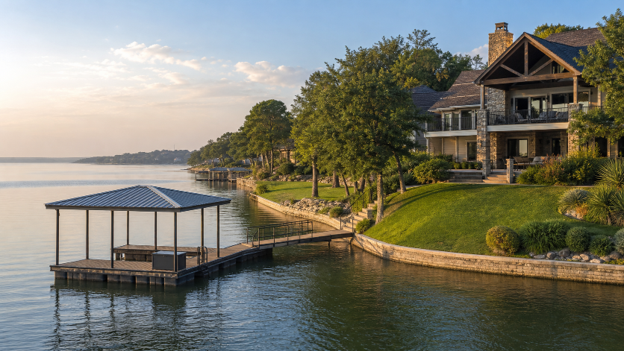
A waterfront home on Lake Granbury is a genuinely different purchase than a standard house. The lake — about 103 miles of shoreline winding through Hood County — comes with its own rules, costs, and homework. Get those right and it’s one of the best lifestyle buys in North Texas. Skip them and you can inherit a permit problem or an insurance surprise.
Here’s what to sort out before you fall for the view.
The dock question comes first
On Lake Granbury, you don’t automatically get to build or keep whatever dock you want. The Brazos River Authority (BRA) manages the lake, including shoreline improvements, docks, and piers.
That has real consequences for buyers:
• An existing dock may or may not be permitted. Confirm that any dock, boathouse, or shoreline structure on the property has a current, valid BRA permit before closing. An unpermitted structure can become your problem after you buy.
• HOA rules can stack on top. Many Lake Granbury neighborhoods have their own guidelines for docks and shoreline changes, layered over the BRA’s requirements. Check both.
• Building or modifying takes approval. If dock access is central to why you’re buying — and for most waterfront buyers it is — the ability to build or expand isn’t guaranteed. Verify the permit path before you assume it.
Compared with some Brazos riverfront alternatives, Lake Granbury is often described as offering managed water levels and a more predictable permitting experience — but “more predictable” still means you have to do the paperwork. A simple permit contingency in your offer is worth considering when dock rights matter to your decision.
Not all “waterfront” is the same
The word “waterfront” hides a lot of variation on Lake Granbury. Before you compare listings on price alone, understand what type of frontage you’re actually buying:
• Open-water frontage — the widest views and best big-water access, usually the priciest, and the most exposed to wind and wave action.
• Cove frontage — more protected water, calmer for docking and swimming, often a bit more sheltered from weather.
• Canal frontage — water access via a channel, typically the most affordable entry to “waterfront,” but with narrower navigation and its own maintenance considerations.
Each type carries different pricing, boating experience, and long-term upkeep. A canal home and an open-water home can both be “waterfront” and yet be very different investments.
Water depth matters too. Depth at the shoreline affects what boats you can dock and whether you can use the frontage in lower-water periods. Ask about typical depth at the property’s waterline, not just at the middle of the lake.
Budget beyond the purchase price
Waterfront ownership comes with costs a standard home doesn’t:
1. Flood insurance. Waterfront and near-water properties commonly fall in higher-risk flood zones, and a lender will typically require flood coverage. Get a quote early — it’s a real line item, and it varies significantly by elevation and zone. Standard homeowners policies don’t cover flood.
2. Dock and shoreline maintenance. Docks, boathouses, retaining walls, and bulkheads all wear and need upkeep. Factor in periodic repair and eventual replacement.
3. Higher insurance and upkeep generally. Water exposure, humidity, and weather add to maintenance on the structure itself.
4. Permit and inspection diligence. Confirming permits and condition takes a bit more legwork than a typical purchase — build it into your timeline.
None of this should scare you off. It should just be in the budget from day one, so the lake stays a joy instead of a running surprise.
Do this diligence before you offer
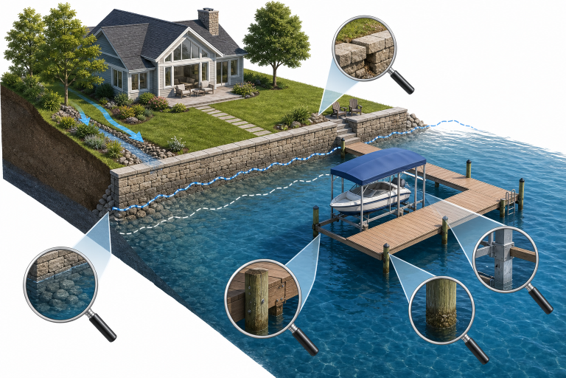
A quick pre-offer checklist for a Lake Granbury waterfront home:
• Verify BRA permits for every existing dock and shoreline structure.
• Check HOA rules on docks, piers, and shoreline improvements for the specific neighborhood.
• Confirm the frontage type — open-water, cove, or canal — and what that means for boating and value.
• Ask about water depth at the shoreline.
• Get a flood insurance quote tied to the actual property, not a rough estimate.
• Contact the BRA directly with any questions about permit timelines for changes you plan to make.
Hood County waterfront is a specialized purchase, and the buyers who do best are the ones who treat the diligence as seriously as the view. If you want the lake lifestyle without weighing a longer commute, our look at what to budget for when relocating to a smaller North Texas community helps frame the broader move.
Frequently Asked Questions
Do you need a permit for a dock on Lake Granbury?
Yes. Docks, piers, and shoreline improvements on Lake Granbury are governed by the Brazos River Authority, and many neighborhoods add their own HOA rules. Always confirm that an existing dock is properly permitted before you buy.
Is flood insurance required for Lake Granbury waterfront homes?
Waterfront and near-water properties often sit in higher-risk flood zones, and lenders typically require flood insurance in those cases. Standard homeowners policies don’t cover flood, so get a property-specific quote early.
What county is Lake Granbury in?
Lake Granbury is in Hood County, southwest of Fort Worth. The lake has about 103 miles of shoreline and is managed by the Brazos River Authority.
What’s the difference between open-water, cove, and canal frontage?
Open-water frontage offers the widest views and big-water access but more exposure; cove frontage gives more protected, calmer water; and canal frontage is usually the most affordable but has narrower navigation. Each affects price, boating, and upkeep differently.
Should I include a contingency when buying a waterfront home?
If dock access or permitted shoreline use is central to your purchase, a permit contingency can protect you. It gives you room to confirm that the dock and shoreline structures are properly permitted before you’re committed.
Considering a Lake Granbury home?
A waterfront home on Lake Granbury can be a fantastic buy — as long as you go in with the dock permits, frontage type, water depth, and insurance already checked. The view is the easy part; the diligence is what protects it.
If you’re weighing a waterfront purchase in Hood County, we’re happy to help you work through the permits, costs, and trade-offs before you make an offer. Reach out anytime.
About The Chad Smith Team
The Chad Smith Team at Realty of America is one of the top-producing real estate teams in the Dallas-Fort Worth Metroplex, with more than 22 years of experience, 2,915 homes sold, and recognition by RealTrends among the top 1% of real estate professionals nationwide. The team helps first-time buyers, sellers, relocation clients, and new construction buyers throughout Arlington, Mansfield, Fort Worth, Midlothian, Waxahachie, and surrounding DFW communities. Through this blog, the Chad Smith Team shares expert market insights and practical advice to help North Texas buyers and sellers make informed real estate decisions.