New Construction vs. Established Acreage Homes in Aledo, TX
Is new construction or an established acreage property the better buy in Aledo, TX?
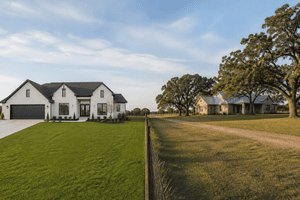
New construction in Aledo — through builders like Highland Homes, Drees, David Weekley, and GFO in communities such as Walsh — typically starts in the mid-$700s with HOA dues, municipal or district water, and a build timeline of a few months to over a year. Established acreage properties around Aledo generally list from roughly $150,000 to $400,000+ per acre, run on private well and septic systems, come with no HOA in most cases, and hand you land, fencing, and infrastructure that already exist — for better or worse. The right choice depends on how much you value predictability versus how much you value space, privacy, and an already-developed piece of land.
By The Chad Smith Team | October 1, 2026
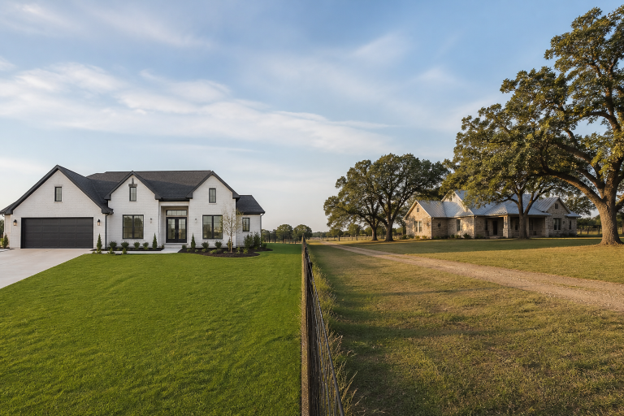
Aledo has spent the last decade turning from a small Parker County town into one of the fastest-growing addresses west of Fort Worth. The city’s 2025 population estimate sits around 5,500, but the surrounding unincorporated county — where most of the acreage inventory sits — is growing just as fast. That growth has created two very different buying paths, and buyers regularly ask us which one actually makes more sense for their budget and their goals.
There’s no universal right answer. But there is a clear set of trade-offs, and once you see them side by side, the decision usually gets a lot easier.
Price Per Acre: What You’re Actually Buying
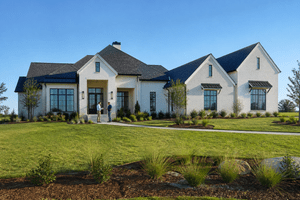
New construction in and around Aledo is priced by the house, not the dirt. Communities like Walsh (Highland Homes, GFO Home, and others) start new homes in the $750,000s, typically on lots well under half an acre. Custom-home neighborhoods like LaMadera and gated, acreage-lot communities like Bear Creek Ranch — which offers 2+ acre homesites — push land and finished home prices considerably higher, with land value baked into a much larger total price tag.
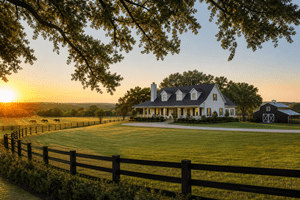
Established acreage works on a different math entirely. Based on current listings in the Aledo area, land-only tracts are averaging somewhere around $150,000-$200,000 per acre, while houses that already come with acreage attached average closer to $300,000-$400,000+ per acre once the structure’s value is folded in. In practice, that means:
• A 2-3 acre property with an existing home in the $600,000-$1,100,000 range is common
• Bare land parcels between 1 and 5 acres frequently list from the high $400,000s to $1,000,000+, depending on location, road frontage, and utility access
• Smaller acreage tracts (under 2 acres) tend to carry a higher price per acre than larger tracts, since land value doesn’t scale down evenly
Because Texas is a non-disclosure state, exact closed sale prices aren’t published publicly — list prices and agent-accessible sold data are the most reliable way to gauge real per-acre value in a specific pocket of Parker County. That’s a conversation worth having with someone who’s actively watching the Aledo market, not just scrolling listing photos.
If you’re weighing new construction against an existing home more broadly — not just on acreage — our breakdown of new construction vs. resale trade-offs in Mansfield covers a lot of the same decision points that apply here.
Utilities: Well and Septic vs. Municipal Water and Sewer
This is the single biggest lifestyle and cost difference between the two paths.
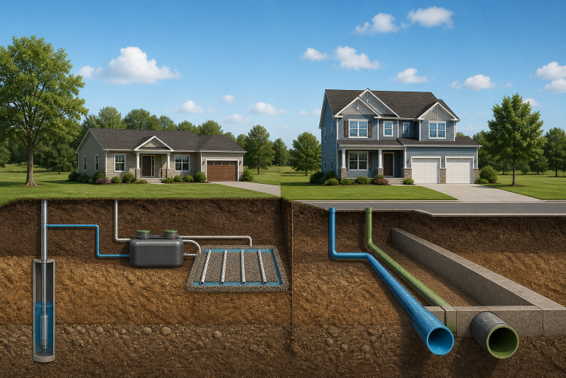
New construction in Walsh and most in-city Aledo developments connects to municipal or utility-district water and sewer, billed like any city utility. You pay a monthly bill, the infrastructure is new, and you generally don’t think about it again.
Established acreage, especially outside Aledo’s city limits, is a different story. Much of unincorporated Parker County relies on private wells and septic systems, or service from a special utility district such as Parker County SUD, which serves southwest Parker County and is projecting more than 2,500 connections by 2030 as the area keeps filling in. When you buy an existing acreage home, you’re inheriting whatever well and septic system is already there — which means you’ll want a full well flow test, water quality test, and septic inspection before closing, not after.
If you’re building new on raw acreage instead of buying an existing home, budget for the systems themselves:
• Water well drilling: roughly $9,000-$20,000 in Texas, depending on depth (commonly 160-600 feet in this part of the state) and geology
• Septic system installation: roughly $6,300-$10,000 for a conventional system, or $10,000-$20,000+ for an aerobic system, which is common in areas with heavier clay soil
• Site evaluation, engineering, and permitting: typically another $1,500-$5,000 on top of installation
All told, budget $20,000-$35,000 or more for a new well-and-septic setup on raw land — a cost new-construction buyers in municipal-utility neighborhoods simply never see.
Timelines, Land Condition, and What You’re Really Buying
Production builders in Walsh and similar communities can hand you keys to a quick move-in home in a matter of weeks, or a pre-sale build in roughly six to nine months. Custom builds on acreage — through builders like John Askew Custom Homes in LaMadera, or a build-your-own project on a raw tract — usually run nine to fourteen months or longer once you factor in design, permitting, and well/septic installation before the foundation even goes in.
Established acreage skips the build timeline entirely — you can often close in 30-45 days, same as any resale home. But “established” cuts both ways. You’re buying:
• Existing fencing, which may need repair or full replacement depending on age and material (cross-fencing for livestock, if any, adds another layer of inspection)
• Cleared or partially cleared land, versus tracts with heavy brush, trees, or drainage issues that affect usable acreage
• Existing outbuildings, barns, or ag structures that may or may not be included, permitted, or in usable condition
• A property history you can actually inspect — soil conditions, tree cover, and drainage patterns that are already visible, rather than promised in a rendering
New construction gives you predictability. Established acreage gives you the ability to see exactly what you’re getting before you sign anything, plus land that’s already earned any agricultural valuation it carries — which matters for your property tax bill (more on that below).
HOA Dues, Property Taxes, and Financing Differences
HOA structure is one of the clearest dividing lines. Walsh carries HOA dues in the $200s per month with amenities like pools, an athletic club, and maintained common areas. Bear Creek Ranch, a gated acreage community, requires HOA approval for improvements and enforces standards like minimum square footage and masonry percentage. Most established acreage properties outside a platted subdivision, by contrast, have no HOA at all — no dues, no architectural review, no restrictions on outbuildings or fencing beyond county and applicable code requirements.
Property taxes in Parker County run with an effective rate that’s often higher than the national median, and your actual bill depends on which taxing entities overlap your property — county, school district, emergency services district, and any municipal utility or public improvement district tied to a specific new-construction community. New-construction neighborhoods with a PID or MUD attached can carry meaningfully higher combined tax rates than an established acreage property with an agricultural or wildlife valuation, which can significantly reduce the taxable value on larger tracts. This is worth running the actual numbers on before you compare two properties by list price alone — your title company and the Parker County Appraisal District can confirm exact rates for any specific address.
Financing also splits along different lines. New construction often uses a standard purchase mortgage once the home is complete, or a construction-to-permanent loan if you’re building custom. Acreage purchases — especially anything over 10 acres, with outbuildings, or without a “typical” comparable home nearby — sometimes require specialized rural or land-and-home financing, and appraisals can take longer since comparable sales are thinner on the ground. If you’re also selling a current home to fund either path, it’s worth understanding your bridge and timing options in advance — our guide on financing options for buying before you sell applies whether you’re moving into a new build or an acreage property.
Neither path is universally cheaper or faster. New construction trades a higher entry price and HOA dues for predictability, warranty coverage, and zero deferred maintenance. Established acreage trades well and septic responsibility and a less predictable renovation list for immediate space, no HOA, and land you can walk before you buy. The right call comes down to your timeline, your tolerance for maintenance, and how much you value space over structure.
If you’re weighing these two paths for your own move, we’re happy to pull current listings in both categories and walk through the real numbers together. Reach out anytime.
Frequently Asked Questions
Is it cheaper to build new or buy an established acreage home in Aledo, TX?
It depends on the tract. New construction in communities like Walsh starts in the mid-$700,000s on small lots with HOA dues included. Established acreage homes vary widely, often landing between $600,000 and $1,100,000+ for 2-3 acres, so the “cheaper” option really comes down to how much land and how much house you want for the price.
Do homes in Aledo, TX use well and septic systems?
Homes inside Aledo’s city limits and in developments like Walsh connect to municipal or utility-district water and sewer. Many established acreage properties in unincorporated Parker County rely on private wells and septic systems, or service from a district like Parker County SUD, so it’s important to confirm utility type before you buy.
How long does it take to build a custom home on acreage in Parker County?
Custom builds on raw acreage typically take nine to fourteen months or longer once you include design, permitting, and installing a well and septic system before construction starts. Production-built homes in established communities move much faster, often six to nine months or less for a pre-sale build.
Are there HOA-free communities near Aledo, TX?
Yes. Most established acreage properties outside platted subdivisions have no HOA, while many new-construction communities like Walsh and gated acreage neighborhoods like Bear Creek Ranch do carry HOA dues and deed restrictions. If avoiding an HOA is a priority, established acreage outside a planned community is usually the better fit.
Does financing work differently for acreage properties than for new construction?
Yes, in some cases. Acreage purchases, particularly larger tracts or properties with outbuildings, sometimes require rural or land-and-home financing and can take longer to appraise due to fewer nearby comparable sales. New construction typically uses a standard mortgage or a construction-to-permanent loan, which follows a more predictable underwriting timeline.
About The Chad Smith Team
The Chad Smith Team at Realty of America is one of the top-producing real estate teams in the Dallas-Fort Worth Metroplex, with more than 22 years of experience, 2,915 homes sold, and recognition by RealTrends among the top 1% of real estate professionals nationwide. The team helps first-time buyers, sellers, relocation clients, and new construction buyers throughout Arlington, Mansfield, Fort Worth, Midlothian, Waxahachie, and surrounding DFW communities, including Aledo and Parker County. Through this blog, the Chad Smith Team shares expert market insights and practical advice to help North Texas buyers and sellers make informed real estate decisions.