Midlothian vs. Waxahachie: Comparing Price, Space, and Commute
Which Is a Better Fit: Midlothian or Waxahachie, TX?
Midlothian generally runs higher on price per square foot with newer, master-planned subdivisions on tighter lots, while Waxahachie tends to offer more square footage and larger lot sizes for a similar budget alongside its historic downtown core. Both cities sit in Ellis County, share the same appraisal district, and post similar off-peak commute times to Dallas and Fort Worth — roughly 30 to 45 minutes depending on your exact route. The right call usually comes down to how much land you want versus how new you want the neighborhood to be.
By The Chad Smith Team | October 12, 2026
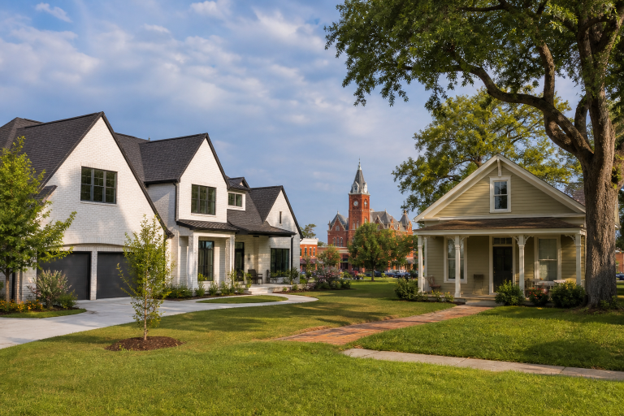
If you’re cross-shopping Midlothian and Waxahachie, you’ve probably noticed the listings don’t line up as neatly as you’d expect for two cities that sit about 12 miles apart on US-287. One market skews newer and denser. The other skews a little more spread out, with a historic core mixed into the growth. Here’s how the numbers actually compare.
Price and Space: What You Get for the Money
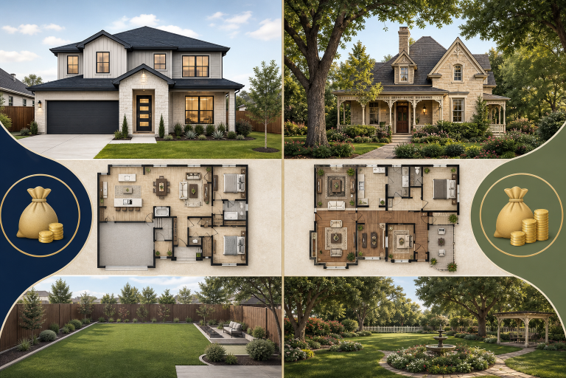
Both cities have been active markets in 2026, and pricing has moved in slightly different directions for each.
Midlothian:
• Homes listed for sale carried a median asking price around $519,000 in May 2026, with a median price per square foot near $185 to $189.
• Recent 30-day sale data put the median sold price closer to $478,000, with price per square foot down roughly 3 to 5% year-over-year — a sign the market has cooled slightly from its peak.
Waxahachie:
• Homes listed for sale carried a median asking price around $499,000 as of August 2026, with list-price-per-square-foot near $183.
• Sold price per square foot has trended closer to $179, down modestly year-over-year as well.
Keep in mind that Texas is a non-disclosure state, so exact sold prices aren’t published as public record — the figures above come from listing data and MLS-derived trends your agent can pull comps from directly. That’s also why working with someone who has current MLS access matters more here than in states where sold prices are public.
Where the two cities really diverge is lot size and housing stock:
• Midlothian has grown around master-planned communities like BridgeWater, MidTowne, and Westside Preserve, with typical lots running 40 to 80 feet wide and homes ranging from roughly 1,500 to 4,400+ square feet depending on the section and builder.
• Waxahachie mixes established neighborhoods on larger home sites — some up to an acre — with newer developments on more standard 60- to 80-foot lots. If a bigger yard matters more to you than a brand-new floor plan, Waxahachie generally has more of that inventory available right now.
Buyers weighing new construction against an existing home in either city should also think through the trade-offs the same way Mansfield-area buyers do — the comparison of new construction versus resale homes applies just as directly in Midlothian and Waxahachie, where builders are active in both markets.
Commute Times: Getting to Dallas and Fort Worth
Both cities sit near the US-287 and I-35E corridor, which is the main artery for Ellis County commuters heading north or west.
• Waxahachie sits close to the interchange of I-35E and US-287, with off-peak drive times under 35 minutes to downtown Dallas and around 45 minutes to downtown Fort Worth.
• Midlothian is about 25 miles from downtown Dallas, with off-peak drives typically around 30 minutes. Fort Worth commutes run about 30 to 32 minutes off-peak via the US-287 corridor.
Rush hour changes the math for both. The I-35E and US-67 corridor south of Dallas sees heavy congestion during the 7 to 9 a.m. and 4 to 7 p.m. windows, and a daily commuter from either city should plan on 45 to 60 minutes each way during peak traffic. If your job has any flexibility on start time, shifting even 30 minutes earlier or later can meaningfully shorten the drive.
For a closer look at how commute math plays out across the broader DFW area, the commute time breakdown for Mansfield to Dallas and Fort Worth walks through the same rush-hour patterns that affect Ellis County drivers on connecting routes.
Property Taxes and Growth in Ellis County
Midlothian and Waxahachie both fall under the Ellis County Appraisal District, so the exemption rules and appraisal calendar are identical — what changes is the specific city and school district tax rate applied to your home.
A few numbers worth knowing:
• Combined property tax rates across Ellis County’s cities and school districts generally run between roughly 1.99% and 2.15%, with a county-wide average near 1.98%.
• Texas voters approved Proposition 13 in the November 2025 election, raising the school district homestead exemption from $100,000 to $140,000, retroactive to the 2025 tax year. That applies to any homestead in Midlothian or Waxahachie the same way it applies anywhere else in Texas.
• Homeowners age 65 or older can claim an additional $60,000 off the school tax portion, along with a school tax ceiling (freeze) once that exemption is filed.
• Homestead exemption applications are due by April 30, and the deadline to protest your appraised value is May 15.
Buyers comparing carrying costs across nearby DFW cities may also find it useful to see how property tax rates stack up in Mansfield, Arlington, and Fort Worth — the rate structure and exemption mechanics work the same way in Ellis County, just with different local rates layered on top.
Growth is shaping both markets, just from different directions. Midlothian’s population has climbed to roughly 48,800 in 2026, up close to 38% since the 2020 census, driven partly by an industrial base that includes multiple cement plants and a steel mill alongside the residential growth. Waxahachie has leaned into its historic downtown square — officially designated the Crape Myrtle Capital of Texas — while adding new subdivisions on its outer edges. Neither city’s growth trajectory shows signs of slowing, which is part of why inventory and pricing have both been moving targets this year.
If you’re weighing the full monthly cost of living in either city — not just the mortgage payment — a general framework like the cost of living breakdown for Mansfield is a useful starting template, even though your Ellis County tax rate and utility providers will differ.
Frequently Asked Questions
Is Midlothian or Waxahachie more affordable?
Based on current listing data, Waxahachie runs slightly lower on price per square foot than Midlothian, and it tends to offer larger lots for a comparable price. Midlothian’s newer master-planned communities often carry a premium for updated finishes and amenity packages, but the gap between the two cities isn’t dramatic.
How long is the commute from Midlothian or Waxahachie to Dallas?
Off-peak, expect roughly 30 minutes from Midlothian and under 35 minutes from Waxahachie to downtown Dallas. During morning and evening rush hour, both commutes can stretch to 45 minutes or more depending on exactly where you’re starting and ending.
Do Midlothian and Waxahachie have the same property tax rates?
Both cities are appraised by the Ellis County Appraisal District and follow the same exemption rules, including the 2025 increase to the school district homestead exemption. The actual tax rate you pay depends on your specific city and school district, and combined rates across the county generally fall between about 1.99% and 2.15%.
Which city has more new construction?
Midlothian has more active master-planned communities right now, including BridgeWater, MidTowne, and Westside Preserve, with lot widths typically between 40 and 80 feet. Waxahachie has new construction too, but it’s more mixed with established neighborhoods, and some of its communities offer larger, up-to-one-acre home sites.
What’s the difference in lot sizes between the two cities?
Midlothian’s newer subdivisions typically sit on standard 40- to 80-foot suburban lots. Waxahachie has a wider range, from similar-sized lots in newer developments to established neighborhoods with lots approaching an acre, which is one reason buyers who want more outdoor space often look there first.
If you’re thinking through this for your own situation, we’re happy to walk you through the numbers. Reach out anytime.
About The Chad Smith Team
The Chad Smith Team at Realty of America is one of the top-producing real estate teams in the Dallas-Fort Worth Metroplex, with more than 22 years of experience, 2,915 homes sold, and recognition by RealTrends among the top 1% of real estate professionals nationwide. The team helps first-time buyers, sellers, relocation clients, and new construction buyers throughout Arlington, Mansfield, Fort Worth, Midlothian, Waxahachie, and surrounding DFW communities. Through this blog, the Chad Smith Team shares expert market insights and practical advice to help North Texas buyers and sellers make informed real estate decisions.