Financing a Home on Acreage in Aledo: Loan Options Explained
What are the best loan options for buying a home on acreage in Aledo?
For a home on acreage in Aledo, your main financing paths are a conventional or jumbo mortgage when the land is a modest share of the value, a USDA loan for eligible rural properties with zero down, or a Farm Credit loan built specifically for acreage of any size. The catch with conventional and jumbo financing is that most lenders won’t approve a loan where the land value exceeds roughly 30% of the total property value — which rules out a lot of true acreage. That’s why buyers in Parker County often turn to USDA or Texas Farm Credit for larger parcels.
By The Chad Smith Team | September 18, 2026
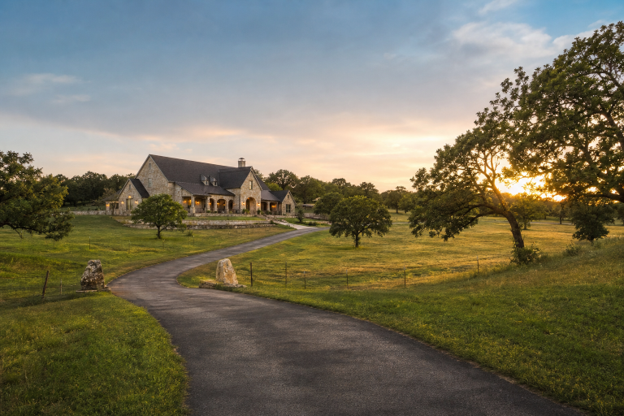
Buying a home on a few acres outside Aledo is a different animal than buying a house on a standard lot. The house might be straightforward, but the land, the well, the septic system, and the way lenders value rural property all change how you get financed. We’ve walked plenty of buyers through this in Parker County, and the deals that close smoothly are the ones where the buyer picked the right loan product before they fell for the property.
Here’s how the options actually work.
Conventional and jumbo loans — great, until the land gets big
A conventional loan is the default for most buyers, and for a home on a smaller acreage lot — say a house on two or three acres — it often works fine. For 2026, the conforming loan limit in Texas rose to $832,750. Borrow above that and you’re in jumbo territory, which comes with tighter underwriting: closer review of your credit, income stability, and cash reserves.
But acreage introduces a specific hurdle. Most conventional and jumbo guidelines won’t approve a loan where the land value exceeds about 30% of the total property value. In practice, that means a modest house sitting on 15 or 20 acres of valuable Parker County land can fail the test, because the dirt is worth more than the structure. The lender is making a home loan, not a land loan, and the guidelines are built around that.
There’s some good news on the down-payment front: for 2026, expanded low-down-payment jumbo options have emerged in the Dallas-Fort Worth market, with some programs allowing up to 95% financing on qualifying jumbo loans. That helps buyers stretching into higher price points — but it doesn’t change the land-value rule. If your Aledo property is heavy on acreage, you may need a different tool.
USDA loans — zero down on eligible rural property
Parts of Parker County sit inside USDA-eligible rural areas, and that’s a real advantage for buyers. A USDA loan is backed by the U.S. Department of Agriculture to encourage homeownership in rural communities, and its headline feature is 100% financing — no down payment required on eligible properties.
USDA lending is active in the county. There are more than 250 USDA-backed residential loans in Parker County, with an average loan balance around $134,290, and over 80% of them went to first-time buyers, on homes averaging roughly 1,650 square feet.
A few things to know about USDA financing:
• The property has to be in an eligible area. Eligibility is drawn by map, and it can change. The land right around Aledo’s more developed pockets may not qualify, while property a little farther out does. We check the specific address early.
• There are income limits tied to household size and area.
• The home has to meet condition standards, which matters more on older rural houses.
For the right buyer on the right parcel, USDA is one of the strongest tools out there — but it’s built for homes on reasonable lots, not sprawling ranch acreage.
Farm Credit loans — built for acreage of any size
When the land is the whole point — a real ranch, a horse property, or a larger parcel where conventional guidelines break down — Texas Farm Credit is often the answer. Unlike a standard mortgage lender, Farm Credit is set up to finance the purchase, construction, or refinance of a home on acreage of any size, with a variety of down-payment and term options.
This is also the route if you’re planning to build on land you buy in Aledo. Farm Credit offers construction financing, including a one-time-close option that combines your construction loan and your final mortgage into a single closing — which simplifies the process and saves you a second round of closing costs. Building on acreage involves several moving parts: buying the land, designing the home, choosing a builder, collecting construction bids, and lining up financing. A one-time close keeps that from turning into two separate loan headaches.
If you’re comparing how much down payment and rate structure make sense across these products, it’s worth understanding the trade-offs the same way you would between other loan types — our breakdown of FHA versus conventional loans for first-time buyers covers the framework, even though acreage buyers often land on USDA or Farm Credit instead.
The rural due diligence lenders care about
Financing a home on acreage isn’t only about the loan product. The property itself carries features a lender — and a smart buyer — will want verified before closing.
1. Well. If the home is on a private well rather than city water, you’ll want it tested for flow and water quality. Some loan programs require a water test.
2. Septic. Rural Aledo homes typically run on a septic system. Get it inspected, and confirm its capacity matches the home’s bedroom count.
3. Survey and boundaries. Acreage boundaries, easements, and access rights matter far more than on a platted subdivision lot. A current survey tells you exactly what you’re buying and how you legally reach it — our guide to property surveys in Texas explains what a survey should reveal.
4. Access and road frontage. Confirm the property has legal, maintained access — not just a driveway across a neighbor’s land on a handshake.
5. Appraisal comps. Rural appraisals are harder because comparable sales are scattered and varied. Build in extra time, and don’t be surprised if the appraiser reaches farther for comps than they would in a subdivision.
Matching the loan to the land
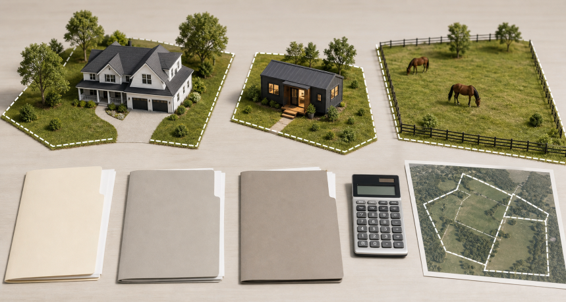
The single biggest mistake we see acreage buyers make is falling for a property, then discovering their pre-approval won’t stretch to cover it because of the land-value rule. The fix is simple: figure out how much acreage you actually want, then choose the financing that fits it, before you shop.
A home on a few acres near town? Conventional or USDA may work beautifully. A larger parcel where the land carries most of the value? Farm Credit is likely your path. Planning to build? A one-time-close construction loan keeps it clean.
Every property is different, and the only way to know for sure is to run the numbers on the specific parcel with someone who knows how rural Parker County deals close. That’s exactly the conversation we have with acreage buyers before they write an offer. If you’re also weighing timing on selling a current home first, our guide to buying before you sell and your financing options is a useful companion.
Frequently Asked Questions
Can I get a conventional loan for a home on acreage in Aledo?
Sometimes. Conventional loans work when the land is a modest share of the total value, but most guidelines won’t approve a loan where the land value exceeds roughly 30% of the total property value. For larger parcels, USDA or Farm Credit financing is usually the better fit.
Does USDA financing work in Parker County?
Yes, in eligible rural areas. Parts of Parker County qualify for USDA loans, which offer 100% financing with no down payment, subject to area eligibility, income limits, and property condition standards. Eligibility is address-specific, so it’s worth checking the exact property early.
What’s the advantage of a Farm Credit loan?
Texas Farm Credit is built to finance homes on acreage of any size, including ranches and horse properties where conventional guidelines break down. It also offers construction loans with a one-time-close option if you plan to build on the land.
Do I need to test the well and septic before buying?
Yes. On a rural Aledo property, have the private well tested for flow and water quality and the septic system inspected for condition and capacity. Some loan programs require a water test, and these systems are expensive to replace if problems surface after closing.
Why do rural appraisals take longer?
Comparable sales on acreage are scattered and vary widely in land size and improvements, so appraisers often have to reach farther to find valid comps. Build extra time into your closing timeline for the appraisal on an acreage property.
The bottom line
Financing a home on acreage in Aledo comes down to matching the loan to the land. Conventional and jumbo loans work when the house carries most of the value, USDA opens the door with zero down on eligible rural property, and Farm Credit handles the larger parcels and construction projects that standard mortgages can’t.
If you’re eyeing acreage around Aledo and want help lining up the right financing before you make an offer, we’re happy to walk you through the options. Reach out anytime.
About The Chad Smith Team
The Chad Smith Team at Realty of America is one of the top-producing real estate teams in the Dallas-Fort Worth Metroplex, with more than 22 years of experience, 2,915 homes sold, and recognition by RealTrends among the top 1% of real estate professionals nationwide. The team helps first-time buyers, sellers, relocation clients, and new construction buyers throughout Arlington, Mansfield, Fort Worth, Midlothian, Waxahachie, and surrounding DFW communities. Through this blog, the Chad Smith Team shares expert market insights and practical advice to help North Texas buyers and sellers make informed real estate decisions.