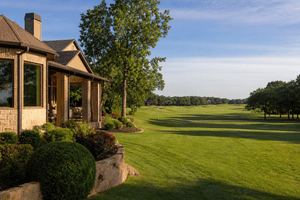
Buying Acreage in Weatherford: Horse Property Basics
What should you check before buying horse property acreage in Weatherford, TX?
Weatherford, in Parker County, is known as the “Cutting Horse Capital of the World,” and its acreage market is built for equestrian buyers. Before you buy, verify the ag exemption status, the water supply (usually a private well), the septic system and its permits, fencing and barn condition, and access and easements. These rural details determine both your costs and what you can actually do with the land. Here’s a basics guide.
By The Chad Smith Team | September 17, 2026
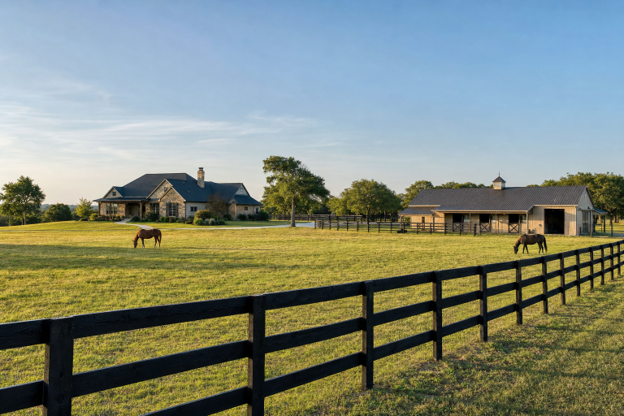
Parker County produces more cutting horses than any other county in Texas, and Weatherford sits at the heart of it. The sandy loam soil of the Cross Timbers belt is prized as a working surface for horses, and the region’s equestrian economy runs into the tens of millions of dollars a year. If you’re shopping for horse property here, you’re shopping one of the best equestrian markets in the country.
But rural acreage comes with a different checklist than a subdivision home. Here are the basics to understand before you make an offer.
Start with the agricultural exemption
The single biggest financial factor on Weatherford acreage is often the agricultural valuation — commonly called the “ag exemption.” It’s not technically an exemption; it’s a special appraisal that taxes qualifying land based on its agricultural productivity rather than market value, which can dramatically lower the annual property tax bill.
What to know:
• It’s tied to use, not just ownership. The land must be in genuine agricultural use — which can include raising or keeping horses for qualifying purposes like breeding — to earn and keep the valuation.
• Qualification takes documentation. The Parker County Appraisal District generally looks for evidence of agricultural use, often over a multi-year history, before granting the valuation.
• It doesn’t automatically transfer clean. When a property changes hands or its use changes, the valuation can be re-evaluated. Buying land that currently has ag valuation does not guarantee you’ll keep it without continuing to qualify.
The practical move: confirm the current ag status with the Parker County Appraisal District and understand what you’d need to do to maintain it before you rely on that lower tax number in your budget. A change in valuation can also trigger a rollback tax in some situations, so ask.
Verify the water supply
Most Weatherford acreage relies on a private water well rather than city water. That changes your due diligence:
• Confirm the well exists and works — location, depth, output (gallons per minute), and age of the equipment.
• Test the water quality and understand what treatment, if any, is in place.
• Ask about the aquifer and neighbors’ wells for a sense of long-term reliability.
If the property is on a rural water supply line instead of a well, confirm the provider, the monthly cost, and whether capacity is available for your needs. Never assume water is a solved problem on rural land.
Understand the septic system
Rural properties use an on-site sewage facility (OSSF) — a septic system — instead of municipal sewer. In Parker County, OSSF permitting runs through Parker County Environmental Health, which acts as the state’s authorized agent for these systems.
Key points:
• Get the septic type, age, and permit history. Systems vary from conventional to aerobic, with different maintenance demands.
• Note the 10-acre consideration. Properties of 10 acres or larger with a single-family dwelling may qualify for an exemption from certain OSSF permitting requirements — confirm how this applies to your specific parcel.
• Inspect before closing. A septic inspection is cheap insurance against an expensive surprise.
Look hard at fencing, barns, and improvements
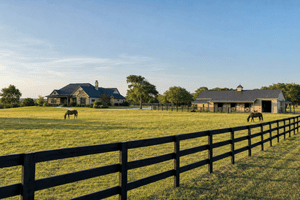
For a working horse property, the infrastructure is a big part of the value — and a big part of the cost if it’s not there or not in good shape. Walk the property with equestrian eyes:
• Fencing — type, condition, and whether it’s safe and appropriate for horses.
• Barns and stalls — structural condition, electrical, and water access.
• Pastures and footing — drainage, grass, and whether the land is set up for rotation.
• Arenas, round pens, and run-in sheds — condition and whether they meet your needs.
Existing quality infrastructure can save you tens of thousands versus building it yourself. Missing or failing infrastructure isn’t a dealbreaker, but it belongs in your budget.
Check access, easements, and boundaries
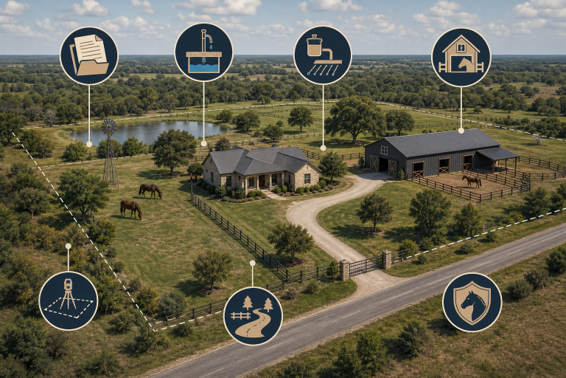
Rural parcels can carry access and boundary questions that suburban lots rarely do:
• Legal access — Is the property reached by a public road or a private easement? Get it in writing.
• Easements — Utility, pipeline, and shared-road easements can affect where you build and how you use the land. Review the title commitment carefully with your title company.
• Survey — On acreage, a current survey is worth every penny to confirm boundaries, improvements, and encroachments.
Plan for financing and insurance differences
Buying land with a home, barns, and acreage can look different from a standard mortgage. Loan products for rural and agricultural property have their own requirements, and how the land is valued and used can affect your options. It’s worth lining up the right lender early — the same kind of upfront financing planning we cover in our guide to financing options when buying in North Texas.
Insurance is also its own conversation on acreage. Outbuildings, barns, and the distance from fire services can all affect coverage and cost. Our overview of what shapes homeowners insurance in North Texas is a useful starting point, though rural equestrian policies add their own layers.
If you’re weighing an existing horse property against buying raw land and building, our breakdown of new construction versus existing homes covers the trade-offs at a high level.
The bottom line
Weatherford is one of the premier horse markets anywhere, and the acreage here can be a dream property. The difference between a great buy and a costly one usually comes down to the rural due diligence — ag valuation, water, septic, infrastructure, and access — that a subdivision buyer never has to think about.
Get those pieces verified before you commit, and you can buy with confidence. That’s exactly the kind of legwork we help acreage buyers work through.
Frequently Asked Questions
What is an ag exemption on Weatherford horse property?
It’s an agricultural special appraisal that taxes qualifying land on its agricultural productivity instead of market value, which can significantly lower the property tax bill. It’s tied to genuine agricultural use — which can include keeping horses for qualifying purposes — and the Parker County Appraisal District requires documentation to grant and maintain it.
Do Weatherford acreage properties have city water and sewer?
Usually not. Most rural Weatherford properties rely on a private water well and an on-site septic system rather than municipal water and sewer. Verify the well’s condition and output and get the septic system’s type, age, and permit history before closing.
What county is Weatherford in?
Weatherford is the county seat of Parker County. Property taxes and appraisals — including agricultural valuations — are handled by the Parker County Appraisal District, and septic permitting runs through Parker County Environmental Health.
Does buying land with an existing ag exemption mean I keep the lower taxes?
Not automatically. The valuation is tied to continued qualifying use, and a change in ownership or use can trigger a re-evaluation and, in some cases, a rollback tax. Confirm the current status and what you’d need to do to maintain it with the Parker County Appraisal District before relying on that number.
What should I inspect on a Weatherford horse property?
Beyond a standard home inspection, check the well and water quality, the septic system, fencing suited for horses, barns and stalls, pasture footing and drainage, and legal access and easements. A current survey is also strongly recommended on acreage.
Shopping for acreage in Weatherford?
Horse property is a rewarding buy when the rural details check out. If you’d like help working through ag valuation, water, septic, and the rest of the acreage checklist on a specific property, we’re happy to walk you through it. Reach out anytime.
About The Chad Smith Team
The Chad Smith Team at Realty of America is one of the top-producing real estate teams in the Dallas-Fort Worth Metroplex, with more than 22 years of experience, 2,915 homes sold, and recognition by RealTrends among the top 1% of real estate professionals nationwide. The team helps first-time buyers, sellers, relocation clients, and new construction buyers throughout Arlington, Mansfield, Fort Worth, Midlothian, Waxahachie, and surrounding DFW communities. Through this blog, the Chad Smith Team shares expert market insights and practical advice to help North Texas buyers and sellers make informed real estate decisions.