Energy Bill Saving Tips for Texas Summers in Mansfield, TX
How Can Mansfield, TX Homeowners Lower Their Energy Bills in the Summer Heat?
The fastest wins come from three habits: setting your thermostat to 78°F when you’re home (and letting it drift higher when you’re away), sealing air leaks and topping off attic insulation, and keeping your HVAC system on a regular maintenance schedule. Ceiling fans, smart window treatments, and paying attention to peak-demand hours between 2 PM and 7 PM stack additional savings on top. None of these require a major renovation — most are weekend projects or simple habit changes.
By The Chad Smith Team | August 13, 2026
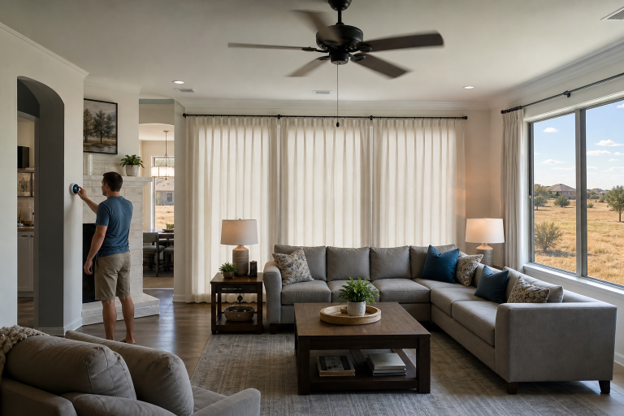
North Texas summers don’t ease into the heat — they arrive in May and don’t let go until October. If you’ve lived in Mansfield for more than one cooling season, you already know the drill: triple-digit afternoons, humidity that makes 95°F feel like 105°F, and an electric bill that seems to double the moment summer starts.
The good news is that most of the biggest energy drains in a North Texas home are fixable without hiring a contractor or spending a lot of money. Here’s where to focus first.
Start With Your Thermostat — It’s the Single Biggest Lever
Your HVAC system is almost certainly the largest single line item on your summer electric bill, which means your thermostat setting is the highest-leverage change you can make.
A widely used starting point: 78°F when you’re home and awake, and a few degrees warmer when the house is empty. ENERGY STAR has long used 78°F as its baseline recommendation for summer cooling efficiency, and many North Texas HVAC companies recommend the same range for this climate.
A few refinements that matter in Mansfield’s heat and humidity:
• Humidity affects comfort as much as temperature. A home held at 45-55% relative humidity feels noticeably cooler at 78°F than a humid home does at the same setting. If your system struggles with humidity, ask an HVAC technician whether your unit is sized and set up correctly for moisture removal, not just temperature.
• Pre-cooling can help before peak hours. Some homeowners cool the house down a few degrees in the morning, then let it drift up slightly during the hottest, highest-demand part of the afternoon (roughly 2 PM to 7 PM), when electricity is typically most expensive and the grid is under the most strain.
• A programmable or smart thermostat pays for itself fairly quickly. Being able to schedule setbacks for the hours you’re at work, or adjust remotely, removes the temptation to just leave the AC running at one temperature all day regardless of occupancy.
The exact numbers will vary by home size, insulation, and how your system is set up, but the direction is consistent: modest, consistent thermostat management beats constant adjusting.
Attic Insulation and Air Sealing: Where North Texas Homes Lose the Most Cool Air

If your thermostat is the lever, your attic and building envelope are what determine how hard your system has to work to hit that setting.
Dallas-Fort Worth sits in a climate zone where current energy code guidance calls for attic insulation in the R-38 to R-49 range. Many existing Mansfield homes, especially older resale properties, were built to older, lower standards and have less insulation than that today. A hot Texas attic can reach well above 130°F on a summer afternoon, and if there isn’t enough insulation between that attic and your living space, a meaningful amount of that heat radiates straight down into your rooms.
Worth checking before you assume you need new insulation:
• Depth is a rough proxy for R-value. Blown-in fiberglass generally needs around 15 inches for R-38 and closer to 20 inches for R-49. If you can see the tops of your attic joists, you likely don’t have enough.
• Air sealing often matters more than people expect. Gaps around attic hatches, recessed lighting, plumbing penetrations, and duct connections let conditioned air escape and hot air in, sometimes at a bigger cost than the insulation level itself.
• A home energy audit gives you a real answer instead of a guess. Many North Texas utilities and independent contractors offer these, and they’ll tell you specifically where your home is losing the most energy rather than having you upgrade everything at once.
While you’re up there or scheduling a contractor, it’s also a reasonable time to have ductwork checked for leaks or disconnected sections, a surprisingly common issue in older attics that quietly wastes cooled air before it ever reaches your vents.
Windows, Fans, and Everyday Habits That Add Up
Not every fix requires attic access. Several lower-effort changes make a real difference during a Texas summer, especially on south- and west-facing rooms that take the brunt of the afternoon sun.
• Block direct sun during peak hours. Blinds, curtains, solar screens, or reflective window film on south- and west-facing windows can noticeably reduce how much heat builds up in a room, particularly in the late afternoon.
• Run ceiling fans the right direction. In summer, fans should spin counterclockwise (when viewed from below) to push air straight down, creating a wind-chill effect that lets you feel comfortable at a slightly higher thermostat setting. Remember fans cool people, not rooms, so turn them off when you leave.
• Close doors and vents in unused rooms so your system isn’t cooling space nobody’s using, but check with an HVAC technician first if your system requires balanced airflow.
• Avoid heat-generating appliances during the hottest hours. Ovens, dryers, and even dishwashers add heat and humidity indoors. Running these in the morning or evening instead of midafternoon takes some load off your AC.
• Weatherstrip doors and seal obvious gaps. It’s a low-cost afternoon project that reduces the amount of hot outdoor air infiltrating your home.
None of these single-handedly transforms a bill, but combined with a well-managed thermostat and adequate insulation, they add up over a full summer.
HVAC Maintenance and Peak-Demand Programs Worth Knowing About
A well-maintained system simply runs more efficiently than a neglected one, and it’s also less likely to fail on the hottest day of the year, which in North Texas is exactly when you don’t want to be waiting on a repair.
• Change or clean your air filter regularly. A dirty filter restricts airflow and forces your system to work harder for the same result. This is the single easiest maintenance task homeowners skip.
• Schedule annual professional maintenance before peak season if you can, so a technician can check refrigerant levels, coil cleanliness, and overall system performance before the hottest months hit.
• Keep your outdoor condenser unit clear of grass clippings, leaves, and debris, and give it a couple of feet of clearance so it can release heat efficiently.
• Know your peak-demand hours. In the Oncor service territory, the summer on-peak period generally runs weekdays from about 1 PM to 7 PM, June through September. Some retail electric plans price energy differently during these hours, and some utility programs offer incentives for smart thermostats that can help manage demand during high-stress periods on the Texas grid. It’s worth checking what your specific electric provider offers.
• A well-maintained system also protects your home’s value. Deferred HVAC problems have a way of becoming bigger, more expensive issues, and they’re exactly the kind of thing that shows up in a home inspection or affects your homeowners insurance in Mansfield, TX if neglected long enough to cause water damage or other secondary issues.
Staying ahead of routine maintenance is one of the most overlooked ways homeowners save money over the life of a system, not just in a single billing cycle, but across every summer the equipment is in service.
Small, consistent habits, a thoughtful thermostat schedule, adequate attic insulation, a few window and fan adjustments, and routine HVAC care, are what actually move the needle on a North Texas summer electric bill. None of it requires guesswork; most of it just requires a little attention before the heat peaks.
If you’re weighing energy efficiency upgrades because you’re planning to sell, or you’re evaluating a home’s systems as part of a purchase in Mansfield or elsewhere in the DFW Metroplex, we’re happy to talk through what matters most for your specific situation. Reach out anytime, no pressure, just a conversation.
Frequently Asked Questions
What temperature should I set my thermostat to in the summer in Texas?
A common starting point is 78 degrees when you’re home, with a slightly higher setting when the house is empty. The right number for your home depends on humidity control, insulation, and personal comfort, so treat 78 degrees as a baseline to adjust from rather than a strict rule.
Do ceiling fans actually help lower my AC bill?
Yes, when used correctly. Fans create a wind-chill effect that lets you feel comfortable at a higher thermostat setting, but they cool people, not rooms, so turn them off when you leave to avoid wasting energy.
How much attic insulation do North Texas homes need?
Current energy code guidance for the Dallas-Fort Worth climate zone generally calls for R-38 to R-49 in the attic. Many older resale homes in Mansfield have less than that, and topping off insulation is one of the more impactful upgrades for summer cooling costs.
What is Oncor peak-demand period, and does it affect my bill?
In the Oncor service territory, the summer on-peak period generally runs weekdays from about 1 PM to 7 PM, June through September. Depending on your electric plan, energy used during these hours may cost more, and some providers offer incentives for smart thermostats that help reduce demand during high-stress periods on the grid.
How often should I change my HVAC air filter in the summer?
Most manufacturers recommend checking filters monthly during peak cooling season and replacing or cleaning them as needed, since a clogged filter forces your system to work harder and can raise your bill. Your specific filter type and household conditions may call for more frequent checks.
About The Chad Smith Team
The Chad Smith Team at Realty of America is one of the top-producing real estate teams in the Dallas-Fort Worth Metroplex, with more than 22 years of experience, 2,915 homes sold, and recognition by RealTrends among the top 1% of real estate professionals nationwide. The team helps first-time buyers, sellers, relocation clients, and new construction buyers throughout Arlington, Mansfield, Fort Worth, Midlothian, Waxahachie, and surrounding DFW communities. Through this blog, the Chad Smith Team shares expert market insights and practical advice to help North Texas buyers and sellers make informed real estate decisions.