Buying a Rental Property in Arlington: Cash Flow and Financing
How do you finance and cash-flow a rental property in Arlington?
Financing a rental property in Arlington usually means a conventional investment loan or a DSCR loan, both requiring 20% to 25% down. A conventional loan qualifies you on your personal income and credit, while a DSCR loan qualifies on the property’s rental income instead — no tax returns required. Cash flow is what’s left after the rent covers the mortgage, taxes, insurance, and upkeep. With average Arlington rents around $1,525 a month and a metro gross rental yield near 8.55%, the numbers can work, but only if you underwrite the full expense picture before you buy.
By The Chad Smith Team | September 21, 2026
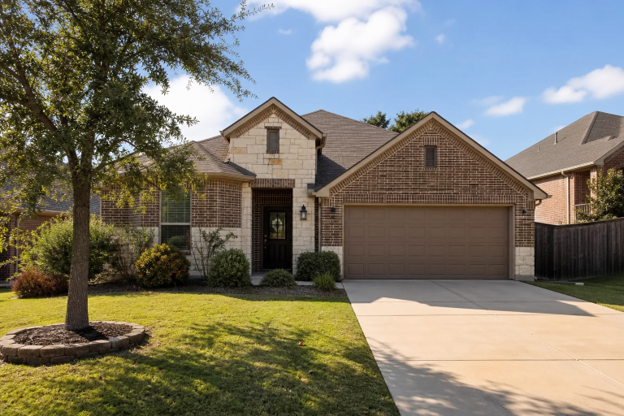
Arlington sits right in the middle of the Dallas-Fort Worth Metroplex, and that central location, steady rental demand, and mix of housing make it a market investors keep circling back to. But buying a rental here is a numbers game, not a gut call. We help investors run the math before they commit, and the deals that perform are the ones where the financing and the cash flow were pressure-tested up front.
Here’s how both pieces work in Arlington.
Your two main financing paths
Buying an investment property is a different lending conversation than buying a home to live in. Lenders see rentals as higher risk, so the terms are tighter and the down payment is bigger. Two products handle most Arlington rental purchases.
Conventional investment loans. This is the traditional route. You qualify based on your personal income, credit, and debt-to-income ratio, and the property’s expected rent can help. Expect:
• 20% down as the standard minimum with strong credit (roughly 700+) and a property that cash-flows
• 25% down for lower credit tiers (660–699), condos, multi-unit properties, or thinner cash flow
• A minimum credit score around 640–660 with most lenders
• Rates roughly in the 7% to 7.5% range for well-qualified borrowers in 2026
DSCR loans. DSCR stands for Debt Service Coverage Ratio, and this is the tool built for investors. Instead of underwriting your pay stubs and tax returns, the lender underwrites the property’s cash flow. If the rent covers the debt, you can qualify — which is a big deal for self-employed buyers or investors who write off enough that their taxable income looks thin on paper.
DSCR highlights:
• 20% to 25% down, similar to conventional
• No mortgage insurance, even below 20% equity — unlike conventional loans
• No limit on the number of financed properties, so you can scale a portfolio without hitting the conventional cap
• Rates typically 6.75% to 8.25%, depending on your credit, the DSCR ratio, and your down payment
The DSCR itself is simple: it’s the property’s rental income divided by its total debt payment. A ratio of 1.0 means the rent exactly covers the loan; above 1.0 means positive coverage. Most lenders want to see 1.0 or better, and a stronger ratio can earn you a lower rate or down payment.
Which product fits depends on your income profile and how many properties you already carry. Our breakdown of FHA versus conventional loans covers the fundamentals of conventional underwriting — just remember that FHA and other owner-occupied programs don’t apply to a pure rental.
What Arlington rents actually look like
Cash flow starts with the rent. Arlington’s rental market is active, and the numbers give you a realistic band to underwrite against:
• Average rent across property types sits around $1,525 a month as of mid-2026, roughly 22% below the national average — which keeps entry prices reasonable relative to income.
• One-bedroom units average near $1,034, and two-bedrooms near $1,483.
• The broader Dallas-Fort Worth-Arlington median asking rent runs about $2,350, pricing the metro at roughly an 8.55% gross rental yield against an average home value near $371,126.
That yield figure is a useful sanity check. Gross rental yield is annual rent divided by property value, and a number in the 8% range is healthy for a large, stable metro. But gross yield ignores expenses — the real test is what’s left after the bills.
Underwriting the real cash flow
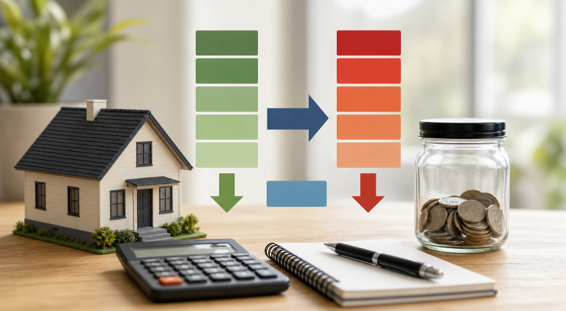
Positive cash flow means the rent covers everything and leaves money over. Too many first-time investors underwrite only the mortgage and get surprised. Build every one of these into your Arlington numbers:
1. Principal and interest on the loan
2. Property taxes — Tarrant County rates apply, and Texas property taxes run higher than most states because there’s no state income tax. Get the actual tax figure for the specific property, not an estimate.
3. Insurance — landlord policies cost more than owner-occupied coverage, and North Texas hail exposure adds to it. Our guide to homeowners insurance in North Texas explains what drives premiums here.
4. Vacancy reserve — budget for the property sitting empty part of the year between tenants. A common assumption is 5% to 8% of annual rent.
5. Maintenance and repairs — set aside a percentage of rent for ongoing upkeep and the occasional big-ticket item.
6. Property management, if you’re not self-managing — typically around 8% to 10% of collected rent.
7. HOA dues, if the property sits in an association.
Run the rent against that full stack. If it clears with margin, you have a cash-flowing rental. If it’s break-even, you’re betting entirely on appreciation and tax benefits — which can be fine, but you should know that’s the bet you’re making.
Property taxes deserve extra attention in Arlington. Rates vary across the metro, and they materially change your monthly math. Our comparison of property tax rates across Mansfield, Arlington, and Fort Worth shows how much of a difference the taxing jurisdiction makes.
Getting the deal right in Arlington
The investors who do well here aren’t chasing the lowest price — they’re buying the property whose rent, taxes, and condition pencil out to real cash flow. That means getting the actual tax bill, pulling honest rent comps for the specific area and property type, and inspecting for deferred maintenance that could eat a year of returns.
This is exactly the kind of analysis we run with investor clients before they write an offer: pull the rent comps, get the real tax number, stress-test the DSCR, and confirm the deal cash-flows at a conservative vacancy assumption. Every property is different, and the only way to know for sure is to run the numbers with someone who knows how this market behaves.
Frequently Asked Questions
How much down payment do I need for a rental property in Arlington?
Plan for 20% to 25% down. Conventional investment loans and DSCR loans both start around 20% for strong borrowers and rise to 25% for lower credit, condos, multi-unit properties, or weaker cash flow.
What is a DSCR loan, and who is it for?
A DSCR (Debt Service Coverage Ratio) loan qualifies you based on the property’s rental income rather than your personal tax returns or pay stubs. It’s ideal for self-employed investors or anyone whose taxable income looks thin on paper, and it has no cap on the number of financed properties.
What’s the average rent in Arlington?
As of mid-2026, average rent across property types is around $1,525 a month, with one-bedrooms near $1,034 and two-bedrooms near $1,483. The broader DFW-Arlington median asking rent is about $2,350, reflecting larger homes and multi-bedroom units.
What expenses should I include when calculating cash flow?
Include principal and interest, Tarrant County property taxes, landlord insurance, a vacancy reserve, maintenance, property management if applicable, and any HOA dues. Cash flow is what’s left after all of these, not just the mortgage.
Are Arlington rentals a good investment?
They can be. With a central DFW location, steady rental demand, and a metro gross rental yield near 8.55%, the fundamentals are solid, but returns depend entirely on the specific property’s price, rent, taxes, and condition. Underwrite each deal individually.
The bottom line
Buying a rental in Arlington comes down to two questions: how you finance it and whether it cash-flows. Conventional and DSCR loans both work with 20% to 25% down, and Arlington’s rents and metro yield give you room to build a performing rental — as long as you underwrite the full expense picture, not just the mortgage.
If you’re weighing a rental purchase in Arlington and want help running the cash flow and financing before you commit, we’re happy to walk you through the numbers. Reach out anytime.
About The Chad Smith Team
The Chad Smith Team at Realty of America is one of the top-producing real estate teams in the Dallas-Fort Worth Metroplex, with more than 22 years of experience, 2,915 homes sold, and recognition by RealTrends among the top 1% of real estate professionals nationwide. The team helps first-time buyers, sellers, relocation clients, and new construction buyers throughout Arlington, Mansfield, Fort Worth, Midlothian, Waxahachie, and surrounding DFW communities. Through this blog, the Chad Smith Team shares expert market insights and practical advice to help North Texas buyers and sellers make informed real estate decisions.