Buying a Home With Land in Joshua: What to Verify
What should you verify before buying a home with land in Joshua, TX?
Before you buy a home on acreage in Joshua, verify the things a subdivision lot handles for you: the water source (a private well’s depth, flow rate, and quality, or a rural water connection), whether the septic system is permitted and functioning, the boundary survey and any easements, the deed restrictions, the floodplain status, and whether the land carries — or could carry — an agricultural tax exemption. Johnson County has its own subdivision and septic rules, so confirm them for the specific parcel. Getting this done during your option period is what keeps a country dream from becoming an expensive surprise.
By The Chad Smith Team | September 25, 2026
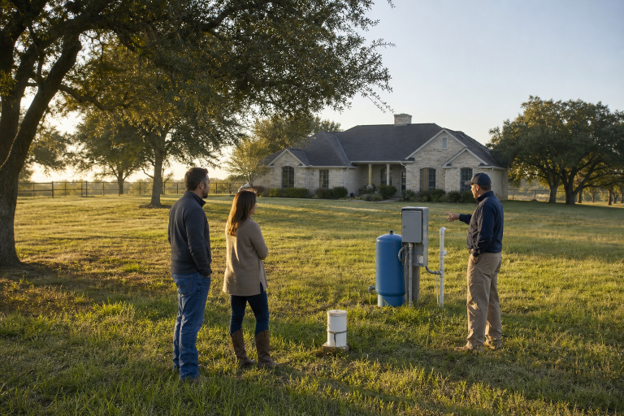
Joshua sits in Johnson County, just south of Burleson and about a half hour from Fort Worth, and it’s a favorite for buyers who want small-town living with a little land. A home on a few acres here is a different purchase than a house on a standard city lot. The house might come with city-style convenience, or it might rely entirely on a well and a septic system — and the things you can’t see from the driveway are usually the ones that matter most.
None of this should scare you off. Country properties around Joshua are some of the more rewarding buys in North Texas. You just have to verify a specific list of items before you commit. Here’s that list.
Water: know exactly how the property gets it
On a home with land, water is the first question, not an afterthought. There are two common setups around Joshua:
• Rural water connection. Many properties tap a rural water supply district or co-op. Confirm the home already has an active meter and account, and ask about monthly costs and any capacity limits.
• Private well. If the home is on a well, you need to know its depth, condition, flow rate (gallons per minute), and water quality. Older wells can be worn out or underperforming, and a low-producing well is a serious quality-of-life issue.
Never assume water is “handled.” Ask for documentation, and make well testing — both flow and water quality — part of your due diligence, not something you discover after closing.
Septic: is it permitted, and does it work?
Most homes with land around Joshua use an on-site septic system (OSSF) rather than city sewer. Two things to confirm:
1. Is the existing system permitted and in good working order? Septic systems are permitted and inspected at the county level. Ask for permit records and get the system inspected. A failing septic system or a drain field at the end of its life is a costly repair.
2. If you plan to add on or rebuild, will the soil support it? Each county sets its own requirements for septic approval, inspection, and installation. A soil percolation test tells you what the land can actually support — important if you’re thinking about an addition, a shop, or a second structure.
Survey, easements, and deed restrictions
This is where country properties differ most from subdivision homes, and where careful buyers protect themselves.
Get a current survey. Insist on an up-to-date survey showing exact boundaries, easements, and any encroachments. On acreage, fence lines don’t always match legal boundaries, and that gap causes real disputes. Our overview of property surveys in Texas explains what a survey shows and why it matters.
Read every easement and restriction. Rural land can carry utility easements, pipeline easements, or deed restrictions from a prior owner that limit where and how you can build. Request the title commitment and actually read the documents it references — don’t just skim the summary. Title work should surface these, but you want to understand them yourself.
Check the deed restrictions and county subdivision rules. Johnson County has specific subdivision regulations. For example, deed restrictions in some subdivisions require that no house be built in a 100-year floodplain unless it’s constructed at or above the minimum finished-floor elevation. Know what applies to your parcel before you plan any project.
If you’ve read our guide to buying land in the DFW area, the principles carry over — but always confirm the rules for Johnson County specifically, since they differ from Tarrant County’s.
Floodplain and access
Two more items belong on every acreage checklist:
• Floodplain status. Check the FEMA flood map for the parcel. If any structure sits in a special flood hazard area and you have a mortgage, your lender will require flood insurance — and it affects where you can build.
• Legal access. Confirm the property has legal, recorded access to a public road. Landlocked parcels or those relying on an informal easement across a neighbor’s land can create serious headaches. The survey and title commitment should address this.
The agricultural exemption: a big tax lever
Here’s an item unique to land: the agricultural exemption (technically an ag-use valuation). If the land qualifies and is used for a qualifying agricultural purpose, it can reduce the taxable value dramatically — cutting that portion of your tax bill by a large margin.
A few things to verify:
• Does the land currently carry an ag valuation? If it does, understand what’s required to keep it — there are typically minimum acreage, use, and sometimes income requirements.
• What happens if the use lapses? Dropping the ag use can trigger a rollback of back taxes, so don’t assume you can let it go without consequences.
• If it doesn’t have one, can it qualify? You’d apply to the Johnson County Appraisal District, usually with a history of qualifying use.
The ag exemption can meaningfully change your annual carrying cost, so it’s worth confirming its status before you buy, not after.
Do it all during your option period
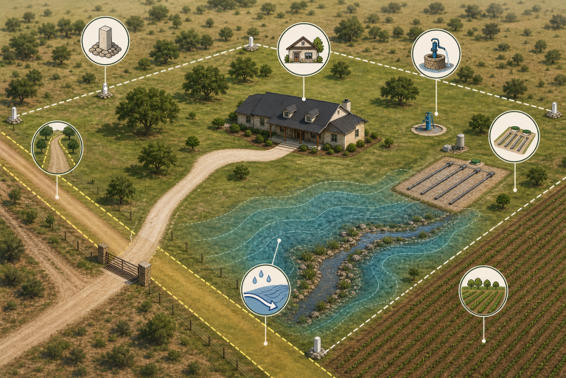
Every one of these checks — well testing, septic inspection, survey review, title and easement reading, floodplain and access confirmation, ag-exemption status — belongs in your option period. For a small negotiated fee, that window gives you the unrestricted right to terminate the contract for any reason, so it’s your protected time to verify everything. Our guide to the Texas option period covers how to use it.
For local specifics, Johnson County’s planning, health, and permit offices are the authoritative sources on subdivision rules, septic requirements, and building permits. A local agent who’s closed rural transactions can help you line these up in the right order.
This is exactly the kind of layered due diligence we walk our Joshua buyers through — because on a home with land, the questions you ask before closing are what protect you after.
Frequently Asked Questions
What’s the difference between buying a home with land and a regular house in Joshua?
A home on a standard city lot comes with city water, sewer, and utilities already connected. A home with land around Joshua often relies on a private well and a septic system, and it carries its own survey, easement, deed-restriction, and floodplain questions. You have to verify these directly rather than assume they’re handled.
Do I need to test the well and septic before buying?
Yes. Test the well for flow rate and water quality, and have the septic system inspected and its permit records confirmed. A low-producing well or a failing septic system is expensive to fix, and these are exactly the issues a standard walkthrough won’t reveal.
How much can an agricultural exemption save on a Joshua property?
An ag-use valuation can reduce the taxable value of qualifying land substantially, which meaningfully lowers that portion of the tax bill. You must meet the Johnson County Appraisal District’s requirements to qualify and maintain it, and dropping the use can trigger a rollback of back taxes, so confirm its status before you buy.
What should a survey show on a home with land?
A current survey should show exact boundaries, easements, encroachments, and how fence lines relate to the legal property lines. On acreage, fences and legal boundaries often don’t match, so the survey protects you from boundary disputes and confirms legal road access.
Are there special rules for building on land in Johnson County?
Yes. Johnson County has its own subdivision regulations and septic requirements, and some subdivisions carry deed restrictions — such as rules requiring homes in a 100-year floodplain to be built at or above a minimum finished-floor elevation. Confirm the rules for your specific parcel with the county before planning any construction.
The bottom line
Buying a home with land in Joshua is a genuinely great option for the right buyer — but it comes with a verification checklist a subdivision home doesn’t. Confirm the water source, the septic system, the survey and easements, the deed restrictions, the floodplain and access, and the ag-exemption status, and do it all inside your option period.
If you’re considering a home on acreage around Joshua and want a guide who knows the rural due-diligence process in Johnson County, we do this with our buyers all the time. Reach out anytime.
About The Chad Smith Team
The Chad Smith Team at Realty of America is one of the top-producing real estate teams in the Dallas-Fort Worth Metroplex, with more than 22 years of experience, 2,915 homes sold, and recognition by RealTrends among the top 1% of real estate professionals nationwide. The team helps first-time buyers, sellers, relocation clients, and new construction buyers throughout Arlington, Mansfield, Fort Worth, Midlothian, Waxahachie, and surrounding DFW communities. Through this blog, the Chad Smith Team shares expert market insights and practical advice to help North Texas buyers and sellers make informed real estate decisions.