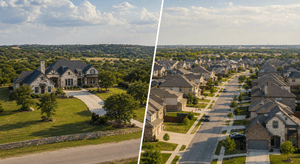
USDA Loan Options Near Dallas-Fort Worth: Can First-Time Buyers Qualify?
Can First-Time Buyers Near Dallas-Fort Worth Qualify for a USDA Loan?
Yes, some first-time buyers near Dallas-Fort Worth may qualify for a USDA loan, but the home must be in a USDA-eligible area and the buyer must meet income, credit, lender, and occupancy requirements. USDA loans can be a strong First Time Home Buyer Program option because they may allow no down payment, but they usually work best in eligible rural or outer-suburban areas near DFW rather than inside the urban core of Dallas, Fort Worth, Arlington, Plano, or other densely developed cities.
By The Chad Smith Team | July 8, 2026
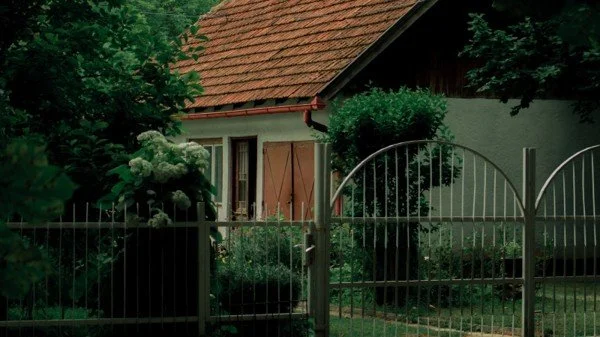
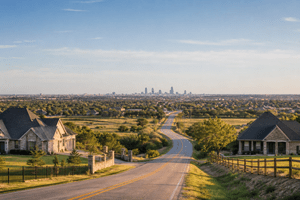
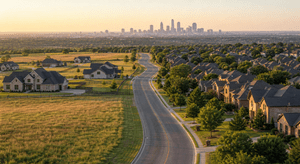
USDA loans are most often explored in eligible rural or outer-suburban areas around Dallas-Fort Worth, not in the dense urban core.
If you are buying your first home in Dallas-Fort Worth and trying to avoid a large down payment, a USDA loan may be worth understanding. A lot of buyers think USDA loans are only for farms or remote rural properties, but that is not always the case.
USDA loans are designed to help eligible buyers purchase homes in qualified rural areas. In a large metro like DFW, that usually means you are not looking in the middle of Dallas or Fort Worth. But you may find USDA possibilities in outer areas, smaller towns, and rural pockets around North Texas.
The key word is “may.” USDA eligibility is address-specific, and it can change. You should never assume a property qualifies just because it feels rural or sits outside the city.
For the right buyer and the right property, though, USDA can be one of the most helpful low-cash options available.
What Is a USDA Loan?
A USDA loan is a mortgage program backed by the U.S. Department of Agriculture through its Rural Development housing programs. The version most DFW buyers hear about is the Single Family Housing Guaranteed Loan Program.
With a USDA Guaranteed Loan, an eligible buyer works through an approved lender. The lender makes the loan, and USDA guarantees part of it.
The main appeal is simple: qualified buyers may be able to buy with no down payment in eligible rural areas.
That can make USDA especially attractive for first-time buyers who have stable income but limited savings. If the biggest obstacle is saving for a down payment, USDA may help close that gap.
USDA loans are not grants. They are still mortgages. You still have to qualify, make monthly payments, meet lender requirements, and buy a property that fits USDA rules.
Is USDA Only for First-Time Buyers?
No. USDA loans are not only for first-time buyers.
Repeat buyers may use USDA too if they meet the program rules. However, USDA can be especially helpful for first-time buyers because it may reduce the upfront cash needed to buy.
That is why USDA often gets compared with FHA, VA, conventional 3% down loans, TDHCA assistance, TSAHC assistance, and local Dallas or Fort Worth homebuyer programs.
The difference is that USDA is heavily tied to property location and household income. With FHA, you may be able to use the loan across a much wider range of DFW locations. With USDA, the property itself has to be in an eligible area.
Where USDA Loans May Work Near DFW
USDA loans usually do not work in dense urban areas. That means homes in most of Dallas, Fort Worth, Arlington, Plano, Frisco, Irving, Garland, Grand Prairie, and similar built-out parts of the metro are typically not where buyers expect USDA eligibility.
USDA possibilities are more likely to come up in outer areas, rural pockets, and smaller communities around the edges of DFW.
Buyers often check eligibility around parts of:
Johnson County
Ellis County
Parker County
Wise County
Kaufman County
Hunt County
Navarro County
Rural pockets outside the main city cores
Examples of areas buyers may research include places near Cleburne, Joshua, Alvarado, Venus, Maypearl, Ennis, Ferris, Terrell, Weatherford-area outskirts, Decatur-area outskirts, and other outer North Texas communities.
That does not mean every home in those areas qualifies. It means those are the types of places where checking the USDA map may be worthwhile.
The exact address matters. A home across the road may qualify while another nearby home may not. A property can also appear eligible on a map, but the final determination comes through USDA Rural Development during the application process.
USDA Income Limits

USDA qualification depends on more than the home price; income, credit, payment, taxes, insurance, and location all matter.
USDA loans are intended for low-to-moderate-income households, so income limits are a major part of qualification.
For the USDA Guaranteed Loan Program, household income generally cannot exceed 115% of the area median income. The actual limit depends on the county, household size, and current USDA guidelines.
This is important because USDA looks at household income, not only the income of the person listed on the loan. If multiple adults live in the home, a lender may need to review income from the household even if not everyone is borrowing.
That surprises some buyers.
For example, a first-time buyer looking near Cleburne, Waxahachie, Weatherford, Terrell, or another outer DFW area may meet the credit and location rules but still need to confirm household income. Another buyer may assume they earn too much, but the actual household-size limit may still leave room.
Do not guess. A lender who works with USDA loans can calculate your income eligibility based on your household, county, and current limits.
USDA Credit Score Requirements
USDA does not work exactly like a simple credit-score checklist.
Many lenders prefer a credit score around 640 because it may allow a smoother automated underwriting review. USDA guidance also calls for a more complete credit review when an applicant’s credit score is below 640, when there is limited credit history, or when there are significant delinquencies.
That does not mean every buyer below 640 is automatically denied. It means the file may require more review, and lender requirements can vary.
Your lender will look at more than the score:
Payment history
Debt-to-income ratio
Employment stability
Income documentation
Cash reserves
Recent late payments
Collections or charge-offs
Bankruptcy or foreclosure history
Overall ability to repay
For many first-time buyers, the practical takeaway is this: if your score is near 640, USDA may be worth exploring. If your score is lower, talk to a USDA-experienced lender before assuming you cannot qualify.
USDA vs. FHA for DFW First-Time Buyers

USDA, FHA, VA, conventional loans, and assistance programs should be compared side by side before choosing a financing path.
USDA and FHA are both common first-time buyer options, but they solve different problems.
USDA may be better if you want to buy in an eligible rural or outer-suburban area, meet the income limits, and want the possibility of no down payment.
FHA may be better if you are buying in a non-USDA-eligible part of DFW, need broader property-location
flexibility, or do not meet USDA income or location rules.
A buyer looking in central Fort Worth, Dallas, Arlington, Mansfield, or Garland may find FHA easier to use because property eligibility is broader. A buyer looking farther out near Cleburne, Alvarado, Maypearl, Terrell, or other outer areas may want to compare USDA and FHA side by side.
The best choice depends on the full payment, not just the down payment. USDA may reduce upfront cash, but you still need to compare interest rate, fees, taxes, insurance, commute costs, and the long-term affordability of the home.
What This Looks Like in the DFW Market
In May 2026, the Dallas-Fort Worth median single-family home price was reported around $409,900, with nearly 40,000 homes for sale across the metro. That means buyers have more options than they had during the tightest parts of the market, but affordability is still a major issue.
USDA loans may appeal to buyers who are priced out of closer-in DFW neighborhoods and are open to outer communities. But a lower purchase price farther from Dallas or Fort Worth does not automatically mean the home is more affordable.
You still need to think about:
Commute time
Fuel and toll costs
Property taxes
Homeowners insurance
School district boundaries
HOA dues
Internet access
Road access
Distance to work, childcare, family, and daily routines
A buyer may find a lower-priced home outside the urban core but spend more time and money commuting. Another buyer may work remotely and find that an outer-area USDA-eligible property fits well.
This is why USDA should be evaluated as part of a lifestyle and budget decision, not just a loan program.
USDA and New Construction Near DFW
USDA can sometimes work with new construction, but buyers need to confirm the details early.
New construction is common around the edges of Dallas-Fort Worth. Builders in outer-growth areas may offer closing-cost incentives, rate buydowns, or preferred-lender credits. Some of those communities may be near areas buyers want to check for USDA eligibility.
Before assuming USDA works with a new build, ask:
Is the property address USDA eligible?
Does the builder’s preferred lender offer USDA loans?
Can builder incentives be used with USDA financing?
Will the home be complete within the loan timeline?
Are there HOA dues, PID assessments, or MUD taxes?
Will the final payment still fit your income and debt limits?
Builder incentives can be helpful, but they should be compared against the full USDA loan structure. A no-down-payment loan is only helpful if the monthly payment still works.
USDA Property Requirements
USDA loans are tied to both the buyer and the property.
The home must be used as your primary residence. It also needs to be modest, safe, sanitary, and structurally sound. USDA is not designed for investment properties, vacation homes, or luxury properties.
The lender and appraiser will review the property as part of the approval process.
Potential issues may include:
Major roof problems
Safety hazards
Non-functioning utilities
Structural concerns
Serious water or drainage problems
Homes in poor condition
Properties that do not meet program standards
This matters because some lower-priced rural or outer-area homes may need repairs. A home may be affordable and in the right location, but if condition issues are too significant, USDA financing may not work without repairs.
How The Chad Smith Team Helps USDA Buyers Near DFW
USDA buyers need a plan because the program depends on location, income, lender approval, and property condition.
The Chad Smith Team helps first-time buyers think through questions like:
Is USDA realistic for the cities or counties you are considering?
Does the property appear worth checking on the USDA eligibility map?
Should you compare USDA against FHA, VA, conventional, TDHCA, or TSAHC?
Does your income appear likely to fit USDA limits?
Does the lender regularly close USDA loans?
How will taxes, insurance, HOA dues, and commute costs affect the payment?
Does the home’s condition appear likely to fit loan requirements?
Are builder incentives better than a USDA option?
The Chad Smith Team at Realty of America has more than 22 years of experience, 2,915 homes sold, and 660+ client reviews across Dallas-Fort Worth. That experience matters because USDA buyers are often balancing more than the home itself. They are balancing the city, county, eligibility map, income rules, lender requirements, and daily-life logistics.
The goal is to help you avoid wasting time on homes that look good online but do not fit your financing.
How to Start With a USDA Loan Near Dallas-Fort Worth

A USDA-aware lender and local agent can help buyers focus on homes that fit the program, the payment, and the property requirements.
If you think USDA may be a fit, start before you tour homes.
Talk with a lender who closes USDA loans. Ask how often they close USDA purchases in North Texas and whether they can compare USDA against FHA and conventional options.
Check household income eligibility. USDA income limits depend on household size, county, and current program rules.
Check the property map before falling in love with a home. USDA eligibility is address-specific, so confirm early.
Get a full pre-approval. Your lender should review income, credit, debt, assets, and likely USDA eligibility.
Compare the full monthly payment. Include principal, interest, taxes, insurance, any USDA fees, HOA dues, and special assessments.
Think through the location. Outer-area affordability only works if the commute, lifestyle, and long-term costs make sense.
This order can save you from chasing homes that do not qualify.
Frequently Asked Questions
Can first-time buyers use a USDA loan near Dallas-Fort Worth?
Yes. First-time buyers may use a USDA loan near Dallas-Fort Worth if they meet income, credit, lender, occupancy, and property-location requirements. The home must be in a USDA-eligible area.
Does a USDA loan require a down payment?
USDA Guaranteed Loans may allow qualified buyers to purchase with no down payment in eligible rural areas. Buyers may still need money for closing costs, inspections, appraisal, prepaid expenses, and moving costs.
Are USDA loans only for farms?
No. USDA loans are not only for farms. They are for eligible homes in qualified rural areas, which may include some small towns, outer-suburban locations, and rural pockets near DFW.
What credit score do I need for a USDA loan?
Many lenders prefer a score around 640, and USDA guidance requires a full credit review when scores are below 640. Exact requirements vary by lender and loan file.
Can I use a USDA loan in Dallas or Fort Worth?
Most homes in the urban core of Dallas and Fort Worth are not likely to be USDA eligible. USDA is more commonly explored in outer areas, smaller towns, and rural pockets around North Texas.
How do I know if a home is USDA eligible?
You can check the USDA property eligibility map, but final eligibility is determined by USDA Rural Development after a complete application. Always confirm with a USDA-experienced lender.
Is USDA better than FHA for first-time buyers?
It depends. USDA may be better if the home is eligible and you meet income rules. FHA may be better if you need more location flexibility or do not meet USDA requirements.
If you are open to areas near the outer edges of Dallas-Fort Worth, a USDA loan may be worth exploring. It can be a strong option for qualified first-time buyers who want to reduce upfront cash and buy in an eligible rural or outer-suburban location.
The Chad Smith Team can help you compare USDA against FHA, VA, conventional, TDHCA, and TSAHC options, connect with lenders who understand USDA loans, and focus your home search on properties that fit your budget and location needs. If you are looking near Dallas-Fort Worth, Fort Worth, Arlington, Mansfield, Midlothian, Waxahachie, Burleson, Keller, Northlake, Joshua, Cleburne, or surrounding North Texas communities, reach out and we will help you understand where to start.
About The Chad Smith Team
The Chad Smith Team at Realty of America is one of the top-producing real estate teams in the Dallas-Fort Worth Metroplex, with more than 22 years of experience, 2,915 homes sold, and 660+ client reviews. The team helps first-time buyers, sellers, relocation clients, new construction buyers, and rural-area buyers throughout Arlington, Mansfield, Fort Worth, Midlothian, Waxahachie, and surrounding DFW communities. Through this blog, the Chad Smith Team shares expert market insights and practical advice to help North Texas buyers and sellers make informed real estate decisions.