How to Read a Home Inspection Report Without Feeling Overwhelmed
How do you read a home inspection report without panicking?
Focus on severity, not length. A long report is normal — most homes generate dozens of items, and the majority are minor or routine maintenance. In Texas, inspectors use the standard TREC report form and flag problems as “Deficient,” so start there. Sort the deficient items into three buckets: material defects that affect safety, structure, or major systems; minor issues; and normal wear. The material defects are what deserve your attention and any repair negotiation.
By The Chad Smith Team | August 20, 2026

Your home inspection report lands in your inbox, you open it, and it’s 40 pages long with problems flagged on nearly every one. Your heart sinks. Before you panic and start second-guessing the whole purchase — take a breath. A long report almost never means a bad house. Here’s how to read one calmly and figure out what actually matters.
A Long Report Is Normal
The first thing to understand: inspectors are paid to find and document everything. A missing outlet cover, a slow-draining sink, a bit of caulk that needs replacing — it all goes in the report, right alongside the genuinely important stuff.
That’s a good thing. You want a thorough inspector. But it means the length and item count of a report tell you almost nothing about the home’s real condition. A 40-item report where 35 items are minor maintenance is a healthy report. The number of pages is not the story — the severity of the findings is.
So don’t react to volume. React to what’s serious.
How Texas Inspection Reports Are Organized
In Texas, licensed inspectors use a standardized report form promulgated by TREC (the Texas Real Estate Commission). That standardization is helpful, because once you understand the format, every report reads the same way.
The form walks through the home’s systems in order — structural components, electrical, HVAC, plumbing, appliances, and more. For each item, the inspector checks one of a few boxes:
• I (Inspected) — the item was inspected
• NI (Not Inspected) — it wasn’t inspected, and the inspector notes why
• NP (Not Present) — the item doesn’t exist in this home
• D (Deficient) — the inspector found a deficiency
The letter to hunt for is D. An item marked “Deficient” is one the inspector flagged as not functioning properly, unsafe, or in need of repair. Your reading strategy is simple: scan for the “D” items first, and read the inspector’s comments on each one.
Sort the Deficiencies Into Three Buckets
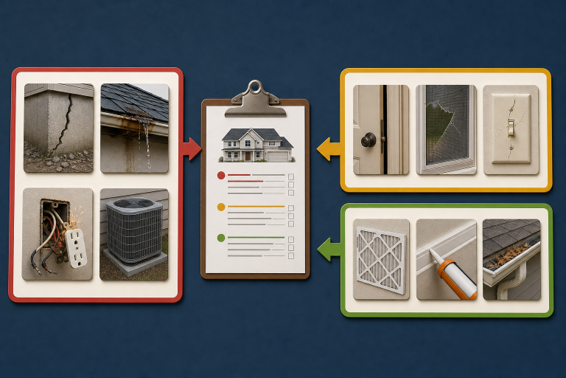
Not all deficiencies are equal. Once you’ve found the flagged items, sort them into three groups. This is the step that turns an overwhelming report into a clear picture.
1. Material defects. These are the ones that matter. A material defect affects safety, structure, or a major system — or requires immediate repair. Think foundation problems, roof damage, active leaks, electrical hazards, plumbing failures, HVAC systems that aren’t working, and mold or moisture intrusion. These are worth your full attention and are the legitimate basis for negotiation.
2. Minor issues. Cosmetic or small functional items — a torn window screen, a sticky door, a cracked switch plate. They’re real, but they don’t affect the home’s integrity or your safety. Most buyers handle these themselves after moving in.
3. Routine maintenance. Things every homeowner deals with — replacing HVAC filters, resealing grout, clearing gutters. These aren’t defects so much as the normal upkeep of owning a home.
When you look at a scary-looking report through this filter, it usually shrinks dramatically. Often a report with dozens of items comes down to two or three things that genuinely deserve a conversation.
What to Do With the Serious Items
When something potentially serious shows up — a foundation note, a possible roof issue, an electrical concern — the inspector’s report is a starting point, not a final verdict. General inspectors flag problems; they don’t always quantify them.
Your next move is a specialist evaluation. A foundation company, a roofer, or a licensed electrician can assess the severity and give you a repair estimate. That estimate is what you actually negotiate from — it’s hard to ask a seller for a credit when “how bad is it?” is still an open question.
This diligence matters enough that skipping the inspection entirely is rarely wise, even in a competitive market. If you’ve been wondering whether to waive it, our piece on whether to waive the home inspection in Mansfield right now walks through the risk.
The Report and Your Option Period
In Texas, the home inspection typically happens during your option period — a short, negotiated window early in the contract when you can terminate for any reason (or negotiate repairs) after paying a small option fee.
That window is exactly when you read the report, get any specialist evaluations, and decide how to proceed. You generally have a few paths: ask the seller to make repairs, request a price reduction or closing-cost credit, accept the home as-is, or terminate during the option period if the issues are dealbreakers.
Understanding how that timeline works is a big part of reading your report with confidence instead of dread. Our guide to the Texas option period explains the window and how buyers use it.
Keep Perspective
No house is perfect — not new construction, not a recently renovated home, not the one you’re buying. Every inspection turns up something. The goal isn’t a flawless report; it’s an informed decision. Once you can separate the material defects from the noise, a home inspection report stops being a source of anxiety and becomes what it’s meant to be: a clear, honest picture of what you’re buying.
Frequently Asked Questions
Is a long home inspection report a bad sign?
Not usually. Inspectors document everything, so most reports run long with many minor items. What matters is the severity of the findings, not the page count — a report full of small maintenance notes describes a healthy home.
What does “Deficient” mean on a Texas inspection report?
On the standard TREC report form, “Deficient” (marked with a “D”) means the inspector found the item not functioning properly, unsafe, or in need of repair. These are the items to read first and evaluate most closely.
Which inspection findings actually matter?
Material defects — issues affecting safety, structure, or major systems. Foundation problems, roof damage, active leaks, electrical hazards, plumbing failures, HVAC issues, and mold or moisture intrusion are the red flags worth attention and negotiation.
Should I get a specialist after the general inspection?
Yes, when something serious is flagged. A general inspector identifies problems; a specialist (foundation, roofing, electrical) assesses severity and provides a repair estimate — which is what you need to negotiate effectively.
When do I get the inspection report in a Texas purchase?
The inspection typically happens during your option period, an early window in the contract. That’s when you review the report, gather any specialist opinions, and decide whether to request repairs, negotiate, accept the home, or terminate.
Reading your first inspection report can feel like a lot, and there’s no rush to make sense of it alone. If you’d like help sorting the serious items from the noise on a Mansfield home, we’re always glad to talk it through.
About The Chad Smith Team
The Chad Smith Team at Realty of America is one of the top-producing real estate teams in the Dallas-Fort Worth Metroplex, with more than 22 years of experience, 2,915 homes sold, and recognition by RealTrends among the top 1% of real estate professionals nationwide. The team helps first-time buyers, sellers, relocation clients, and new construction buyers throughout Arlington, Mansfield, Fort Worth, Midlothian, Waxahachie, and surrounding DFW communities. Through this blog, the Chad Smith Team shares expert market insights and practical advice to help North Texas buyers and sellers make informed real estate decisions.