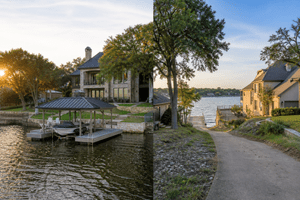
Buying a Home With Acreage on Mansfield’s Outskirts
What do you need to know before buying an acreage home outside Mansfield?
Homes with an acre or more on Mansfield’s outskirts typically run from the high $500,000s into the $1 million-plus range, and most rely on private well and septic instead of city utilities. Financing, insurance, and inspections work differently than a standard in-town purchase, so you’ll want a lender experienced with rural property, a septic inspection, and a water test before you’re firmly under contract.
By The Chad Smith Team | November 17, 2026
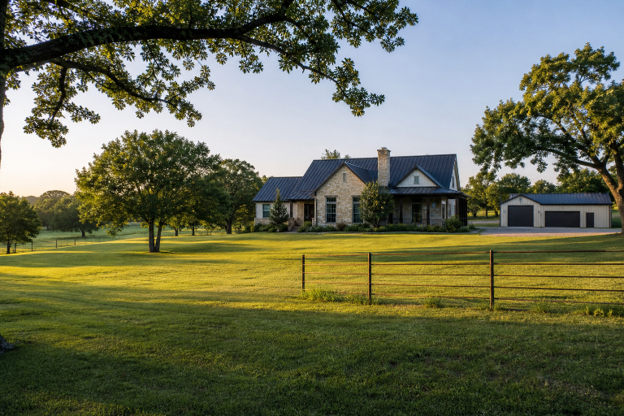
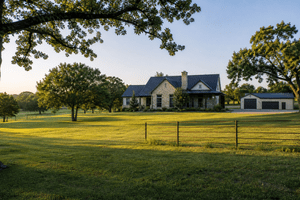
Mansfield’s outskirts — the pockets outside city utility lines toward the edges of Tarrant County — are where you’ll find the acreage buyers keep asking us about: a few acres, more separation from neighbors, room for horses, a shop, or just space. It’s a different kind of purchase than a subdivision home, and the process has real differences worth knowing before you write an offer.
What Acreage on Mansfield’s Outskirts Actually Costs
Pricing on acreage properties around Mansfield varies more than in-town homes because you’re paying for land, house, and often extras like a workshop, guest quarters, or barn separately.
• Smaller acreage tracts (1–3 acres) with an existing home often run in the high $500,000s to low $700,000s, depending on the home’s size and condition.
• Larger tracts (5+ acres) with additional structures — guest apartments, workshops, RV or boat storage — can push into the $800,000s and above.
• Raw or lightly improved land outside city limits, if you’re planning to build, is priced separately from any home and depends heavily on utility access and road frontage.
Compare that to Mansfield’s overall home market, where the typical sale price runs closer to the low $500,000s — acreage carries a real premium, largely because you’re buying land as much as square footage.
Well and Septic: What Changes
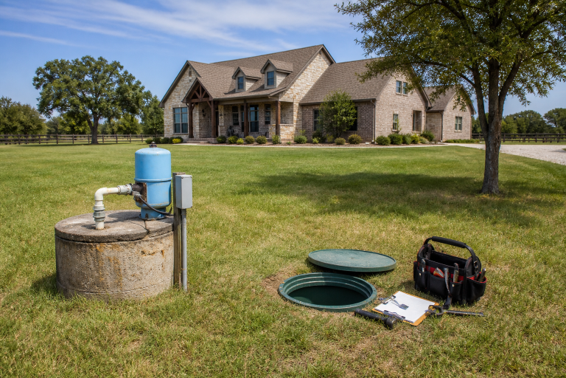
Almost every acreage property on Mansfield’s outskirts is outside the city water and sewer service area, which means private well water and an on-site septic system instead of municipal utilities.
Before you go under contract, or during your option period at the latest:
• Get the septic system inspected. A standard home inspection typically does not include a full septic evaluation — you’ll want a separate inspection that checks the tank, drain field, and system age.
• Test the well water. A water quality test tells you what you’re working with for drinking water, and a flow test confirms the well can actually supply the household’s needs.
• Check permit history. In Tarrant County, properties of 10 acres or more with a single home and septic system, where all disposal components sit at least 100 feet from the property line, may have been exempt from standard septic permitting. That exemption can trigger retroactive permitting requirements at time of sale, so confirm the system’s permit status with the seller and the county before closing. A standard new residential septic permit in Tarrant County runs around $260 and covers the application, plan review, and inspections.
• Budget for septic system age. Older systems nearing the end of their service life are a real negotiating point — a full septic replacement can run several thousand dollars depending on system type and soil conditions.
Financing an Acreage Purchase
This is where acreage purchases diverge most from a standard in-town home purchase, and it’s worth knowing before you fall in love with a specific property.
• Conventional lenders often cap the land-to-home value ratio. Many conventional loan programs limit how much of the purchase price can be attributable to land versus the structure, which can complicate financing on larger tracts with a modest home.
• Appraisals take longer and can be harder to pin down. Lenders typically want three comparable sales within about six months and roughly a mile of the property — a standard that’s difficult to hit in a lower-density area, which can mean a longer appraisal process or a request for additional comps from further away.
• Rural-specific loan programs exist for a reason. Farm Credit lenders and some regional and community banks specialize in rural and acreage financing and are often better equipped to handle a well-and-septic, larger-acreage purchase than a big-box mortgage lender.
• VA and USDA buyers have specific acreage rules. If you’re using a VA or USDA loan, there are property eligibility and acreage guidelines that don’t apply to conventional financing — worth confirming with your lender early, not after you’ve written an offer.
Talk to your lender about the specific property before you write an offer, not after. A pre-approval for a standard subdivision home doesn’t automatically translate to a pre-approval for five acres with a well and a barn.
Taxes, Insurance, and Ongoing Costs
Property taxes on Mansfield-area acreage are calculated the same way as any Tarrant County property — based on assessed value and your local taxing entities — but a few things are worth knowing:
• Mansfield ISD’s total tax rate is roughly $1.15 per $100 of assessed value, and combined effective rates across Mansfield-area properties, including county, city, and school taxes, typically run in the 1.85%–2.4% range depending on the specific taxing jurisdictions your property falls under.
• The $140,000 school district homestead exemption and Tarrant County’s 20% county and hospital district homestead exemption both apply to acreage properties the same as any owner-occupied home, as long as you’re claiming it as your primary residence.
• An agricultural exemption is a separate, harder bar to clear. Tarrant County requires land to have been in active agricultural use for five of the preceding seven years and to currently meet the county’s intensity standards for that classification. Buying a property with an existing ag exemption doesn’t guarantee you’ll keep it — you’ll need to maintain qualifying use, and it’s worth confirming the current status with the Tarrant Appraisal District before you count on that lower valuation.
• Insurance runs higher than a standard subdivision policy. Well, septic, outbuildings, and sometimes distance from a fire hydrant or fire station can all affect your homeowners insurance premium and availability — get a quote on the specific property before your option period ends.
Your specific numbers depend on the property’s exact location, acreage, existing exemptions, and the structures on it — that’s exactly the kind of due diligence we walk buyers through before they write an offer on acreage.
Frequently Asked Questions
How much does an acreage home cost outside Mansfield city limits?
Smaller acreage tracts of 1–3 acres with an existing home typically run from the high $500,000s to low $700,000s, while larger tracts of 5 or more acres with additional structures can run $800,000 and above, depending on condition and extras.
Do I need a different kind of loan to buy acreage near Mansfield?
Not always, but conventional loans often limit how much of the value can be attributed to land versus the home, and appraisals can take longer due to limited comparable sales. Rural-focused lenders, including Farm Credit institutions, are often better set up for these purchases.
Does an acreage property near Mansfield come with an agricultural tax exemption?
Not automatically. Tarrant County requires land to have been in qualifying agricultural use for five of the preceding seven years and to meet current intensity standards. Confirm the current exemption status with the Tarrant Appraisal District rather than assuming it transfers with the sale.
What should I inspect before buying a home with a well and septic system?
Beyond a standard home inspection, get a dedicated septic inspection covering the tank and drain field, and a water quality and flow test on the well. Also confirm the septic system’s permit history with the county, since some systems on larger tracts were exempt from standard permitting.
Is homeowners insurance more expensive on acreage properties?
Often, yes. Distance from fire services, the presence of a well and septic system, and any outbuildings can all affect your premium and which carriers will write the policy. Get a quote on the specific property during your option period.
If you’re considering acreage on Mansfield’s outskirts, we can help you understand what’s actually available, connect you with lenders and inspectors who know rural property, and walk through the tax and insurance numbers before you write an offer. Reach out anytime.
About The Chad Smith Team
The Chad Smith Team at Realty of America is one of the top-producing real estate teams in the Dallas-Fort Worth Metroplex, with more than 22 years of experience, 2,915 homes sold, and recognition by RealTrends among the top 1% of real estate professionals nationwide. The team helps first-time buyers, sellers, relocation clients, and new construction buyers throughout Arlington, Mansfield, Fort Worth, Midlothian, Waxahachie, and surrounding DFW communities. Through this blog, the Chad Smith Team shares expert market insights and practical advice to help North Texas buyers and sellers make informed real estate decisions.