Financing a Larger-Lot Home in Benbrook, TX
How Do You Finance a Home on a Larger Lot in Benbrook, TX?
Financing a larger-lot home in Benbrook works through the same conventional, FHA, or VA loan programs as any other purchase — as long as the land doesn’t overwhelm the house. Most lenders want the land’s value to stay under roughly 25–35% of the total appraised value, and the property has to read as a residential homesite rather than a working farm or ranch. Cross that line, or add several acres of pasture, and you’re often looking at a specialty land or agricultural loan instead of a standard mortgage.
By The Chad Smith Team | October 16, 2026
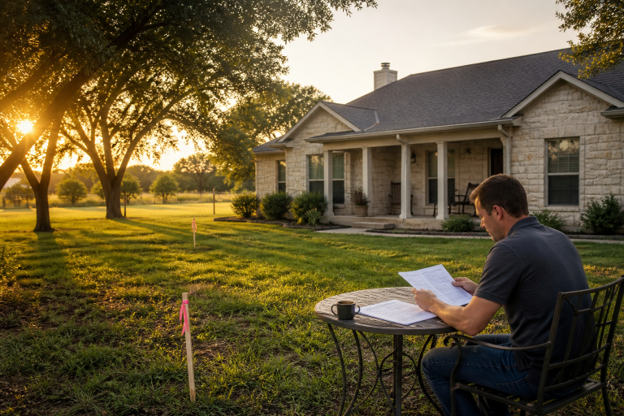
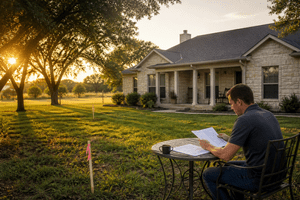
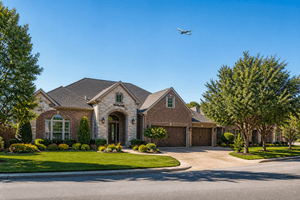
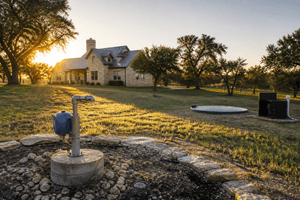
Benbrook draws buyers for a reason a lot of inner Fort Worth subdivisions can’t compete with: room. Half-acre and full-acre lots near Benbrook Lake, older ranch-style properties on wide parcels off Old Benbrook Road and South Hulen, and newer builds with one to three acres are common here in a way they simply aren’t inside Loop 820. That extra land is the whole appeal — and it’s also the part of the transaction that trips up buyers who assume every mortgage works the same regardless of lot size.
It doesn’t. Once a lot gets large enough, or starts to look like it could support livestock, crops, or a hobby farm, your loan file picks up an extra layer of underwriting scrutiny. Here’s what that means in practice, and what to plan for before you write an offer.
What Counts as “Excess Land” and Why It Matters to Your Lender

Appraisers and underwriters use the term excess land to describe acreage beyond what’s typically needed to support the home and a standard residential lot in that area. It’s a different concept than “surplus land,” which refers to extra land that adds value but can’t be sold off separately.
Here’s why it matters to your loan:
• Fannie Mae and Freddie Mac don’t cap total acreage outright, but for appraisal purposes, only the value of the first 10 acres — the acreage that includes the home site — typically gets factored into the loan-to-value calculation.
• Many lenders still apply an informal guideline that land value shouldn’t exceed roughly 25–35% of the total appraised value. Fannie Mae’s old 30% rule was technically retired decades ago, but plenty of investors and underwriters still use something close to it as an internal checkpoint.
• If the property has any income-producing agricultural use — a working orchard, boarded horses for a fee, a leased hay field — conventional financing is generally off the table. Lenders want to see residential use, even if there’s a barn or a few acres of pasture.
On a $450,000 Benbrook property, for example, if the land alone appraises at $160,000, that’s about 35.5% of value — right at the edge of where an underwriter starts asking questions. This is exactly the kind of file we walk buyers through before they ever write an offer on a larger-lot listing, because it changes which lenders and loan programs are even in play.
FHA and VA Loans on Larger Lots in Benbrook
FHA and VA loans can both work on larger Benbrook lots, but each program handles excess land a little differently.
FHA loans: - No hard acreage limit, but the appraiser must separate the value of the home and its typical residential lot from any excess land. - Excess land value generally isn’t credited toward the loan amount, which can affect how much you’re able to borrow relative to the purchase price. - The property can’t be a working farm generating agricultural income — FHA is for residential use only.
VA loans: - Also carry no stated maximum acreage, but the property’s primary purpose must be residential, with the size “typical” for homes in the area. - The VA appraiser values the home and a standard residential lot separately from any excess acreage, outbuildings, or farm-style infrastructure like barns and stables. - Some individual VA lenders self-impose acreage caps — often somewhere between 10 and 20 acres — even though VA guidelines themselves don’t set one. Shopping more than one VA lender matters here, since overlays vary widely.
If you’re weighing FHA against a conventional loan for a larger-lot purchase in Benbrook, our guide to FHA vs. conventional loans for first-time buyers breaks down how down payment and mortgage insurance requirements compare between the two — a useful starting point before you narrow in on a lender.
What about USDA Rural Development loans? Probably not an option here. USDA financing is reserved for properties in designated rural areas, and Benbrook sits inside the Fort Worth metropolitan area’s urbanized boundary, which typically makes it ineligible. The USDA eligibility map is address-specific and does change over time, so if you’re looking at a property on Benbrook’s outer edge, it’s worth a quick check — but don’t count on USDA financing as your fallback plan for a larger lot close to town.
Appraisals, Insurance, and Other Costs to Plan For
The financing conversation doesn’t stop once you know which loan program fits. Larger lots create a few downstream costs and timeline factors worth budgeting for up front.
Appraisal timelines can stretch. Comparable sales on larger, non-standard lots are harder to find than they are in a typical subdivision. Appraisers often have to widen their search radius — sometimes pulling comps from other semi-rural pockets of Tarrant County — and may need to make manual adjustments for land value separately from the structure. Build in extra time on your contract’s appraisal contingency, especially if your target property sits on more than an acre.
Homeowners insurance usually costs more. A bigger lot often means more to insure and more exposure for the carrier. A few specifics:
• Standard “other structures” coverage (Coverage B) typically caps around 10% of your dwelling coverage amount. On a $400,000 dwelling limit, that’s roughly $40,000 for barns, workshops, detached garages, or sheds — which may not be enough if the property has a substantial outbuilding.
• Pools typically add somewhere in the range of $50–$75 a year to a premium, plus most carriers will want a liability endorsement.
• If the property has multiple outbuildings, a well, septic system, or fencing across several acres, get quotes early. Underwriters will want your homeowners insurance figure locked in before final approval, and a bigger-than-expected premium can shift your debt-to-income ratio.
Down payment size matters more on higher-priced, larger-lot properties. Homes on bigger Benbrook lots often price above the area’s overall median, which usually means a bigger loan amount. If you’re putting down less than 20%, you’ll carry private mortgage insurance until you build enough equity — our breakdown of what PMI is and how to get rid of it walks through when that cost typically drops off.
None of this means a larger lot is harder to finance — it just means the file needs a lender who’s handled acreage properties before. Every situation is different, and the only way to know for sure what a specific Benbrook property will qualify for is to run the numbers with someone who’s done this before.
Frequently Asked Questions
What is considered “excess land” on a mortgage appraisal?
Excess land is acreage beyond what’s typically needed to support the home and a standard residential lot for the area. Appraisers value it separately from the home site, and many lenders limit how much of the total property value it can represent — often somewhere around 25–35% — before requiring a different type of loan.
Can I get a conventional loan on a 2- or 3-acre lot in Benbrook?
In most cases, yes. Fannie Mae and Freddie Mac guidelines don’t set a hard acreage cap, and the first 10 acres including the home site typically count toward your loan-to-value calculation. The property does need to be primarily residential — no commercial farming or income-producing agricultural use.
Does USDA financing work for larger lots near Benbrook?
Generally no. Benbrook falls within the Fort Worth metro area’s urbanized boundary, which USDA typically excludes from Rural Development loan eligibility. Eligibility is address-specific, so it’s worth checking the USDA map for properties on Benbrook’s outer edges, but plan on a conventional, FHA, or VA loan as your primary path.
Will a bigger lot make my homeowners insurance more expensive?
Usually, yes, especially if the property has a pool, barn, workshop, or other outbuildings. Standard policies cap “other structures” coverage around 10% of your dwelling coverage, which may not be enough for larger properties — get quotes before you finalize your loan so the premium doesn’t catch your budget off guard.
Do I need a special loan for a property with a barn or workshop?
Not necessarily. As long as the outbuildings support residential use rather than income-producing agricultural activity, they can typically be financed as part of a standard conventional, FHA, or VA loan. The appraiser will value the structures and land separately from the home, and your lender will factor that into your total loan-to-value calculation.
If you’re thinking through financing for a larger-lot property in Benbrook, the details above are exactly the kind of thing worth walking through before you write an offer — the right lender and loan program depend on the specific property, its acreage, and how the appraisal shakes out. We’re happy to walk you through the numbers for your situation. Reach out anytime.
About The Chad Smith Team
The Chad Smith Team at Realty of America is one of the top-producing real estate teams in the Dallas-Fort Worth Metroplex, with more than 22 years of experience, 2,915 homes sold, and recognition by RealTrends among the top 1% of real estate professionals nationwide. The team helps first-time buyers, sellers, relocation clients, and new construction buyers throughout Arlington, Mansfield, Fort Worth, Midlothian, Waxahachie, and surrounding DFW communities. Through this blog, the Chad Smith Team shares expert market insights and practical advice to help North Texas buyers and sellers make informed real estate decisions.