Buying a Golf-Course Home in Mansfield: What to Weigh
Is buying a golf-course home in Mansfield, TX worth it?
A golf-course home in Mansfield can offer open views, premium lot appeal, and strong resale demand — but you’re taking on costs and risks a standard home doesn’t carry. Before you write an offer, weigh the HOA dues, whether club membership is mandatory and what it costs, stray-ball liability and insurance, lot-premium pricing, and a narrower buyer pool at resale. Here’s how to think it through.
By The Chad Smith Team | September 15, 2026
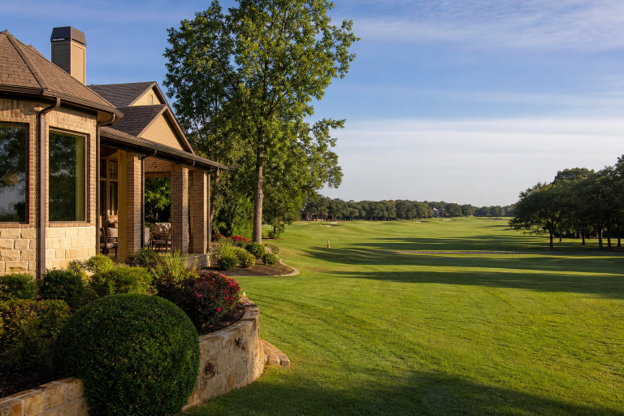
Most of Mansfield’s golf-course homes sit around Walnut Creek Country Club, a private 36-hole club off Highway 287 with the Oak and Pecan courses. The homes that back to the fairways — many in the custom neighborhoods around the club — range from the $300,000s to well past $1 million depending on size, lot, and finish.
The views and prestige are real. So are the extra line items. This is exactly the kind of purchase we walk clients through carefully, because the number on the listing is only part of the picture. Here’s what to weigh before you commit.
Understand the two separate cost structures: HOA and club
The single most common point of confusion on a golf-course home is that the homeowners association and the golf club are two different things with two different bills.
• HOA dues cover neighborhood common areas, entry features, and community upkeep. These are mandatory for homes inside the association and typically run a few hundred to a couple thousand dollars a year, depending on the neighborhood.
• Club membership covers golf, dining, pool, tennis, and fitness at the country club itself. At a private club like Walnut Creek, membership is a separate, optional purchase — with its own initiation fee and monthly dues.
The critical question to answer in writing: is club membership mandatory for your specific home, or optional? In most Mansfield golf-course neighborhoods it’s optional — you can own a home on the fairway without joining the club. But some communities elsewhere bundle mandatory membership into ownership, so never assume. Confirm it with the HOA documents and the club before you’re under contract.
If membership is something you want, budget for it realistically. Private club initiation fees commonly run into the thousands, and monthly dues can add a few hundred dollars a month on top of your mortgage. Ask the club for its current fee schedule in writing — these change, and you want today’s numbers, not last year’s.
Weigh the premium you’re paying for the lot
Homes that back directly to a fairway usually carry a lot premium over otherwise-identical homes a street or two away. That premium is real money, and it’s worth understanding what you’re buying with it.
You’re paying for the view, the open space behind you, and often no rear neighbor. Those are genuine advantages that tend to hold up at resale. But a premium lot can also come with trade-offs:
• Less backyard privacy, since the course is open and sometimes trafficked.
• Proximity to cart paths, irrigation, and early-morning course maintenance.
• Occasional stray golf balls, depending on where your lot sits relative to the tee boxes and fairways.
Where the home sits on the hole matters enormously. A lot behind a green plays very differently from a lot along a landing zone where drives tend to come down. Walk the lot, and ideally talk to the current owner about how often balls actually reach the yard.
Plan for stray-ball risk and the right insurance
Stray golf balls are the classic golf-course-home issue, and they’re worth taking seriously. Broken windows, dented siding, and the occasional startled afternoon all come with the territory on certain lots.
A few practical points:
• Check your homeowners policy. Confirm your coverage handles property damage from stray balls, and understand your deductible. On higher-risk lots, some buyers add protective measures like tempered or laminated glass on the exposed side.
• Understand liability limits. Generally the golfer or the course carries responsibility for injury, but rules and signage vary. Don’t assume — read what the course posts and what the HOA documents say.
• Ask about history. A quick conversation with neighbors will tell you whether stray balls are a rare event or a weekly one on that particular stretch.
For a broader look at what drives insurance costs on North Texas homes, our guide to homeowners insurance in the Mansfield area covers the factors that shape your premium.
Think about resale before you buy
Golf-course homes attract a specific buyer, and that cuts both ways. When it’s time to sell, the fairway setting is a genuine selling point that many buyers will pay up for. But the pool of buyers who want a golf-course home — and are comfortable with the dues, the membership question, and the stray-ball reality — is smaller than the pool for a standard home.
That can mean a golf-course home takes a little longer to sell, or that it sells briskly to exactly the right buyer. The outcome depends on pricing it correctly and marketing it to people who value the setting. Because Texas is a non-disclosure state, the true sold history of fairway homes in the neighborhood isn’t public — we can pull that MLS data to show you how these homes have actually been trading before you buy.
Due diligence checklist before you offer

Run through this list on any Mansfield golf-course home you’re serious about:
1. Get the HOA documents — dues, what they cover, and any assessments on the horizon.
2. Confirm the membership rules — mandatory or optional, and the current fee schedule from the club.
3. Verify the club’s financial health — a private course in good standing protects your view and your value.
4. Study the lot — where it sits on the hole, ball-strike risk, privacy, and cart-path proximity.
5. Order a full inspection — golf-course lots can have irrigation, drainage, and grading considerations worth a close look.
6. Review your insurance — confirm coverage for stray-ball damage and know your deductible.
7. Understand the taxes — the home sits in Tarrant County, so budget for Tarrant County property tax rates and file your homestead exemption.
The bottom line
A golf-course home in Mansfield can be a great fit if you value the view and lifestyle and you go in clear-eyed about the extra costs and the resale realities. The mistake buyers make is treating it like a standard home and getting surprised by the club dues, the lot premium, or a stray ball through the patio door.
Run the full math — mortgage, taxes, HOA, and any club dues you’d take on — before you decide. That’s the conversation we have with every client considering a fairway home.
Frequently Asked Questions
Do you have to join the country club to own a golf-course home in Mansfield?
Usually no. In most Mansfield golf-course neighborhoods, including those around Walnut Creek Country Club, membership is optional and separate from owning the home. But some communities require it, so always confirm the membership rules in the HOA documents and with the club before going under contract.
How much are HOA and club dues on a Mansfield golf-course home?
They’re two separate bills. HOA dues typically run a few hundred to a couple thousand dollars a year depending on the neighborhood. Private club membership, if you choose it, adds an initiation fee (often several thousand dollars) plus monthly dues. Ask both the HOA and the club for their current fee schedules in writing.
Are stray golf balls really a problem?
It depends heavily on where the lot sits on the hole. Lots along landing zones see more ball strikes than lots behind greens. Talk to neighbors about how often it happens, confirm your homeowners insurance covers the damage, and consider protective glass on exposed windows for higher-risk lots.
Do golf-course homes hold their value in Mansfield?
Fairway homes tend to hold value well because the view and setting are in steady demand, but the buyer pool is narrower than for standard homes. That can affect how long a home takes to sell. Pricing it right and marketing to the right buyers matters — we can show you how comparable homes have actually sold using MLS data.
What county is Mansfield in for property taxes?
Mansfield is primarily in Tarrant County. Budget for Tarrant County property tax rates, and be sure to file your homestead exemption on a primary residence to reduce your taxable value.
Thinking about a fairway home in Mansfield?
A golf-course home is a lifestyle purchase with real financial fine print. If you want help running the full numbers — mortgage, taxes, HOA, and club dues — and understanding how these homes actually sell here, we’re happy to walk you through it. Reach out anytime.
About The Chad Smith Team
The Chad Smith Team at Realty of America is one of the top-producing real estate teams in the Dallas-Fort Worth Metroplex, with more than 22 years of experience, 2,915 homes sold, and recognition by RealTrends among the top 1% of real estate professionals nationwide. The team helps first-time buyers, sellers, relocation clients, and new construction buyers throughout Arlington, Mansfield, Fort Worth, Midlothian, Waxahachie, and surrounding DFW communities. Through this blog, the Chad Smith Team shares expert market insights and practical advice to help North Texas buyers and sellers make informed real estate decisions.