What does an FHA 203(k) loan cover when you buy a fixer-upper in Mansfield?
An FHA 203(k) loan lets you finance the purchase of a Mansfield fixer-upper and the cost of renovating it in a single mortgage, with a down payment as low as 3.5%. A Limited 203(k) covers up to $75,000 in cosmetic and non-structural repairs. A Standard 203(k) covers larger projects — foundation work, room additions, and major structural repairs — with no fixed repair cap beyond the FHA county loan limit. Repairs must be done by a licensed contractor, and the renovation money is held in escrow and released as the work is completed.
By The Chad Smith Team | August 21, 2026
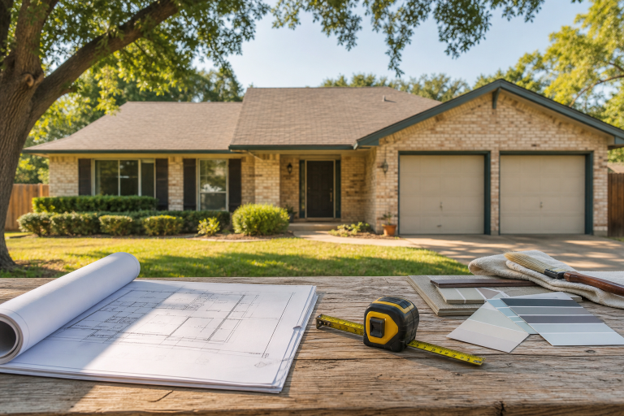
If you’ve been watching Mansfield’s inventory and keep landing on the dated listings — the ones with the pink tile, the worn carpet, or the kitchen that hasn’t been touched since the ’90s — you’ve probably had the same thought a lot of buyers have right now: What if I bought the ugly one and fixed it?
The problem is usually cash. A conventional renovation means buying the home first, then coming up with tens of thousands more for the work. An FHA 203(k) loan solves exactly that. It rolls the purchase price and the renovation budget into one loan, one monthly payment, and one closing at your local title company. Here’s what it actually covers, what it doesn’t, and how the process works in Tarrant County.
The two versions: Limited vs. Standard
There are two flavors of the 203(k), and picking the right one is the first real decision.
Limited 203(k) — This is for cosmetic and light renovation work. As of 2026, you can finance up to $75,000 in repairs on top of the purchase price. It’s built for projects that don’t touch the home’s structure: new kitchens and baths, flooring, paint, HVAC replacement, roofing, appliances, and similar updates. No structural work, no room additions, and no work that requires the home to be vacant for an extended period.
Standard 203(k) — This is for bigger, heavier projects. There’s no separate repair cap the way there is with the Limited version — your ceiling is the FHA loan limit for the county. For 2026, the FHA one-unit limit runs from roughly $541,000 in lower-cost counties up to about $1.25 million in the highest-cost areas, so most Mansfield fixer-uppers fall well within range. A Standard 203(k) can cover:
• Foundation and structural repairs
• Room additions or reconfiguring the floor plan
• Converting a home to as many as four units
• Adding or rebuilding a garage, deck, or porch
• Major systems overhauls and accessibility improvements
A Standard 203(k) also requires a HUD consultant to oversee the scope of work and inspect progress — an extra layer the Limited version skips.
What the money can and can’t be used for
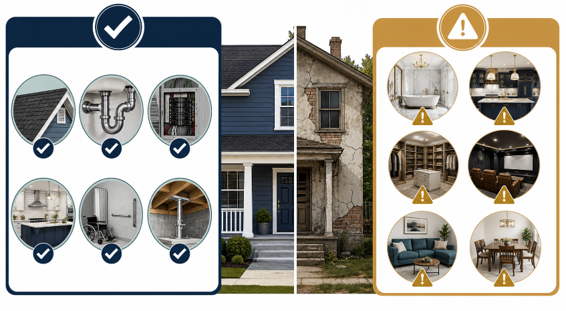
The 203(k) is generous, but it’s not a blank check. It’s meant to make a home safe, sound, and livable — not to fund luxuries.
Covered: structural repairs, roofing, plumbing and electrical, HVAC, kitchen and bath remodels, flooring, windows, energy-efficiency upgrades, well and septic work, accessibility features, and, in many cases, up to six months of mortgage payments if you can’t live in the home during construction.
Not covered: most true luxury add-ons. An outdoor kitchen, a new swimming pool (repairs to an existing pool are allowed, but new pool installation isn’t), a tennis court, or similar amenities generally can’t be financed with 203(k) money.
Because Mansfield sits on the North Texas clay that’s tough on foundations, the Standard 203(k) is often the more realistic tool here. A lot of the older inventory that’s priced to sell has some settling or a foundation that needs attention — and that’s exactly the kind of repair a Limited loan won’t touch.
How the process actually works
A 203(k) has a few more moving parts than a standard purchase. Here’s the path, start to finish:
1. Get pre-approved with a 203(k)-experienced lender. Not every loan officer writes these regularly. You want one who does, because the paperwork and timelines are specific.
2. Find the home and go under contract. You’ll shop with the renovation in mind — the worse the condition, the more the 203(k) can help.
3. Get contractor bids and build your scope of work. Repairs have to be performed by a licensed contractor, so you’ll line one up and get a detailed estimate. On a Standard 203(k), a HUD consultant helps define the scope.
4. The lender orders an “as-completed” appraisal. This values the home based on what it’ll be worth after the renovation, which is what your loan is sized against.
5. Close on the loan. The purchase funds go to the seller; the renovation funds go into an escrow account.
6. Work gets done, draws get released. As your contractor hits milestones, the escrowed money is released in stages after inspections confirm the work.
7. Final inspection and you’re done. Once everything checks out, any leftover contingency funds are typically applied to your loan balance.
Expect the whole thing to run longer than a standard closing — often 45 to 60 days — because of the appraisal, the bids, and the consultant review. It’s worth building that into your expectations and your contract’s timeline.
Is a 203(k) the right move in today’s Mansfield market?
With 30-year fixed rates sitting in the high-6% range in mid-2026 and Mansfield inventory giving buyers a little more breathing room than a couple of years ago, fixer-uppers have become one of the more interesting plays in the area. Move-in-ready homes still draw the most competition. The dated ones sit — which means room to negotiate, and less of a bidding war.
The 203(k) lets you buy that overlooked home, fix it to your taste, and finance it all at once with 3.5% down. You’re also building instant equity if you buy well and renovate smartly, because you’re paying a fixer-upper price for a home that appraises higher once the work is done.
It’s not the right tool for every buyer. The extra steps, the contractor requirements, and the longer timeline take patience. And if you’re comparing this against a conventional path, it’s worth understanding the differences between FHA and conventional loans for first-time buyers before you commit. If a fixer-upper feels like a stretch, it’s also worth weighing it against new construction versus resale in Mansfield, which comes with a very different set of trade-offs.
The only way to know if the numbers work on a specific house is to run them — purchase price, realistic renovation budget, as-completed value, and your monthly payment at today’s rates. That’s exactly the kind of math we walk buyers through before they ever write an offer.
Frequently Asked Questions
What’s the minimum down payment on an FHA 203(k) loan?
The same as a standard FHA loan — 3.5% of the total, which includes both the purchase price and the renovation costs. On a $300,000 combined figure, that’s about $10,500 down.
Can I do the renovation work myself to save money?
Generally, no. FHA 203(k) rules require repairs to be completed by a licensed contractor. The program is designed so a professional does the work and the escrowed funds are released against inspected milestones, which protects both you and the lender.
How long does a 203(k) loan take to close?
Usually 45 to 60 days, longer than a typical FHA purchase. The added time comes from gathering contractor bids, completing the as-completed appraisal, and — on a Standard 203(k) — the HUD consultant’s review.
Can a 203(k) loan cover foundation repairs on a Mansfield home?
Yes, but you’ll need a Standard 203(k), not the Limited version. Foundation work is structural, and the Limited 203(k) can’t be used for structural repairs. Given North Texas clay soil, this is a common reason Mansfield buyers choose the Standard program.
Is there a limit on how much I can borrow for repairs?
With a Limited 203(k), repairs are capped at $75,000. With a Standard 203(k), there’s no separate repair cap — the total loan simply can’t exceed the FHA loan limit for Tarrant County.
The bottom line
An FHA 203(k) loan turns a Mansfield fixer-upper from a cash problem into a financing solution. The Limited version handles up to $75,000 of cosmetic work; the Standard version takes on the structural and major projects that older North Texas homes often need. If you’ve been eyeing the dated listing that everyone else scrolls past, this might be your way in.
If you’re thinking through whether a fixer-upper makes sense for your situation, we’re happy to help you run the numbers and connect you with lenders who write these loans regularly. Reach out anytime.
About The Chad Smith Team
The Chad Smith Team at Realty of America is one of the top-producing real estate teams in the Dallas-Fort Worth Metroplex, with more than 22 years of experience, 2,915 homes sold, and recognition by RealTrends among the top 1% of real estate professionals nationwide. The team helps first-time buyers, sellers, relocation clients, and new construction buyers throughout Arlington, Mansfield, Fort Worth, Midlothian, Waxahachie, and surrounding DFW communities. Through this blog, the Chad Smith Team shares expert market insights and practical advice to help North Texas buyers and sellers make informed real estate decisions.