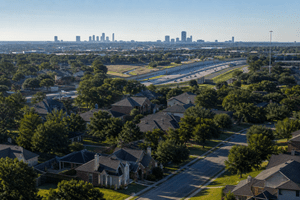
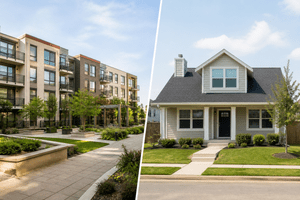
Benbrook vs. Southwest Fort Worth: Price and Space Compared
Is Benbrook or Southwest Fort Worth the Better Value for Space?
Southwest Fort Worth neighborhoods currently post a lower price per square foot — around $160 versus roughly $194 in Benbrook — but Benbrook homes typically sit on larger lots, many a quarter acre or more, with some estate-sized parcels near Benbrook Lake. Southwest Fort Worth trades yard space for a shorter, more direct commute into downtown. Both are in Tarrant County and both are roughly 15–25 minutes from downtown depending on the exact street and time of day.
By The Chad Smith Team | October 5, 2026
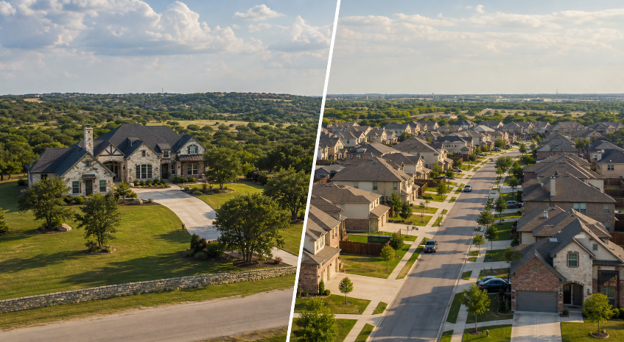
If you’re cross-shopping Benbrook and the southwest Fort Worth neighborhoods — Wedgwood, Ridglea, Tanglewood, and the pockets around Chapin School Road — you’ve probably noticed the listings don’t line up neatly. A house in Benbrook can look more expensive on paper and still cost less per square foot once you factor in the lot. A similar-sized house closer to TCU or Ridgmar can feel tighter on land but shave real minutes off your drive downtown.
We get this question constantly from buyers who work in downtown or near-downtown Fort Worth and want to know whether the extra distance to Benbrook actually buys them anything. Here’s how the numbers and the trade-offs actually break down.
Price Per Square Foot: Benbrook vs. Southwest Fort Worth
Recent listing and sales data show a real gap between the two markets:
• Benbrook: Homes listed in Benbrook are running around $194 per square foot as of mid-2026, with a median list price near $425,000. Recent closed sales have trended lower — median sale prices in the $320,000–$385,000 range over the past several months, reflecting a market that’s cooled somewhat year-over-year.
• Southwest Fort Worth: The Redfin-defined Southwest Fort Worth submarket has posted a median sale price around $310,000 and roughly $160 per square foot, both down modestly from a year earlier.
• Fort Worth citywide, for context: Listings across the full city carry a median around $350,000, with homes spending roughly 60+ days on market — a slower pace than Benbrook’s recent 39-day median.
Because Texas is a non-disclosure state, exact closed sale prices aren’t published as public record — the figures above come from listing data and third-party market indexes, which are estimates. Your agent can pull the actual comparable sales for a specific street or subdivision, which is where the real answer to “what will this cost me” lives.
The short version: southwest Fort Worth generally wins on price per square foot for the house itself. Benbrook’s higher per-foot number usually reflects more land coming with the deal, not just a pricier structure.
Lot Size and Space: Where You Get More Room to Breathe
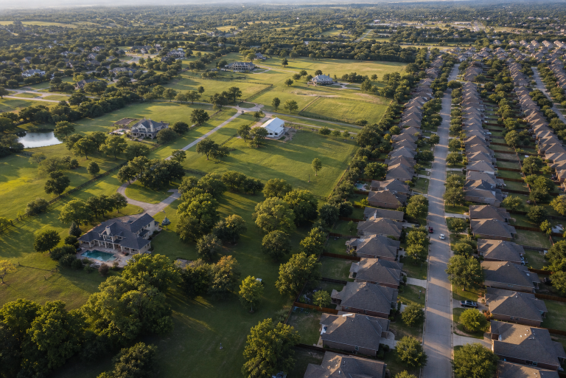
This is where the two markets really diverge.
Benbrook homes average around 2,400 square feet on lots close to a quarter acre, and that’s just the typical case. The inventory also includes meaningfully larger parcels:
• Established pockets like Mont Del Estates carry lots in the 0.35–0.4 acre range.
• Some listings run closer to half an acre.
• Gated communities near Mary’s Creek, such as La Cantera, occasionally list multi-acre homesites — in the range of five-plus acres — for buyers who want genuine acreage inside city limits.
Southwest Fort Worth’s older, closer-in neighborhoods were platted for a more urban footprint. Wedgwood’s ranch-style brick homes and Tanglewood’s tree-lined streets both sit on what local listings describe as “nice-sized” lots, but they’re built for proximity, not acreage — Tanglewood, for example, is only about five miles from the central business district. You’re not going to find five-acre homesites inside that footprint; the trade is walkability and shorter drive times in exchange for a smaller yard.
If a bigger lot, more separation from neighbors, or room for a shop, pool, or garden is the priority, Benbrook’s inventory has more of it. If minimizing square footage of yard maintenance and staying close to the urban core matters more, southwest Fort Worth’s neighborhoods are built around that trade.
Benbrook Lake and the Lifestyle Trade-Off
Part of what buyers are paying for in Benbrook isn’t just the lot — it’s the lake.
Benbrook Lake is a 3,770-acre U.S. Army Corps of Engineers reservoir on the Clear Fork Trinity River, roughly 10 miles southwest of downtown Fort Worth. It has about 40 miles of shoreline and six public parks with fishing, boating, hiking, camping, and horseback riding access. That’s a genuinely different weekend routine than what’s available from most southwest Fort Worth addresses, where the nearest large green space is more likely to be a city park or the Trinity Trails system than a full reservoir with boat ramps.
For buyers who want outdoor recreation without adding a long weekend drive, that proximity is a real, quantifiable amenity — not a soft “lifestyle” selling point. It shows up in demand for homes on the west and south sides of the city, particularly on larger lots that back up to green space or creek frontage.
Southwest Fort Worth’s advantage runs the other direction: closer proximity to TCU, the Cultural District, and downtown’s restaurant and office corridor. Neither trade-off is objectively better — it depends on whether your weekends center on the water or on being a short drive from the center of the city.
Commute and Property Taxes: The Other Side of the Ledger
Distance and taxes are the two numbers buyers underweight until they’re three months into ownership.
Commute: Downtown Fort Worth sits about 11 miles from central Benbrook. Depending on traffic and the exact route — I-20, Loop 820, or U.S. 377 — that’s typically a 15–25 minute drive. Southwest Fort Worth neighborhoods like Tanglewood and Wedgwood cut that distance roughly in half, often putting downtown within a 10–15 minute drive outside of peak congestion. If your work schedule means daily rush-hour trips downtown, that difference adds up over a year. We’ve written more on how commute times factor into DFW home-buying decisions in our guide to commute times across Mansfield, Dallas, and Fort Worth, and the same logic applies here — model your actual drive time before you fall in love with a lot.
Property taxes: Both Benbrook and southwest Fort Worth fall under the Tarrant Appraisal District, and both are subject to overlapping taxing entities — city, county, school district, Tarrant County College, and JPS Health Network — that combine for an effective rate around 2.2% of taxable value for a typical Fort Worth-area homeowner. Tarrant County introduced a new 10% homestead exemption for the county and JPS portions starting in 2025, which stacks on top of the existing school district exemption. The exact rate you pay depends on which school district and municipal boundaries your specific address falls into, since Benbrook and Fort Worth ISD lines don’t map perfectly to city limits. For a fuller breakdown of how these layered rates work across Tarrant County, see our guide to Tarrant County property taxes — the mechanics apply whether you’re comparing Mansfield, Benbrook, or Fort Worth addresses.
Neither market has a built-in tax advantage over the other — the rate depends on the specific taxing jurisdictions attached to the parcel, which is worth confirming address by address before you write an offer.
Which One Fits Your Situation
There’s no universal right answer here — it depends on what you’re optimizing for.
• Choose Benbrook if: you want more land per dollar, you value proximity to Benbrook Lake and outdoor recreation, and an extra 10–15 minutes of commute time is an acceptable trade for space and a slower pace.
• Choose southwest Fort Worth if: minimizing commute time and staying close to TCU, the Cultural District, and downtown matters more than lot size, and you’re comfortable with a smaller yard in exchange for that location.
Your specific numbers — what a comparable house actually sold for on a given street, what the lot really measures, what the tax bill looks like once exemptions are applied — depend on the exact address. That’s the kind of detail we walk buyers through before they ever write an offer, because a listing’s advertised lot size and price per square foot only tell part of the story.
If you’re weighing Benbrook against southwest Fort Worth for your own move, we’re happy to pull current comparables for both areas and walk through the real trade-offs for your budget and commute. Reach out anytime — we know both markets well and can save you a lot of guesswork.
Frequently Asked Questions
Is it cheaper to buy a home in Benbrook or in southwest Fort Worth?
Southwest Fort Worth currently runs lower on price per square foot — around $160 versus roughly $194 in Benbrook. But Benbrook’s higher per-foot number typically reflects larger lots, so total cost depends heavily on the size of house and land you’re comparing, not just the neighborhood.
How big are typical lots in Benbrook compared to southwest Fort Worth?
Benbrook lots average close to a quarter acre, with a meaningful number of listings in the 0.35–0.5 acre range and occasional multi-acre estate parcels near Mary’s Creek. Southwest Fort Worth neighborhoods like Wedgwood and Tanglewood sit on smaller, “nice-sized” urban lots built for proximity rather than acreage.
How far is Benbrook from downtown Fort Worth?
Benbrook is about 11 miles from downtown Fort Worth, typically a 15–25 minute drive via I-20, Loop 820, or U.S. 377 depending on traffic. Southwest Fort Worth neighborhoods closer to the urban core, like Tanglewood, can cut that to roughly 10–15 minutes.
What can you do at Benbrook Lake?
Benbrook Lake is a 3,770-acre U.S. Army Corps of Engineers reservoir with about 40 miles of shoreline and six public parks. It offers fishing, boating, hiking, camping, birdwatching, and horseback riding, all within a short drive of Benbrook neighborhoods.
Are property taxes higher in Benbrook or in Fort Worth?
Both fall under the Tarrant Appraisal District and combine city, county, school, community college, and hospital district rates into an effective rate near 2.2% of taxable value for a typical homeowner. The exact bill depends on which specific school district and municipal boundaries apply to an address, so it’s worth checking parcel by parcel rather than assuming one city is categorically cheaper.
About The Chad Smith Team
The Chad Smith Team at Realty of America is one of the top-producing real estate teams in the Dallas-Fort Worth Metroplex, with more than 22 years of experience, 2,915 homes sold, and recognition by RealTrends among the top 1% of real estate professionals nationwide. The team helps first-time buyers, sellers, relocation clients, and new construction buyers throughout Arlington, Mansfield, Fort Worth, Midlothian, Waxahachie, and surrounding DFW communities. Through this blog, the Chad Smith Team shares expert market insights and practical advice to help North Texas buyers and sellers make informed real estate decisions.