Bedford vs. Hurst-Euless: Comparing Commute and Home Prices
Which is better for commute and home prices: Bedford or Hurst-Euless, TX?
Bedford, Hurst, and Euless sit side by side in Tarrant County’s Mid-Cities corridor, all within a few miles of DFW Airport. Bedford’s typical home value runs higher (roughly the mid-$300,000s to low $400,000s) than Hurst or Euless (roughly the low-to-mid $300,000s), while commute times to Dallas, Fort Worth, and the airport are close enough across all three that highway access — not distance — usually decides it. Hurst and Euless also carry more consistently priced, similarly aged housing stock, while Bedford’s range runs a bit wider.
By The Chad Smith Team | October 5, 2026
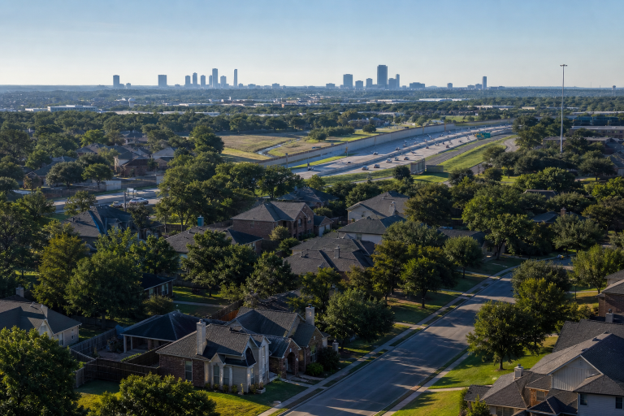
If you’ve narrowed your Mid-Cities search to Bedford on one side and Hurst-Euless on the other, you’ve already done the hard part. These three cities sit shoulder to shoulder between Fort Worth and Dallas, share the same general commute corridor, and pull from a lot of the same buyer pool. The differences that actually matter come down to price, home age, and which highway you’ll be living closest to.
Here’s how they stack up.
Commute Times and Highway Access: Bedford vs. Hurst-Euless
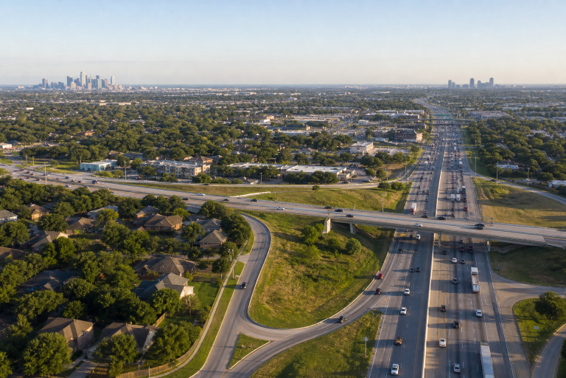
All three cities sit on or near the SH-183 (Airport Freeway) and SH-121 corridor, which is the backbone of Mid-Cities commuting. The differences are more about which entrance ramp is closest to your front door than about which city is “faster.”
Bedford sits just east of Hurst and Euless, with SH-183 running along its southern edge and SH-121 crossing through town. DFW Airport is about 7 to 8 miles away — commonly a 10 to 15 minute drive depending on traffic and which terminal you’re headed to. From Bedford, downtown Fort Worth runs about 18 miles and 20 to 30 minutes, while downtown Dallas is closer to 25 miles and 30 to 45 minutes during peak hours.
Hurst sits at the intersection of SH-183 and Pipeline Road, with direct access to SH-121, SH-360, and Loop 820 — more highway options funneling through one city than you’ll find almost anywhere else in the Mid-Cities. That translates to roughly 20 to 25 minutes to downtown Fort Worth and 25 to 35 minutes to downtown Dallas or the Las Colinas/Irving corridor under normal traffic.
Euless borders Hurst to the west and sits closest to DFW Airport’s southern entrance, with commute times to the airport itself as short as 10 minutes for many addresses. Dallas and Fort Worth commute times run similar to Hurst’s, since both cities share the same SH-183/SH-121 access points.
The practical takeaway: if your job is at or near DFW Airport, Euless and Hurst give you a slight edge. If you split time between Fort Worth and Dallas regularly, Hurst’s access to SH-360 and Loop 820 adds flexibility that Bedford doesn’t have in the same way. Bedford still gets you to the airport quickly, but you’re relying more heavily on SH-183 and SH-121 alone.
Traffic on SH-183 near the North East Mall area in Hurst and on SH-121 through Bedford can back up during weekday rush hours, so actual drive times will run longer than the free-flow estimates above. If you want a broader look at how Mid-Cities and southern Tarrant County commute times compare across the Metroplex, we’ve also broken down commute times from Mansfield to Dallas and Fort Worth for buyers weighing multiple DFW submarkets at once.
Home Prices in Bedford vs. Hurst and Euless
Price is where these three cities separate the most. Based on current listing and sold data from major real estate platforms, here’s roughly where things stand:
• Bedford: Typical home values run around $375,000, with recent sold prices ranging from the mid-$300,000s to the mid-$400,000s depending on the month, home size, and condition.
• Hurst: Typical home values run somewhat lower, generally in the low-to-mid $300,000s, with some recent monthly medians pushing into the mid-$300,000s to $360,000s.
• Euless: Typical home values sit in a similar range to Hurst — roughly the mid-$300,000s — though Euless shows the widest month-to-month swing of the three, reflecting a broader mix of home sizes and lot types across the city.
A quick note on how to read these numbers: Texas is a non-disclosure state, which means exact final sale prices aren’t published as public record the way they are in some states. The figures above come from national listing platforms and reflect estimates and reported sales, which can lag or differ from actual closed prices. Your agent can pull the real, current comparable sales from the MLS for the specific home or neighborhood you’re evaluating — that’s the number that actually matters when you’re pricing an offer or a listing.
Generally speaking, Bedford tends to run a step above Hurst and Euless on price, largely tied to lot sizes and the mix of updated versus original-condition homes on the market at any given time. But the gap isn’t dramatic, and it narrows or widens depending on which pocket of each city you’re comparing.
Home Age and Architecture: What Buyers Find in Each City
All three cities built out heavily during the same era, so the housing stock has a lot in common — but there are real differences worth knowing before you start touring.
Bedford has one of the longer development timelines of the three. Its housing stock spans from established ranch and Craftsman-style homes dating to the late 1950s through the brick ranch boom of the 1970s and 1980s, with a median construction year commonly cited around 1983. That means you’ll find a genuine mix: smaller original-condition ranch homes, updated and expanded versions of the same, and pockets of newer infill construction.
Hurst developed on a similar timeline, with most homes built between 1950 and 1980 in traditional ranch styles — brick exteriors, single-story layouts, and lot sizes typical of that era’s suburban planning. Hurst has also long been home to major employers, including Bell Textron’s helicopter manufacturing operations, which have anchored the local economy since the early 1950s and shaped much of the surrounding residential development.
Euless shows the broadest variation in home age, size, and lot configuration of the three cities. You’ll find pockets of 1960s and 1970s construction alongside newer builds and renovated properties, so home age is less predictable street to street than in Bedford or Hurst.
If you’re specifically hunting for a move-in-ready home with fewer original systems to plan around, ask your agent to filter for renovation history and permit records rather than relying on the build year alone — plenty of 1970s homes in all three cities have been fully updated, and plenty of newer ones haven’t been touched.
Property Taxes and the Bottom Line
Bedford, Hurst, and Euless all fall under the Tarrant Appraisal District, so the appraisal and exemption process works the same no matter which city you choose. Countywide, the effective property tax rate averages a little under 2% of assessed value once you combine city, county, school district, and hospital district levies, though your exact rate depends on the specific taxing entities tied to your address.
Texas homeowners get a state-mandated homestead exemption on the school district portion of their tax bill, and Tarrant County has added local homestead exemptions on top of that in recent years — worth confirming with your title company or lender before you finalize a budget. One thing that doesn’t change no matter which of these three cities you land in: Texas has no state transfer tax, so that’s one cost you won’t see on your closing statement regardless of where you buy.
For a deeper breakdown of how Tarrant County property taxes work and what to budget for, see our full guide on Tarrant County property taxes and what homeowners need to know.
Bottom Line
Bedford, Hurst, and Euless all put you within a short drive of DFW Airport and reasonable commute range of both downtown Dallas and downtown Fort Worth — the real differences come down to price, the specific highway you’ll rely on daily, and the age and condition of the home itself. Bedford tends to run a step higher on price with a wider range of home ages. Hurst and Euless tend to run a bit more affordable with more direct airport access, though pricing and inventory shift month to month in all three.
Your specific number — the right price range, the right commute trade-off, the right home age to target — depends on your budget, your work location, and what you’re willing to update yourself versus buy already renovated. That’s exactly the kind of comparison we walk buyers through before we ever start touring homes.
If you’re weighing Bedford against Hurst-Euless for your own move, we’re happy to pull current listings and real commute data for your specific work locations. Reach out anytime.
Frequently Asked Questions
Is Bedford more expensive than Hurst or Euless?
Generally, yes. Bedford’s typical home values tend to run somewhat higher than Hurst’s or Euless’s, though the gap varies month to month and depends heavily on the specific home’s size, lot, and condition. All three cities overlap significantly in price range.
Which city is closest to DFW Airport — Bedford, Hurst, or Euless?
Euless and Hurst generally offer the shortest drives to DFW Airport’s southern entrance, with some addresses as close as 10 minutes. Bedford is also close, typically 10 to 15 minutes via SH-183, so all three are strong options if airport proximity matters for your work.
Are homes in Bedford, Hurst, and Euless mostly older construction?
Yes, all three cities built out heavily in the 1950s through 1980s and feature a large share of ranch-style homes from that era. Euless shows the widest mix of home ages, while Bedford and Hurst lean more consistently toward mid-century and 1970s-80s construction, with renovation and remodel activity varying home to home.
Do Bedford, Hurst, and Euless have different property tax rates?
All three fall under the Tarrant Appraisal District, but your actual tax rate depends on the specific city, school district, and any other taxing entities tied to your address. It’s worth having your agent or lender run the exact combined rate for a property you’re considering rather than assuming it matches a citywide average.
What’s the commute like from Hurst-Euless to downtown Dallas versus downtown Fort Worth?
From Hurst and Euless, expect roughly 20 to 25 minutes to downtown Fort Worth and 25 to 35 minutes to downtown Dallas under normal traffic, using SH-183, SH-121, SH-360, and Loop 820. Bedford’s times run similar to slightly longer toward Fort Worth and comparable toward Dallas.
About The Chad Smith Team
The Chad Smith Team at Realty of America is one of the top-producing real estate teams in the Dallas-Fort Worth Metroplex, with more than 22 years of experience, 2,915 homes sold, and recognition by RealTrends among the top 1% of real estate professionals nationwide. The team helps first-time buyers, sellers, relocation clients, and new construction buyers throughout Arlington, Mansfield, Fort Worth, Midlothian, Waxahachie, and surrounding DFW communities. Through this blog, the Chad Smith Team shares expert market insights and practical advice to help North Texas buyers and sellers make informed real estate decisions.