Financing an Older Cleburne Home: Renovation Loan Options
What Loan Options Exist for Financing an Older Home in Cleburne, TX?
Buyers financing an older home in Cleburne can combine the purchase price and renovation costs into a single loan through FHA 203(k), Fannie Mae HomeStyle Renovation, or — for eligible veterans — a VA renovation loan. These programs let you borrow based on the home’s value after repairs instead of paying cash out of pocket for foundation work, rewiring, replumbing, or a new roof before you can even move in. Down payments start as low as 3.5% (FHA) or $0 for qualifying VA borrowers, but each program has different repair limits, contractor rules, and timelines worth understanding before you write an offer.
By The Chad Smith Team | October 19, 2026
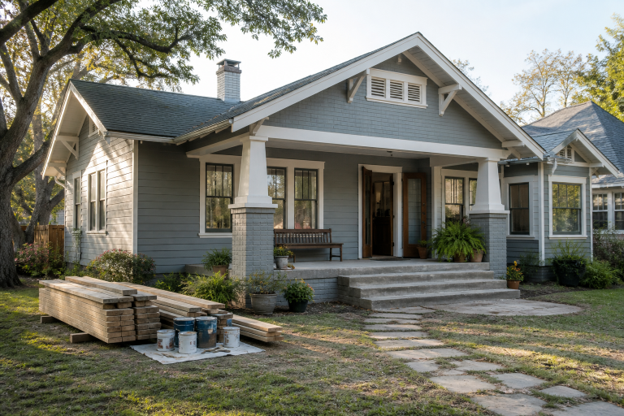
If you’ve been looking at homes near Cleburne’s historic downtown or in one of the established neighborhoods that ring it, you’ve probably noticed a pattern. The character and the price point are appealing, but the inspection report isn’t always pretty. Foundation movement, an electrical panel that hasn’t been touched since the Carter administration, and plumbing that’s original to the house are common in Johnson County’s older housing stock — and they’re exactly the kind of repairs that scare off buyers who assume they’d have to pay for everything out of pocket before or after closing.
That assumption is usually wrong. A renovation loan lets you roll the purchase price and the repair budget into one mortgage, so you’re not scrambling to find cash for a new roof the week after you close. Here’s how the main programs work, what they actually cost, and what to expect if you go this route on an older Cleburne property.
Why Older Cleburne Homes Often Need This Kind of Financing
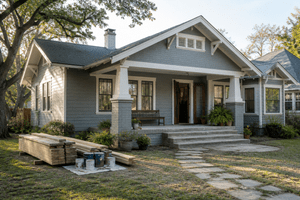
Cleburne is the Johnson County seat, roughly 30 miles south of Fort Worth, and its housing stock reflects more than a century of growth. Homes near the historic downtown and surrounding older sections of the city commonly date back to the early 1900s through the mid-20th century, while newer construction fills out the edges of town.
Older homes in this price range tend to share a few recurring issues:
• Foundation movement, driven by the expansive clay soils common across North Texas. Moderate repairs typically run $3,300–$7,000, while more extensive multi-pier or whole-house leveling can climb to $15,000–$30,000 or more, depending on the extent of the movement.
• Aging or original plumbing, including galvanized pipe that’s well past its useful life and prone to corrosion and leaks.
• Outdated electrical systems, from undersized panels to wiring that doesn’t meet current code.
• Roofs and HVAC systems at or beyond their expected lifespan.
None of that necessarily means you should walk away from a home you like. It means you need financing that accounts for the real cost of bringing the house up to shape — and a clear-eyed inspection and, where foundation concerns are flagged, a structural evaluation before you finalize your repair budget. If you want a deeper look at how foundation issues specifically affect financing and negotiation, we’ve covered how foundation problems play out for buyers and sellers in the DFW market, and the same fundamentals apply to older Cleburne properties sitting on similar soil.
FHA 203(k): The Most Common Renovation Loan
The FHA 203(k) loan is the program most buyers ask about first, and it comes in two versions.
Limited 203(k) covers non-structural repairs and improvements up to $75,000. This is the right fit for cosmetic and moderate updates — kitchens, bathrooms, flooring, HVAC replacement, and similar work that doesn’t touch the structure.
Standard 203(k) is built for bigger projects: foundation repair, room additions, moving walls, full kitchen or bathroom guts, and bringing a home up to code. There’s no separate repair-cost cap beyond staying within your county’s FHA loan limit — for 2026, FHA loan limits run up to roughly $541,287 in standard-cost counties, though you’ll want to confirm the current limit for Johnson County with your lender since these figures are set annually and can shift.
Key details to know:
• Down payment: 3.5% minimum with a credit score of 580 or higher; 10% down if your score falls between 500 and 579.
• Contractor rules: All work must be done by a licensed contractor — you can’t do the work yourself, even if you’re handy.
• Timeline: Renovation work must begin within 30 days of closing and be completed within six months.
• Oversight: Standard 203(k) loans require a HUD consultant to review plans and manage a draw schedule tied to inspections at each stage of completed work.
Because FHA loans are assumable and have flexible credit requirements, the 203(k) tends to be a strong option for first-time buyers who’ve found an older Cleburne home with real potential but need the foundation, electrical, or plumbing addressed before it’s truly move-in ready. If you’re still weighing FHA against a conventional loan in general, our comparison of FHA and conventional financing walks through the trade-offs in more detail.
Fannie Mae HomeStyle Renovation: The Conventional Alternative
The HomeStyle Renovation loan is Fannie Mae’s conventional answer to the 203(k), and it works similarly at a high level: one loan, one closing, one monthly payment covering both the purchase and the renovation.
A few things separate it from FHA’s program:
• Down payment can be as low as 5% for owner-occupied purchases (some first-time buyer programs may pair with HomeStyle for less down — your lender can confirm current eligibility).
• Loan amount is based on the lesser of the purchase price plus renovation costs, or the “as-completed” appraised value, with renovation costs generally capped around 75% of that after-improved value.
• Mortgage insurance works like standard conventional financing — once you reach 20% equity, you can typically request removal of private mortgage insurance, unlike FHA’s longer-term mortgage insurance premium structure.
• Property flexibility: Unlike FHA 203(k), HomeStyle can be used on second homes and investment properties, not just primary residences (though down payment requirements go up accordingly).
• Timeline: Expect roughly 45–60 days to close, plus up to a 12-month window to complete renovations.
For buyers with stronger credit and at least a modest down payment saved, HomeStyle is often worth comparing against FHA 203(k) — the mortgage insurance difference alone can matter significantly over the life of the loan.
VA Renovation Loans: Built for Eligible Veterans
If you’re an eligible veteran or service member, the VA renovation loan combines the purchase price and repair costs into one loan with $0 down payment, based on the home’s as-completed value.
The program is more restrictive about what qualifies:
• Work has to relate to livability, safety, or utility — think roofing, HVAC, plumbing, electrical, and accessibility improvements.
• Pools, detached structures, and major additions generally aren’t eligible.
• The contractor must be VA-registered, and you can’t perform the work yourself.
• Many lenders cap the renovation scope around $50,000 and require the work to finish within 120 days of closing.
For a veteran buyer eyeing an older home near downtown Cleburne that mainly needs plumbing, electrical, or roof work rather than a full structural overhaul, this program can be a strong fit — especially paired with the VA’s no-down-payment benefit.
What to Expect During the Process

Whichever program you use, the process looks roughly the same:
1. Get pre-approved specifically for a renovation loan — not every lender offers all three programs, so ask directly.
2. Get a full inspection, and for any home with visible foundation concerns, bring in a structural engineer or licensed foundation contractor for a formal evaluation before you finalize your repair budget.
3. Collect contractor bids for the scope of work, since your loan amount is built around a documented repair estimate, not a rough guess.
4. Close on the loan, with renovation funds held in an escrow-style account and released in draws as work is inspected and completed.
5. Move forward on the agreed timeline — most programs require work to start within 30 days of closing and finish within six months to a year, depending on the program.
Rates, exact loan limits, and program guidelines change, so treat the numbers here as a starting point and confirm current terms with a lender who actively originates these loans before you commit to a specific program or property.
The Bottom Line for Cleburne Buyers
An older home near Cleburne’s historic downtown or in one of the city’s established neighborhoods doesn’t have to mean choosing between a house you love and a repair bill you can’t afford up front. FHA 203(k), Fannie Mae HomeStyle, and VA renovation loans each offer a path to finance the purchase and the fix-up work together — the right one for you depends on your credit, your down payment, your veteran status, and how extensive the repairs actually are.
Every property is different, and the numbers only make sense once you’ve got real contractor bids and a lender who’s run your specific scenario. That’s exactly the kind of walkthrough we do with buyers before they write an offer on an older Cleburne home.
If you’re considering an older home in Cleburne and want to talk through which renovation loan actually fits your situation, reach out. We’ll help you connect with lenders who specialize in these programs and walk the numbers with you before you make an offer.
Frequently Asked Questions
Can I use a renovation loan to fix foundation problems on an older Cleburne home?
Yes. Foundation repair is eligible under the FHA Standard 203(k) and Fannie Mae HomeStyle Renovation programs, both of which cover structural work. The FHA Limited 203(k) does not cover structural repairs, so if foundation work is needed, you’ll likely need the Standard 203(k) or a HomeStyle loan instead.
How much down payment do I need for a renovation loan in Texas?
FHA 203(k) requires a minimum of 3.5% down with a credit score of 580 or higher, or 10% down for scores between 500 and 579. Fannie Mae HomeStyle typically starts around 5% down for owner-occupied purchases, and VA renovation loans require $0 down for eligible veterans and service members.
Do I have to hire a licensed contractor for the renovation work?
Yes, across all three programs — FHA 203(k), Fannie Mae HomeStyle, and VA renovation loans — the work must be completed by a licensed (and for VA loans, VA-registered) contractor. You cannot perform the work yourself, even if you’re qualified to do it, because the lender is releasing funds based on inspected, completed work.
How long does renovation work take once I close on the loan?
Timelines vary by program. FHA 203(k) requires work to start within 30 days of closing and finish within six months. HomeStyle allows up to a 12-month renovation window. VA renovation loans typically require completion within 120 days of closing, depending on the lender.
Is a renovation loan more expensive than a regular mortgage?
Renovation loans typically carry rates comparable to standard purchase loans of the same type, though you should expect additional fees for the renovation component — such as consultant fees on Standard 203(k) loans — and the overall process takes longer to close than a standard purchase. The trade-off is financing the repairs into your mortgage instead of paying out of pocket or taking on separate, often higher-rate, personal financing after closing.
About The Chad Smith Team
The Chad Smith Team at Realty of America is one of the top-producing real estate teams in the Dallas-Fort Worth Metroplex, with more than 22 years of experience, 2,915 homes sold, and recognition by RealTrends among the top 1% of real estate professionals nationwide. The team helps first-time buyers, sellers, relocation clients, and new construction buyers throughout Arlington, Mansfield, Fort Worth, Midlothian, Waxahachie, and surrounding DFW communities. Through this blog, the Chad Smith Team shares expert market insights and practical advice to help North Texas buyers and sellers make informed real estate decisions.