A Buyer’s Guide to Dallas Neighborhoods by Home Style and Price
Which Dallas neighborhood fits your home style and budget?
Dallas neighborhoods sort loosely by architecture and price: East Dallas areas like Lakewood mix 1920s–1930s homes and craftsman bungalows from roughly the $600Ks into the millions, Bishop Arts in North Oak Cliff blends historic bungalows and modern townhomes from about $300K to $800K-plus, and Preston Hollow offers estate lots that start near seven figures. The citywide median sold price was about $505,900 in spring 2026. The right fit comes down to matching the home style you want to the price band that neighborhood actually trades in.
By The Chad Smith Team | September 7, 2026
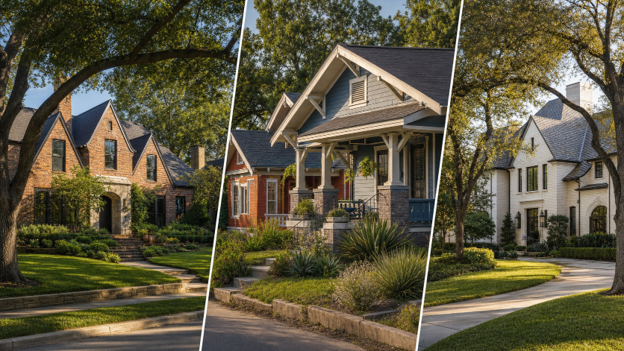
Dallas is not one housing market. It’s dozens of them stacked inside one city, and the price you pay depends as much on which pocket you buy in as on the house itself. A renovated bungalow in one neighborhood can cost what a builder-grade new build costs a few miles away.
If you’re starting your search in Dallas proper — Dallas County, not the outer suburbs — the fastest way to narrow things down is to think in two dimensions at once: the home style you’re drawn to, and the price band that style trades in where you want to live. Here’s how the major areas break down as of 2026.
A note on the numbers: Texas is a non-disclosure state, which means final sold prices aren’t public record the way they are elsewhere. The figures below come from published market reports and give you a reliable sense of range — but the exact, current comps for any specific street are something a local agent can pull for you.
Start with the citywide picture
Dallas’s median sold price landed around $505,900 in May 2026, up roughly 7.6% year over year, according to local market data. But that median hides a wide spread. In spring 2026, homes in the $500K–$749K band made up the largest share of sales at about 21%, with the $1M-plus tier close behind near 19%, and a meaningful chunk of activity still under $300K.
Translation: you can find genuinely different price worlds inside the same city. Inventory has also been climbing — the broader Dallas–Fort Worth market has shifted toward more balance, with more homes to choose from and longer days on market than buyers saw a couple of years ago. That’s good news if you’re buying, because it means more room to be selective.
Here’s how three very different neighborhoods illustrate the range.
Lakewood: established East Dallas character
Lakewood sits just east of downtown near White Rock Lake, and it’s one of the clearest examples of a “character” neighborhood in Dallas.
The housing stock leans historic. You’ll find 1920s and 1930s architecture sitting next to updated craftsman bungalows and larger renovated homes on established lots with mature trees.
On price, Lakewood runs higher than the citywide median:
• Entry point: Around $600,000 for a smaller home that needs updating
• Move-in ready: Roughly $750,000 and up
• Top of the market: $1.5 million and beyond for fully renovated, larger homes on premium lots
Lakewood has seen strong appreciation, with median sale prices over the trailing 12 months reported well above prior-year levels. If your priority is architectural character, walkable proximity to the lake, and a close-in location, this is the kind of neighborhood where you pay for those features — and where they tend to hold value.
Bishop Arts and North Oak Cliff: eclectic and walkable
Cross to the south side of the Trinity River and Bishop Arts, in North Oak Cliff, offers a different feel entirely — a walkable district known for boutique shops, independent restaurants, murals, and a dense, eclectic streetscape.
The homes match that energy. You’ll see a mix of historic homes, renovated bungalows, modern infill townhomes, and creative live-work spaces. That variety is exactly why Bishop Arts appeals to buyers who want options at different price points in one area.
Price ranges here are noticeably more approachable than Lakewood:
• Smaller bungalows: Starting around $300,000
• Fully renovated homes: Up to $800,000-plus
• Median: Reported around $515,000 in early 2026
Bishop Arts has also posted solid year-over-year appreciation, in the neighborhood of 11% as of early 2026. For buyers who want walkability and character without a seven-figure entry price, North Oak Cliff is one of the more compelling parts of the city to watch.
Preston Hollow: space, lots, and the luxury tier
Preston Hollow, in North Dallas, is the city’s signature large-lot luxury neighborhood. Where areas like Bishop Arts are about density and walkability, Preston Hollow is about land, privacy, and scale — lots that can run a half-acre, a full acre, or more.
Pricing reflects that. The median has been reported near $1.9 million in early 2026, and the market breaks into tiers:
• Standard homes on sub-acre lots: roughly $1 million to $3 million
• Estate-tier homes on one to three acres: about $3 million to $10 million
• Trophy estates on three-plus acres: $10 million and well beyond
If you want square footage, setback from the street, and room between you and your neighbors while staying inside the city, this is the tier that delivers it — at a price that matches.
How to use these three as a map
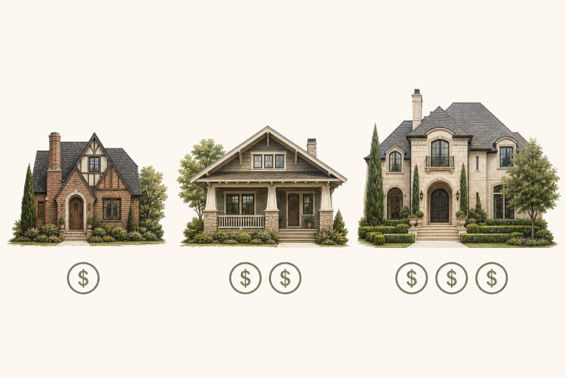
You don’t have to buy in Lakewood, Bishop Arts, or Preston Hollow specifically. The point is that they anchor three recognizable patterns you’ll see repeated across Dallas:
1. Historic-character neighborhoods — older architecture, established lots, premium pricing for close-in location (Lakewood is the archetype).
2. Eclectic, walkable, mixed-stock areas — a blend of bungalows, townhomes, and new infill at a wider price range (Bishop Arts).
3. Large-lot, low-density luxury — space and privacy at the top of the market (Preston Hollow).
Other parts of the city — East Dallas broadly, North Dallas, downtown and its surrounding condo and townhome market, and pockets like Lake Highlands and Midway Hollow — each fall somewhere along these same axes. Once you know which pattern you’re drawn to and what you can spend, the map gets a lot smaller.
One more factor worth flagging: property type matters. Dallas townhome pricing softened in 2026, with inventory rising toward a more buyer-friendly six-plus months of supply. If you’re open to a townhome or condo rather than a single-family home, you may find more negotiating room than the single-family numbers suggest. It’s the same close-in versus outer-suburb trade-off that shapes commute times across the Metroplex — location drives both price and daily life.
Your specific target neighborhood depends on your must-haves, your commute, and your budget — and the only way to know what a given street is really trading at is to run current comps with someone who works this market every week. If you’re weighing a brand-new build against an established home, our breakdown of new construction versus resale covers the trade-offs that apply across DFW.
Frequently Asked Questions
What is the median home price in Dallas in 2026?
Dallas’s median sold price was about $505,900 in May 2026, up roughly 7.6% from a year earlier, though figures vary by source and by how the market area is drawn. Prices swing widely by neighborhood, so the citywide median is a starting reference, not a target for any specific area.
Which Dallas neighborhoods are most affordable for buyers?
Among the character-driven areas, North Oak Cliff neighborhoods like Bishop Arts offer some of the more approachable entry points, with smaller bungalows starting around $300,000. Townhomes and condos across the city also moved toward buyer-friendlier pricing in 2026 as inventory rose.
Are home prices in Dallas going up or down in 2026?
Dallas prices were still up year over year in 2026, but the market has cooled from its earlier peak. Inventory has climbed and homes are taking longer to sell, which has shifted conditions toward a more balanced market that gives buyers more choice and negotiating room.
Why aren’t exact sold prices available in Dallas?
Texas is a non-disclosure state, so final sale prices are not part of the public record. Buyers and sellers can access accurate sold data through a real estate professional, which is why working with a local agent matters when you’re comparing what homes actually traded for.
Is it better to buy a single-family home or a townhome in Dallas?
It depends on your budget and lifestyle. Single-family homes in character neighborhoods carry premium pricing, while Dallas townhomes and condos softened in 2026 with more inventory, meaning buyers open to those property types may find more room to negotiate.
Finding your fit
Dallas rewards buyers who know what they’re looking for. Once you can name the home style you want and the price band you’re working within, the city’s dozens of micro-markets sort themselves into a much shorter list.
If you’re weighing neighborhoods and want current, street-level numbers instead of citywide averages, we’re happy to walk you through what your budget actually buys in each area. Reach out anytime — no pressure, just a clear read on the market.
About The Chad Smith Team
The Chad Smith Team at Realty of America is one of the top-producing real estate teams in the Dallas-Fort Worth Metroplex, with more than 22 years of experience, 2,915 homes sold, and recognition by RealTrends among the top 1% of real estate professionals nationwide. The team helps first-time buyers, sellers, relocation clients, and new construction buyers throughout Arlington, Mansfield, Fort Worth, Midlothian, Waxahachie, and surrounding DFW communities. Through this blog, the Chad Smith Team shares expert market insights and practical advice to help North Texas buyers and sellers make informed real estate decisions.