Rent Out or Sell Your Mansfield Home When You Move?
Should you rent out or sell your Mansfield home when you move?
It depends on three things: your equity, your tax exposure, and your appetite for being a landlord. If you have significant gains, selling within three years of moving out lets you keep the capital gains exclusion — up to $250,000 single or $500,000 married. Renting can build long-term wealth, but the true cost of holding a rental is your mortgage plus roughly 30–35% of the rent for taxes, insurance, maintenance, and vacancy. Run both numbers before you decide.
By The Chad Smith Team | August 27, 2026
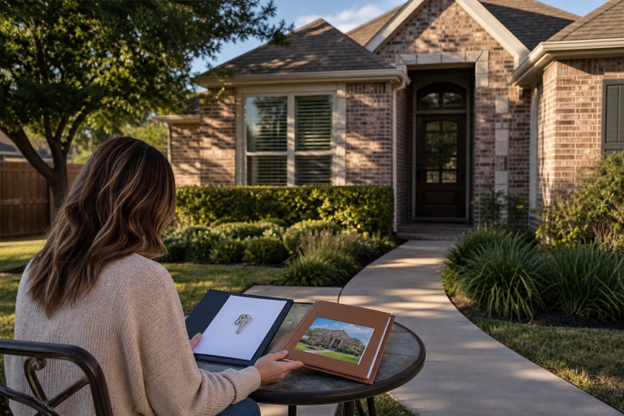
You’re moving — new job, bigger house, a change of scenery — and now you’re staring at the home you already own wondering: do I sell it, or do I keep it and rent it out?
It’s one of the most common questions we get from Mansfield homeowners on the move, and the honest answer is that it’s genuinely a numbers question dressed up as a lifestyle one. Renting sounds appealing — passive income, holding onto a North Texas asset in a growing metro. But “passive” is doing a lot of work in that sentence. Let’s run through what actually goes into this decision so you can make the call with real math instead of a gut feeling.
Start With the Tax Clock — It’s the Part People Miss
Here’s the single most important factor, and it’s the one that costs people the most when they get it wrong.
When you sell a home you’ve lived in for at least two of the last five years, you can exclude a huge chunk of your gain from taxes — up to $250,000 if you’re single, or $500,000 if you’re married filing jointly. That’s the capital gains home-sale exclusion, and for a lot of Mansfield homeowners who’ve built equity, it’s worth tens of thousands of dollars.
Now here’s the trap. Once you move out and convert the home to a rental, a clock starts. You have roughly three years from the date you move out to sell and still qualify for that exclusion. Rent it out longer than that, and you permanently lose it — every dollar of future gain gets taxed as investment property.
So if you’ve got meaningful equity in your Mansfield home, the decision isn’t just “rent or sell.” It’s “rent or sell — and if I rent, am I comfortable committing to sell within three years to protect my exclusion?” For homeowners sitting on large gains who might sell within a decade anyway, waiting past that window can cost anywhere from $50,000 to $150,000 in avoidable taxes. This is worth a conversation with a tax professional before you decide anything.
The “Passive Income” Math Is Sneakier Than It Looks
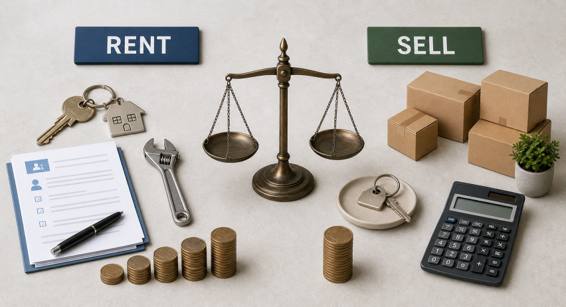
Let’s talk about the rent side honestly.
Say your Mansfield home could rent for around $2,400 a month — roughly in line with what three-bedroom homes have been renting for in the area, though rents have softened over the past year, so you’ll want a current read on your specific home. That $2,400 looks like income. It isn’t, not all of it.
The rule of thumb we share with clients: the true cost of holding a rental is your mortgage payment plus about 30–35% of the gross rent set aside for everything else. That “everything else” includes:
• Property taxes — and Tarrant County taxes aren’t small
• Landlord insurance — you’ll typically switch to a rental (DP3) policy, which usually costs more than your homeowner’s policy
• Maintenance and repairs — the AC that dies in July, the water heater, the fence
• Turnover costs — cleaning, paint, and lost rent between tenants
• A vacancy reserve — commonly 8–10% of gross rent, because no rental stays occupied 100% of the time
• Property management — if you’re moving out of the area and don’t want 11 p.m. maintenance calls, expect to pay a manager a percentage of rent
Do the math on a $2,400 rental and that 30–35% is $720 to $840 a month coming off the top before your mortgage. If your mortgage payment is close to or above what’s left, you could be feeding the property every month — betting entirely on appreciation and loan paydown to make it worthwhile.
Sometimes that bet pays off beautifully. The DFW Metroplex keeps growing, and a paid-down rental in a strong location can be a genuine wealth builder. But it’s a bet, not a guarantee, and you should go in knowing that.
What Selling Gives You
Selling is the cleaner path, and for a lot of movers it’s the right one.
You capture your equity now — potentially tax-free thanks to that exclusion — and you can roll it straight into your next home, which matters if you need the proceeds for a down payment. You close the book on the property completely: no tenants, no midnight repairs, no vacancy risk, no long-distance landlording. And you sidestep the three-year tax clock entirely.
The trade-off is opportunity cost. If North Texas home values keep climbing, you won’t capture that future appreciation. Selling means taking the certain thing today instead of the uncertain-but-potentially-larger thing later. To understand what you’d actually walk away with, it helps to know how much you’ll really net selling your home in Mansfield after commissions and closing costs.
Which Path Fits Which Person
A few patterns we see:
Selling usually makes more sense when you have substantial equity you want to protect from taxes, you need the proceeds for your next down payment, you’re moving far away and don’t want to manage from a distance, or the rental math shows you’d be covering a shortfall each month.
Renting can make sense when the numbers actually cash-flow after all those real costs, you have cash reserves to weather vacancies and repairs, you’re committed to either selling within the three-year tax window or holding for the very long term, and you genuinely want to be a landlord — not just tolerate it.
There’s no universally right answer. There’s only the right answer for your equity, your tax situation, and your temperament. If you’re weighing this against the broader question of holding versus buying in this market, our look at renting versus buying in Mansfield by the 2026 numbers covers the other side of the same coin.
Frequently Asked Questions
How long can I rent out my home before losing the capital gains exclusion?
You generally have three years from the date you move out to sell and still qualify for the exclusion, provided you lived in the home for at least two of the last five years. Rent it beyond that window and you permanently lose the exclusion on future gains. Confirm your specifics with a tax professional.
Is renting out my Mansfield home really passive income?
Not entirely. After property taxes, landlord insurance, maintenance, turnover, and a vacancy reserve, plan to set aside roughly 30–35% of the gross rent on top of your mortgage. What looks like $2,400 a month in income is meaningfully less once real costs come out.
Do I need different insurance to rent out my house?
Yes. You’ll typically switch from a homeowner’s policy to a landlord or rental dwelling policy (often called a DP3). It usually costs more than standard homeowner’s coverage, though the premium is generally tax-deductible as a rental expense.
What if I can’t decide between renting and selling?
Run both scenarios with real numbers — your actual mortgage, a current rent estimate, your equity, and your tax exposure — side by side. Nine times out of ten, seeing the two outcomes on paper makes the answer obvious. We’re glad to help you build that comparison.
The Bottom Line
Renting out your Mansfield home can build long-term wealth, but only if the numbers work after every real cost — and only if you’re mindful of the three-year tax clock that protects your capital gains exclusion. Selling captures your equity now, often tax-free, and frees you completely to move forward.
The right choice comes down to your equity, your tax picture, and whether you actually want to be a landlord. Before you decide, it’s worth running both numbers with someone who knows the Mansfield market and can pull a current rent and value estimate for your specific home. Reach out anytime — we’re happy to walk through it with you.
About The Chad Smith Team
The Chad Smith Team at Realty of America is one of the top-producing real estate teams in the Dallas-Fort Worth Metroplex, with more than 22 years of experience, 2,915 homes sold, and recognition by RealTrends among the top 1% of real estate professionals nationwide. The team helps first-time buyers, sellers, relocation clients, and new construction buyers throughout Arlington, Mansfield, Fort Worth, Midlothian, Waxahachie, and surrounding DFW communities. Through this blog, the Chad Smith Team shares expert market insights and practical advice to help North Texas buyers and sellers make informed real estate decisions.